
On "freedom": frontiers and coloniality - Part 2
Migration: 'Their' unfreedom, 'our' welfare?

Link to Part 1: Our unfreedom in three scenes
Current outrage
All the outrageous political events we have experienced lately, starting with Gaza and then continuing in breathtaking frequency and cruelty, are intimately related to coloniality. All involve absolute contempt for the livelihoods and lives of racialized people coming from what Trump has called “shithole countries.”
Coloniality expresses itself not only in an international setting but also inside the core countries. ICE’s criminal hunting of immigrants in the USA, with all non-whites being possible targets (and not only them) is the material realization, or rather logical consequence, of decades of basically all enriched nations demonizing immigration from the Global South. In Europe, ICE’s twin, Frontex, not only shares a similar development, technology and purpose, but is the EU’s fastest expanding agency. A European ICE is openly defended by far-right parties. It could be around the corner that scapegoat tactics lead to a similar devastation of society as in the USA: recently, the EU has toughened up asylum laws.
In part one we ended with an absurdity of unfreedom, i.e. absurd from the point of view of neoliberal logics: impermeable frontiers. The point was to make the contradictions of one of many neoliberal myths visible. However, the absurdity is only apparent. Actually, closed frontiers serve the winners of our present system very well: labeling people as “illegal” cheapens their labor to utmost extremes, so that the core countries can enjoy the cheap labor it extracts from the South at home. These exclusionary border policies compound to magnify the advantage those countries already enjoy by offshoring much of their production, arranging for sleek global supply chains (until recently at least).
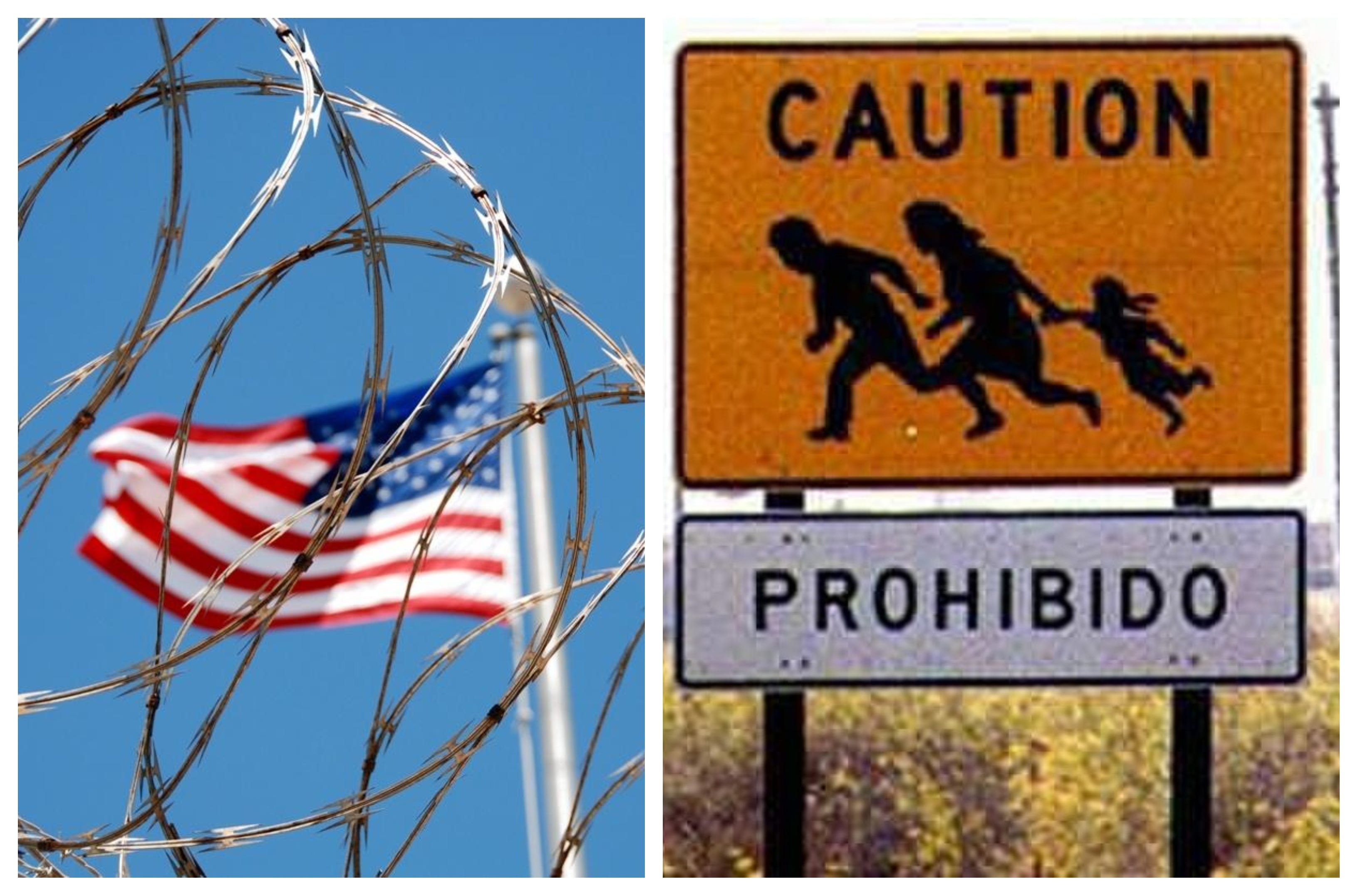
Normalized abuse
Illegality in the Global North plays an important role in its welfare, it is part of what makes “the imperial way of living” possible. From cheap groceries to cheap labor for care work, we, the inhabitants of enriched countries, can’t really escape the benefits we enjoy thanks to a system that stays cheap because it colors outside the legal lines. We as consumers, and of course, capitalism in general, benefit, while paradoxically, relying on the existence of this illegality in order to be maintained as such.
The big question is: how does the system get away with these apparent contradictions? That is: how can we live comfortably in societies which so clearly and permanently disavow all modern values which constitute the pride of the “West” like human rights or the rule of law? Why is there only minimal public outrage?
Let us examine one particular sector, that of the invisibilized care necessities, dependent on cheapened immigrant labor force in the Global North, through one case involving an acquaintance. She, a South American woman, let us name her Margarita, arrived in Spain ‘without papers,’ looking for opportunities in life which she did not have back home, aiming to settle down. Through friends, she eventually found a job where they paid correctly, a minimum salary. That is, a minimum salary for normal working hours, but as it turned out, she was expected to work 10 to 12 hours a day, taking care of the household with kids, sometimes having to sleep overnight for a ridiculous extra amount of pay, or spending whole weeks of vacations with the family. It was a very clear example of an abusive labor arrangement, but she stayed. She slowly learned that it could actually be much worse. Her bosses were decent and nice people, they valued her work...
The crux of the matter is the following: the employer couple, a pair of medical doctors, were quite respectable people, in no way openly racist, brutal, nor followers of the far right. Just normal upper-middle class professionals, with the “freedom” to pursue their careers of choice, as their care necessities were conveniently taken care of. They could entrust their children and their house to Margarita because she was trustworthy.
Had they little conscience of abusing someone, perhaps? Could it seem a win-win scenario for them? How can one bring this abuse in consonance with “nice,” otherwise decent people?
Margarita was no fool. She actually found out that, according to Spanish law, she could file charges against them. But it was not worth the trouble. She did talk to her bosses, bringing solid arguments about what she was entitled to. And they answered: you are in no position to make those demands, you have no papers.
Borders and unfreedom
Immigration is a “problem” in the Global North, yes, for those leaving their homeland and putting themselves in abusive or life-threatening situations. It seems to be one plain fact of life that we have borders which are ‘naturally’ impenetrable from South to North. One interesting historical aspect: Our present spatial understanding and concept of borders actually emerges from the colonial encounter. As in many other aspects, plain realities of modernity were shaped, also, by coloniality1.
Borders seem real and solid, and the abuse we have been talking about is supported by the narrative that these people should not be here anyway: they are “illegal.” (Following far-right narratives, “they” are also suspected of being criminals, but we will leave this aside for now). In general, it is accepted that labor laws and human rights just don’t apply to some people, as it is taken for granted that these rights are linked to legality inside the borders.
The doctors above probably think well of themselves, settling their “western” identities on being part of a “civilized, advanced country” which functions within the order of law. Perhaps they even see themselves as helping out Margarita in a win-win scenario. Perhaps they even consider that she is probably used to worse circumstances in her “backward” country.
However it may be, they are acting from a profound power asymmetry given in this particular social relation which, as has been investigated, can express itself in verbal abuse, humiliation, threats, sexual harassment, and even physical assaults.
We can suspect that this has less to do with legality/illegality and more with racism/coloniality. Boaventura de Santos has named the developed “western” capacity to apply double standards to their most cherished societal values: he called this phenomenon «abyssal thinking», signaling the realm where those values are naturally not deemed valid and a field of brutal self-interest reigns. Only one side is free, borders are valid for only one side. The borders between Global South and North is a division in more than one sense...
The obscurity around the contradictions we perceive here maintains the functioning of a system whose only goal is to extract value. We are dealing here with cultural hegemony, the consent around the ideas of the ruling classes, as Gramsci developed, which gives solidity to our world, which even convinces us that there is no other way to live. The resulting “common senses” don’t endure any analysis, but that doesn’t gnaw on their solidity. They are part of our identity, of our ‘knowledge’ about who is “us” and who is “them.”
The “we” and the “them” or the construction of “race”
The South politician preaches to the poor white man
You got more than the blacks, don’t complain
You’re better than them
You been born with white skin, they explain
And the Negro’s name
Is used it is plain
For the politician’s gain...
(Bob Dylan, “A pawn in their game”)
Dylan’s song is historically accurate. The first African people taken to the American colonies arrived as “indentured” servants, not differentiated from “white” ones, and actually gained freedom after a couple of years. “The first black and white Americans could develop strong bonds of sympathy and until the end of the seventeenth century they were all referred to as ‘servants’“ (Bennett, L., see also more about the construction of race).
In the late 17th century, these communities were broken: the “white” servants were singled out and given privileges, and contempt for the darker-skinned servants was actively promoted... A partitioning happening around “race” (W.E.B. Du Bois). Modern race concepts and the idea of whiteness crystallized in the 18th century, together with the developments of scientific human taxonomy 2.
Race was born as it was advantageous to divide those affected by early modern plundering. And the process has continued until today. For race plays a pivotal role in the more recent historic construction around “underdevelopment”. This imaginary permeates today the perception of the Other of “Western civilization” as she arrives as an immigrant. “They,” who are far behind “us,” only come to take advantage of what we have worked so hard for... (see a recent article of mine). Global dependencies and centuries-old siphoning of value from the South towards the North remains invisible, and the North’s consequent welfare seems completely brewed at home.
It could certainly be seen as strange that the idea of no-borders can be considered radical in a society having “freedom” as a supreme value.
But, as we have seen, it isn’t so strange if we take the real economic interests into account. Our attuned common senses as to who is “us” and who is “them” support and reflect the given order, as part of our modern/colonial imaginary.
Further, in a global setting, whiteness becomes a racialized “title to the universe” (W.E.B. Du Bois), mounding in the aggressive imperial expansion worldwide. A normalized international setting based on an apparent legality. That is, until recently. For this legal buffering seems to be losing significance today, at high speed. Coloniality’s increasingly denuded face: the unbelievable abuse inside the USA (and not only there) and the massive murdering of Global Southern peoples in the attacks waged on Iran and Lebanon, now towering on top of the Palestinian genocide, could make the “abyssal line” too visible for comfort. We can be witnessing hope amid the unbelievable destruction.
Outlook: the Cracks
Not long ago I visited the Basque country, and engaged in conversation with a taxi driver. He knew a lot about the unique language of his homeland, its territorial differentiation and history, and he was clearly proud of it. A question came up from our side: did he actually feel “Spanish”, besides feeling Basque? The answer was straightforward: he was a worker of the world. He loved his homeland, but he was a creature of our planet Earth.
My heart warmed... At this point I was expecting nationalist, excluding, divisive, simplistic views of who is entitled to what. But his “us” was clear.
Hegemony always has cracks, which can be widened--perhaps through the plummeting dignity of the supposed western humanistic superiority. Perhaps, the multiple crises may become so extreme that scapegoating immigrants will not be enough to maintain the status quo, bursting neoliberalism’s common senses, and forcing the system to change. And perhaps, at some point, many will see that “latinos,” or the equivalent, have much more in common with impoverished “white” citizens than the latter have with scaremongering politicians or with the owners of the world in their techno-feudal bubble, all of those who claim them for their superior race collective. An “us” made up of workers of the world (”the 99%”) could develop, like our basque cab driver expressed.
We have powerful images to resort to, like the ones of native US citizens revolting and defending the defenseless, in solidarity or also the recurring flotillas in different geographies. We also have leaders dancing out of the script like Prime Minister Sanchez in Spain introducing a massive legalization of migrants, recognizing that they keep the country going. At this very exceptional point in time, a question could be raised: why not solidarity, instead of hate?

Foto collage credits: Internet archive / Amnesty international
This article is part of our feature The Longer Read. Published periodically, The Longer Read explores important and timely topics in more depth than a typical Sufficiency & Wellbeing Magazine article.
We can understand today’s coloniality (of power) as the continuation of historic colonialism. A. Quijano developed this concept to signal the “power matrix” that constitutes our world based upon racial classifications of the world population. Modernity has always been inseparable from coloniality.
An earlier differentiation of an “other” (at the time of the Spanish conquest) ran along different lines: religious, involving questions of “blood purity”, or also along the differentiation civilized/ savage, or inquiring on who was or was not human or had a soul. For example, still in the 16th century, the English perceived the irish people as “savages” and potential slaves. As R. Grossfoguel develops: with the “enslavement of Africans, religious racism was complemented with or slowly replaced by color racism”.
 | A guest post by
|
This is a beautiful testament to the need to erase colonial borders. I'll add, when you say this arrangement provides "welfare" for the Global North, I know what you mean but would say it doesn't really provide us with "welfare" either. It gives us niceties, like big houses, lots of food options and clothes, expensive travel, etc. But none of that is worth the daily weight of climate collapse, overwork, increasing precarity where it matters (health, retirement), and knowing your government/culture/country/self is complicit in (if not directly committing) genocide, enslavement, ecocide, etc. No one is a winner in this system.
Your vignette of the medical couple and their 'employee' is a powerful description of the double standards western society employs. The compartmentalisation required to manage this is immense and is certainly being eroded by the gloves-off approach of modern colonialist practice. What comes next though is certainly up for grabs
As I contemplate the future Hope and Fear dance together as we are all swept along the rapids of this disintegrating order.