
Animal abuse: our ‘well-being’?
On myths that support a sick normality

Versión original en castellano más abajo
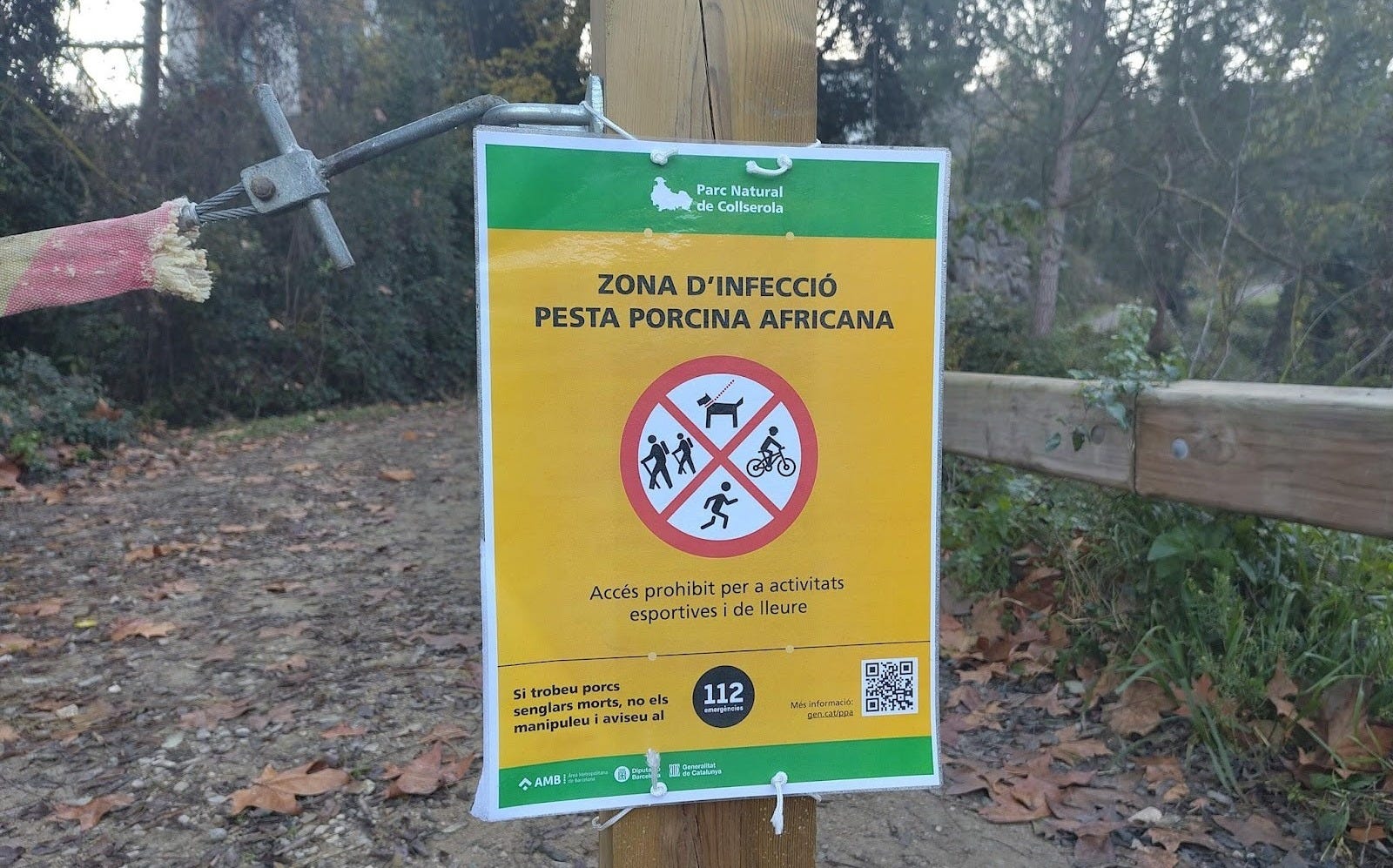
December 2025: African swine fever lurks
I live in the epicenter: a couple of minutes walk and I can enter the Collserola forest. Swine fever arrived and it took me a while to fully realize what was happening around me, as one can’t hear or see anything unusual -except for the signs everywhere, warning you not to enter the forest.
Now, I think more and more about how my surroundings have become a killing field. And my soul crumples... sadness or anger, it is difficult to distinguish. Recently, one morning when I was crossing the forest to catch the train, I stopped for a moment to ask for forgiveness. To the wild boars, or the spirit of the wild boars, or whatever it may be, but I needed to do it: sorry, sorry, sorry. On behalf of individuals of my species, who can be socialized to exercise unparalleled brutality. A symbolic piece of what is happening in the world, perhaps: Save the system, no matter who gets killed.
A slaughter that, as Greenpeace has pointed out, can be counterproductive. The mass hunting of wild boars and the panic it causes can scatter them further and spread the plague. In any case, wild boars are not ‘guilty’. The guilt can be found in human excess, monocultures, and our corporate food system.
In Collserola, located in suburban Barcelona, there is a clear problem of excess wild boars (due to a lack of predators and excessive land use). There are controlled hunting seasons, necessary to keep the population under control. Absurdly, this does not result in wild game meat for humans. In another of ‘my’ countries, Austria, it is normal to eat wild boar meat during the hunting season. But here in Collserola, I am told, there is no infrastructure to examine and guarantee that the animals are in good health.
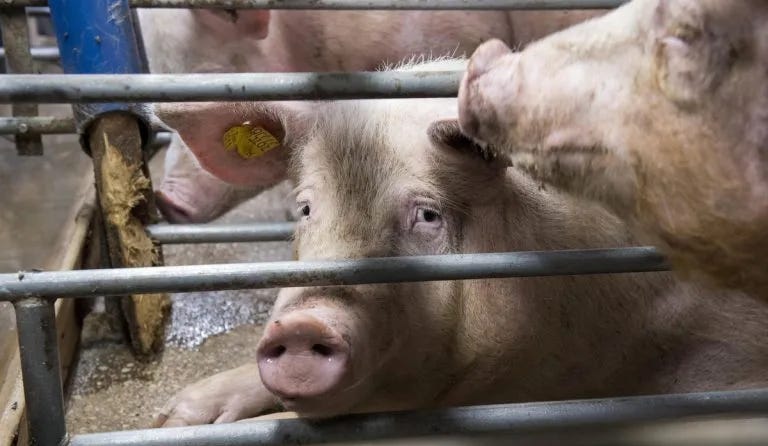
Instead, we have everything in place to eat pork from macro-farms: mistreated, crammed into cubicles, full of antibiotics, growth hormones, and pesticides. This pork has the approval for human consumption.
Sick normality
I became a vegetarian early in life, as a teenager, when I saw on television that a piglet being taken to the slaughterhouse couldn’t walk... It had never walked! This left a lasting impression on me. Why have we humans (some of us) granted ourselves the right to disrespect life? For it is profoundly disrespectful to torture these animals from birth on and to prevent them from living as their species would naturally.
I think of Descartes and his horrific experiments in which he illustrated that the material expression of life was pure mechanics, after having ‘proven’ with logical reasoning that animals did not possess minds. Thus, he was able to allow himself a terrifying indifference to the shrieks of the animals when he tortured them. According to him, it was a mechanical reflex...
In those early days of modernity, dualism took hold, the understanding of human beings as being fundamentally different from animals. This ultimately made it possible to treat living beings as any inert raw material, in an industrial process that ‘optimizes’, without any consideration. Thus, it has become acceptable to put profit before any other priority, as in any other area of the current economy.
Spain has the largest pig population in the EU. In Catalonia, 99% of pig farming is industrial and there are more pigs than people. Most of the production gets exported. The macro-farm business (with more than 2,000 places) has boomed, concentrating farm ownership: Since 1982, we have gone from having 2.6 million pigs on more than 20,000 farms to 8.12 million on just 4,435.
This development has reached harmful and dangerous proportions for the general population, with various health risks, aquifers contaminated by nitrates, and ammonia in the air. The damage is socialized (including the greenhouse gases), while gigantism is subsidized. The result is excessive consumption of ‘cheap’ meat (which can unfortunately be understood as a ‘democratization of consumption’) and a whole global chain of environmental, social, and ethical abuses related to its production (see report on Latin America, for example).
And so, we kill wild boars as a desperate measure to keep this toxic system afloat. This is the tip of the iceberg of a global agri-food system that promotes excess and vulnerability, creating a complete lack of resilience to any change in context, such as a plague.
Mistreatment and myth
When talking about animal abuse in everyday life, we tend to think of issues such as bullfighting or mistreatment of pets... The massive abuse that occurs in industrial farms has less presence. Consumers do not see this abuse directly, it is well hidden.
But even if it had more visibility, wouldn’t it be normal to think: ‘This has to be this way, because we have to feed so many people’? D. Haraway says:...
I experience, in fact, among my colleagues across activist and scholarly worlds, a tendency to think that Anthropocene really does mean a species act. That the problem really is [...] humanity in its evolutionary social history on this planet— its increase in numbers, its increase in demands. This strengthens the illusion that turning all that is Earth into a resource for humanity is inevitable, if tragic.
This is a deeply rooted modern myth. In reality, the agro-industrial corporate system does not feed us. It is highly wasteful and only serves its goal of enriching a few corporations, while seriously affecting the Global South.
But the myth survives, and consumers —assuming that the suffering is “inevitable”— perhaps arm themselves with a (collective) shield so as not to feel. A shield perhaps similar to the one used by Descartes? Humans are very capable of this kind of acrobatics (which has been called, at individual level: ‘ethical fading’). Here I stray from the subject, but a book comes to mind that I could not read to the end because of its masterful display of this ‘ability’: Vargas Llosa’s “The Real Life of Alejandro Mayta” (I leave this to the reader’s curiosity).
There are other ways of relating to animals intended for human consumption. In some indigenous communities, there is a notion of ‘mutual care‘, but even within the “belly of the beast” in Europe, there are still people who live this relationship with restraint, appreciation, and gratitude. I would venture to say that we have lost access to the crux of the matter because, curiously, sacrificing animals that have been raised with care seems to us particularly barbaric, while our barbaric mega farms seem civilized...
The myth of inevitability is hard to shake because everything seems to have led us to this point; we imagine ourselves at the pinnacle of history. This is our deep seated modern version of a teleological worldview, understanding societies as being directed toward an ultimate goal.
But there is a choice. We have arrived here through a series of decisions, made by concrete persons, consolidating a hegemony that can be questioned. And the unsustainability and perversity of the agro-industrial model is more than clear. It is time for us to collectively heed the horror we feel when we learn of massive animal suffering. It is time to dismantle macro-farms and their fatal logic.
Cover photo: Greenpeace
Maltrato animal: ¿nuestro ‘bienestar’?
Mitos de una normalidad enferma
Diciembre 2025: la peste porcina africana acecha
Vivo en el epicentro: doy unos pasos y estoy en el bosque de Collserola. Llegó la peste porcina y tardé un poco en darme plena cuenta de lo que estaría sucediendo a mi alrededor, pues aquí no se oye ni se ve nada raro, excepto los avisos por doquier advirtiendo que no se debe entrar.
Ahora, pienso cada vez más en que mi alrededor se ha convertido en un campo de matanza. Y se me arruga el alma... tristeza, rabia, difícil distinguir. Hace poco, una mañana cuando atravesé el bosque para ir a coger el tren, me paré un momento para pedir perdón. A los jabalíes o al espíritu de los jabalíes o lo que pueda ser, pero me hacía falta hacerlo: perdón, perdón, perdón. En nombre de mi especie que puede ser socializada a ejercer una brutalidad sin par. Un trocito simbólico de lo que pasa en el mundo, tal vez: ‘Mantengamos al sistema, sin mirar a quien se mata’.
Una matanza que, ha señalado Greenpeace, puede ser contraproducente. La caza masiva de jabalíes, el pánico causado, puede hacer que se dispersen más y lleven la peste a donde no había llegado. En todo caso, los jabalíes no son ‘culpables’, y sí lo es la desmesura humana, los monocultivos y nuestro modelo alimentario corporativo.
En Collserola, bosque que linda con Barcelona, hay un claro problema de exceso de jabalíes (por falta de depredadores y excesivo uso de suelos). Hay épocas de caza, necesarias para mantener la población a raya. Absurdamente, los jabalíes abatidos no se convierten en alimento para los humanos. En otro de ‘mis’ países, en Austria, es normal comer carne de jabalí, cuando la hay. Pero aquí en Collserola, me dicen, no hay la infraestructura para poderlos examinar y garantizar que los animales estén en buen estado de salud.
En vez de ello tenemos todo montado para comer la carne de cerdo de las macro-granjas: maltratados, hacinados en cubículos, llenos de antibióticos, hormonas de crecimiento y pesticidas. Esta si que está avalada para el consumo humano.
Normalidad enferma
Yo me volví vegetariana temprano en la vida, de adolescente, cuando vi en televisión que un cerdito que llevaban al matadero no podía caminar pues... ¡nunca había caminado! Me impresionó mucho. ¿Por qué nos hemos otorgado (algunos) humanos el derecho a irrespetar la vida? Pues es un profundo irrespeto el torturarlos desde su nacimiento y no dejarlos vivir como dispondrían las características de su especie1.
Pienso en Descartes y sus horrorosos experimentos en los que ilustraba que la expresión material de la vida era mecánica pura, después de haber ‘probado’ con razonamientos lógicos que los animales no poseían mente. Así, se pudo permitir la aterradora indiferencia a los chillidos de los animales cuando los torturaba. Según él, se trataba de un reflejo mecánico....
En esos albores de la modernidad se instala el dualismo, el entender al ser humano como fundamentalmente distinto a los animales que posibilita en últimas el escándalo de tratar a seres vivos como cualquier materia prima inerte, en un proceso industrial que “optimiza” sin miramientos. Así resulta aceptable poner la ganancia ante cualquier otra prioridad, como hacemos en todos los campos de la economía presente.
España es el país con más cerdos de la UE, en Catalunya el 99% de la cría porcina es industrial y hay más cerdos que personas. La mayor parte de la producción se exporta. El negocio de las macro-granjas (con más de 2000 plazas) se ha disparado, concentrando la tenencia de granjas: Desde 1982, Catalunya ha pasado de tener 2,6 millones de cerdos en más de 20.000 granjas, a 8,12 millones en tan solo 4.435 .
Este desarrollo ha llegado a proporciones dañinas y peligrosas para la población en general con diversos riesgos para la salud, acuíferos contaminados por nitratos y amoniaco en el aire. Se socializan los daños, mientras que se subvenciona el gigantismo. El resultado es el exceso de consumo de carne ‘barata’ (se puede entender, lamentablemente, como una ‘democratización del consumo’) y toda una cadena global de abusos ambientales, sociales, éticos relacionados a su producción (ver informe por ejemplo, de Latinoamérica).
Y así, matamos jabalíes como medida desesperada para mantener a flote este sistema tóxico. Se trata de la punta del iceberg de un modelo agroalimentario global que extiende la desmesura y la vulnerabilidad, creando una absoluta falta de resiliencia ante cualquier cambio de contexto, como, por ejemplo, una peste.
El maltrato y el mito
Al hablar de maltrato animal en el día a día, se piensa más bien en temas como las corridas de toros, o maltrato a mascotas ... ¿Por qué no en el abuso masivo de las macro-granjas? El consumidor no vé directamente ese maltrato en vida, está bien escondido
Pero incluso si lo viera, ¿acaso no pensaría, esto tiene que ser así, pues ‘hay que alimentar’ a tanto humano? Dice D. Haraway2:
... entre mis colegas del mundo activista y académico, observo una tendencia a pensar que el Antropoceno realmente significa un acto de la especie. Que el problema es realmente la humanidad, ... en su historia social evolutiva en este planeta: su aumento en número, su aumento en demandas. Esto refuerza la ilusión de que convertir todo lo que es la Tierra en un recurso para la humanidad es inevitable, aunque trágico.
Se trata de un mito moderno muy arraigado. En realidad el sistema corporativo agro-industrial no es el que nos alimenta, es altamente derrochador, y solo sirve a su meta de enriquecer a unas pocas corporaciones, además afectando gravemente al sur global.
Pero el mito sobrevive y el consumidor (asumiendo que el sufrimiento es “inevitable”), tal vez, se arma con una coraza (colectiva) para no sentir . Coraza parecida, podría ser, a la que acompañó a Descartes. Los humanos somos muy capaces de esta acrobacia (que se ha llamado a nivel individual ‘desvanecimiento ético’). Aquí me salgo del tema pero recuerdo un libro que no pude seguir leyendo por la magistralidad en mostrar esta capacidad: “Historias de Mayta” de Vargas Llosa (lo dejo a curiosidad del lector).
Hay otras maneras de relacionarse con los animales destinados a la alimentación humana. En algunos pueblos indígenas se puede hablar de cuidados mutuos, pero también en el propio seno de la “barriga del monstruo”, en Europa, habrá aún personas que, respetan ésta vida no humana, con mesura, aprecio y gratitud. Me aventuraría a decir que hemos perdido acceso al quid de la cuestión pues, curiosamente, matar animales que se han criado con cuidados hoy parece especialmente barbárico, mientras que las mega granjas nos parecen civilizadas ...
El mito de la inevitabilidad es duro de roer pues todo parece habernos llevado a este punto, nos imaginamos en la cima de la historia. Se trata de nuestra versión moderna de una cosmovisión teleológica, implantada profundamente, entendiendo a las sociedades como dirigidas a un fin último.
Pero sí hay opción, hemos llegado aquí por una serie de decisiones y por el afianzamiento de una hegemonía que se puede cuestionar. Y la insostenibilidad y perversidad del modelo agro-industrial está más que clara. Es hora de que colectivamente hagamos caso al horror que sentimos al saber del sufrimiento masivo de los animales. Es hora de desmantelar las macro-granjas y sus fatales lógicas.
Escribí sobre este tema, en un símil de carta a un pollito que crié en casa: “Carta a Caldito”.
I experience, in fact, among my colleagues across activist and scholarly worlds, a tendency to think that Anthropocene really does mean a species act. That the problem really is humanity […] in its evolutionary social history on this planet— its increase in numbers, its increase in demands. This strengthens the illusion that turning all that is Earth into resource for humanity is inevitable, if tragic. (Traducción de la autora).
 | A guest post by
|
This article highlights something we rarely question: the idea that industrial animal farming is simply “necessary.” The myth that we need this system to feed the world hides how wasteful and destructive it actually is.
What feels especially troubling is how normalized this violence has become. Wild animals are framed as the problem, while the industrial system that creates instability remains untouched.
If we are serious about wellbeing, we have to question not just individual choices, but the structures that make this model seem inevitable.
No es inevitable — es una decisión colectiva.
While I am not a vegetarian I am acutely aware of choosing carefully where I source meat from as I am similarly repulsed by the food industry and its methods. I am lucky, I can generally afford it when I choose to eat it.
As you point out, the role of large animal farming is a product of both the rise of Cartesian thinking and an economic system that only values profit. While the end of corporate farming is an end to be welcomed it would not of itself change the dynamic. Retrieving a sense of the sacred about all life will be critical in order to make decisions about what and how much of it we eat.
To my mind, all the major food production should be local to the area of consumption so that those who consume it also have a voice about its production. This does not preclude some importing of foods either into local areas from other regions or into the country from another but a system of exchange of foodstuffs should underpin this to emphasise the joy of variety without turning supply areas into exporting businesses that promote monocultures and a transactional approach to food.
There is always a logistical element to food supply but this should be downstream of a primary relationship to food that recognises its independent selfhood and place in the complex ecology of our planet. I have no sense that this will be adopted voluntarily by major organisations or governments so it is down to communities to make decisions about increasing local production and upholding high food values. Early adopters will be better placed to ride out the changes that are coming. Certainly, in my part of UK these are very few and far between.