
When workers reclaim their political agency
An interview with Dr. Alejandro "Alex" Fortuny Sicart


Watch the video version here.
Alan: To start, could you tell us about your journey into post-growth research and what motivated you to pursue a PhD in this field?
Alex: My interest began about a decade ago through a personal concern for climate change and social inequality. Living in France at the time, I was exposed to thinkers in the post-growth and degrowth movements. Eventually, I secured funding for the ERC Starting Grant Prospera project in Galicia and in the Post-Growth Innovation Lab, where I spent four years researching how alternative organizations such as worker-recovered enterprises and platform cooperatives are built from the bottom up and how they evolve over time. While academia can be a high-pressure environment, it allowed me the time to explore these cases in depth thanks to my in-depth engagement participation in both cases and the project’s funding, which cover most of its related costs.
Alan: Let’s dive into your first case study, Scop-Ti. What is the story behind the workers taking over this factory as a cooperative?
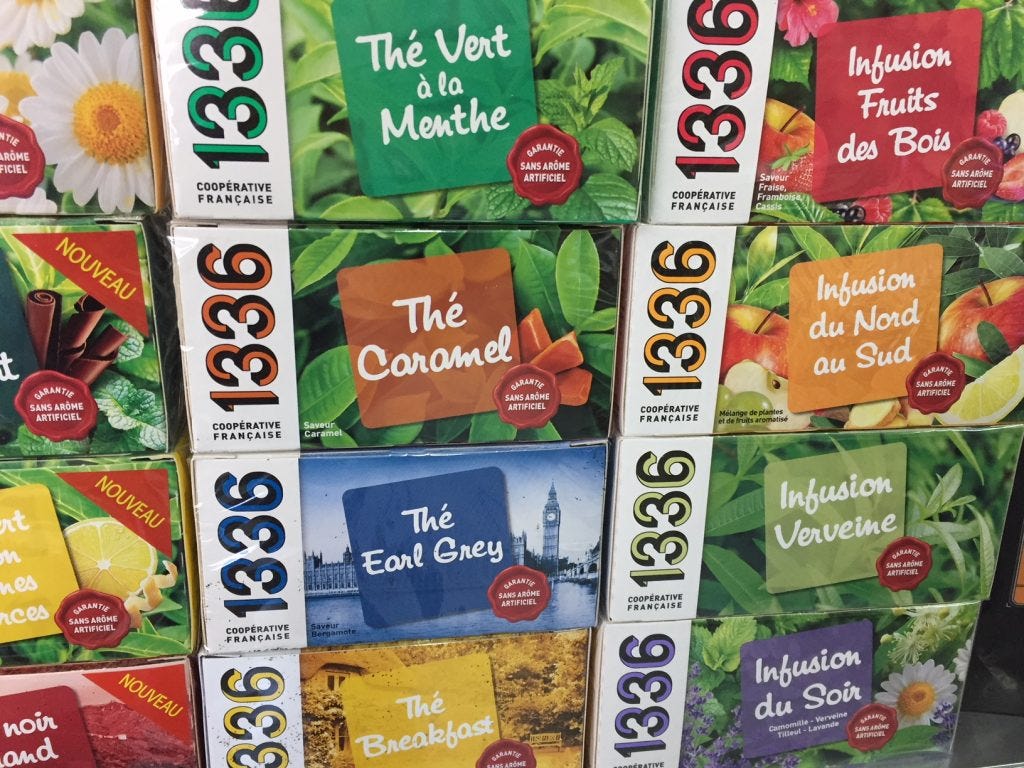
Alex: Scop-Ti is a famous French case involving a tea and infusion factory in Gémenos. It started when the multinational Unilever announced its closure in 2010. This wasn’t an isolated event; many workers had already experienced a previous factory closure in northern France in 1997 and felt the company was systematically “optimising“ by outsourcing and shifting from natural to artificial flavourings.
The workers responded with a fierce 1,336-day struggle. They weren’t just looking for a payout; they wanted to prove the factory was profitable and preserve their jobs. After three years of legal battles and resisting “individualized” compensation offers, they reached an agreement in 2014 to relaunch as Scop-Ti, a worker-run cooperative.
Alan: Why did the workers choose the cooperative route instead of just moving on? And how did they manage the organization given they were all production workers?
Alex: They chose this path because of job preservation and local identity; they refused to let their livelihoods be “offshored.” They also held a strong social and ecological critique of Unilever’s logic, believing they had the skills to run the site without traditional hierarchies and that they could do it by relocating part of its infusion sourcing--as such practices were outsourced during the last decades--and coming back to more natural flavouring of its products.
Regarding skills, because no managers stayed, they had to map internal skills and retrain. For example, a production worker with a prior administrative degree was trained in accountancy. They elected a director—a former technician—and a president who had been a union representative. However, they faced a “dual nature” challenge: they were a democratic association but still had to survive in a market dominated by large retailers. They lost the multinational’s brand names, meaning they had to build their own brand, “1336,” from scratch while production lines designed for high-capitalist efficiency imposed material constraints on their ability to fully democratize work rhythms. They also had to produce high volumes for retailer private labels from day one in order to compensate the initial lack of volumes and as a way to pay the costs of the factory while trying to create their alternative brand which is closer to their alternative project.
Alan: You mentioned external support was vital. Who helped them?
Alex: The struggle was highly unionized (60%), with the CGT french union providing the national network needed to sustain a long conflict. They also built a broad coalition including left-wing political parties and local government. Crucially, the local government bought the land to prevent it from being sold off, which provided a “transitional” space for the cooperative to form. An association called Fraliberthé also helped and still helps by selling products through militant networks and direct-to-consumer channels such as their website (1336.fr).
Alan: Let’s switch to CoopCycle. Who are they, and how do they address precarity in the gig economy?
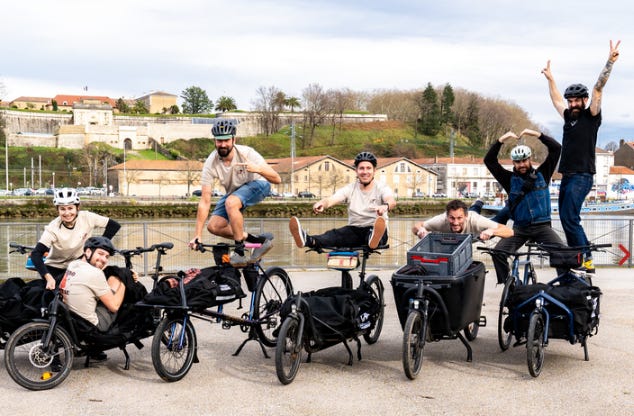
Alex: CoopCycle is a federation of worker-owned rider cooperatives founded in 2017. They provide an alternative to “platform capitalism” giants like Deliveroo or UberEats. While those companies use “opaque” algorithms to surveil and discipline workers, CoopCycle uses a digital common—a platform co-owned and governed by the riders themselves.
They fight precarity by insisting on employee status rather than false self-employment, ensuring workers have access to social security. They also use a copyleft license, that which restricts the commercial use of their software to cooperatives or organisational forms aligned with the EU social and solidarity law that respect labor rights and offer a democratic governance.
Alan: How do they balance the highly technical software work with the physical work of delivery?
Alex: The federation manages the software while local collectives remain autonomous. The coordinators in the federation are often former or current riders, which ensures technical development remains grounded in the reality of the work. They use participatory co-design, where riders decide which features should be prioritized based on how they impact labor conditions.
Alan: To wrap up, what do you see as the biggest challenge to seeing more of these cases to flourish?
Alex: A major limitation is financial capital. These organisations need liquidity but don’t want to adopt a capitalist model. I think we need to rethink labor institutions that can create their own capital, similar to proposals in Sweden in the 1970s. We need funds—perhaps public or collective—that can support workers when a company closes or when they want to create democratically governed technological infrastructure (such as platform cooperatives), so the pressure doesn’t rest solely on the individuals’ personal investment.
Alan: Thank you, Alex. Your research shows that even in challenging markets, workers can reclaim their work spaces and agency
Alex: Thank you! These cases show the challenges and possibilities [as] not being “purely” outside the system; but negotiating alterity both within it and beyond it to create something better.
For those interested in reading the research directly please see researchgate profile of Dr. Alejandro Fortuny Sicart.
In order to get access to his PhD or be in touch, do not hesitate to contact him through researchgate or at alexfortu@protonmail.com.
Some of his work on CoopCycle has been already published or accepted in peer reviewed academic journals.
The interview recording can be found here.
Here, you can learn more about ScopTi and Coopcycle.
You can also buy Scop-Ti products here.
For more information about Scop-Ti, there is a lovely film titled The Taste of Hope that offers a more complete and everyday picture of what it is like.
 | A guest post by
|