
Through the chronic illness looking glass (Part I)
An introduction to navigating chronic illness and current events

This is the first of six articles exploring the connections between chronic illness, degrowth, climate change, and capitalism:
Part I: An introduction to navigating chronic illness and current events
Part II: Navigating the workplace as a someone with a chronic illness
Part III: Questioning and relearning what it means to take care of the self
Introduction: Then and Now
Four years ago, I’d just finished my third unofficial half marathon, and had my sights set on the next challenge: an official 26.2-mile race.
These days, I struggle to walk half a mile at anything faster than a snail’s pace.
No one wants to talk about the COVID-19 pandemic anymore. Many consider it a short, albeit painful, chapter of the last decade, overshadowed by other chapters filled with more horrifying events than one person can rationally be expected to bear. It’s a challenging subject to discuss because no one wants to hear it—and I don’t blame them. Everyone wants to move on, and many already have.
But I need to talk about it, because it changed my life. This has left me in the lonely position of navigating a new chronic illness—new to both me and the scientific world—while also coming to terms with a new sense of self, and continuing to exist in a world that seems to insist on fracturing itself in the most painful ways possible.
Four years ago, I had just finished my undergraduate degree, and was taking a year to figure out what I wanted to do with my career. My degrees were in Sociology and Environmental Studies, with concentrations in Public Health and Global Environmental Politics, all of which felt, to me, like inexplicably intertwined subjects—albeit ones that did not offer a clear career path. I had just finished learning about how many of the technological and medical innovations that have become second nature to Global North life intractably come with degradation of community, wildlife, and land health. That the Industrial Revolution coincided with the beginning of an exponential increase in greenhouse gas emissions was no coincidence—it was a genesis of our current predicaments. That environmental issues tied into racism—who lived near the landfills, the concentrated animal feeding operations (CAFOs), the toxic waste sites—is not any kind of “bad luck,” but the illustrated contours of a system that was built to pummel some groups and support others. That the structure of our consumerist, ultra-individualist, capitalist system preys on us, willing us to buy into “health trends” and aesthetic lifestyles claiming to make us happier and healthier but are actually just smoke and mirrors, taking us away from our connections to each other and to nature while simultaneously destroying those very things—none of that is by chance, but by design. But I was only subliminally conscious of these connections at the time; the theoretical landscape had been thoroughly explored, but I lacked the personal experience that would transform theory into reality.
These days, my weeks are filled with doctor’s appointments, pulmonary rehabilitation classes, sleepy afternoons, cancelled plans, and disappointment. Half-marathons feel like a distant galaxy when I can barely muster up enough energy to cook myself a meal more complicated than avocado toast. My world has become smaller—not only because I spend more time at home, and so the physical boundaries of my days are characterized by the edges of my apartment and backyard, but also because my daily journal reflects a underwhelming lack of variety in activities: ate, slept, read, started a craft, slept more, watched TV, ate again, went to bed. Even friends who have the best intentions struggle to stay in touch—and I don’t blame them because no, nothing’s new, I’m still ill and sleeping all day, and the doctors haven’t found anything helpful—nothing interesting has happened in my life since we last talked.
The Chronic Illness, a New Lens on Life: Long COVID 101
I was suddenly faced with having to view my life in a completely new way. Activities that previously went unnoticed suddenly became mountainous challenges. Showering, cooking a meal, walking to the store—these all now required much more energy and planning than they did before. My daily routine, activities, social engagement, etc. all had to be filtered through a new algorithm—one that factored in a new unknown variable: this chronic illness thing that seems to rear its head at the oddest of times.
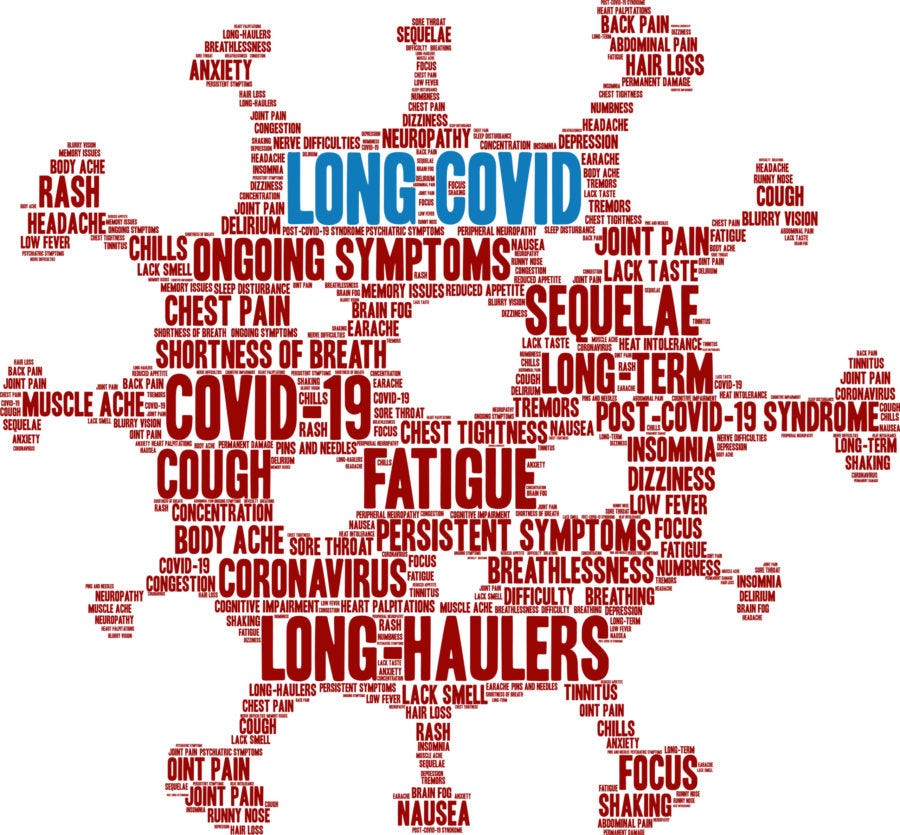
Long COVID is a tricky illness for many reasons. Most obviously, it’s relatively new, and so the scientific world has only had a few years to define and research it (and there isn’t even a universally agreed-upon definition yet, according to the Mayo Clinic). The list of potential symptoms is long and varied, and there is no laboratory test that can diagnose it. This makes the individual experience of trying to understand what’s happening to your body—why sleep doesn’t provide any respite, why my depression gets worse after exercise, not better—a confusing and lonely one. It means that employers, doctors, “accessibility” practitioners often don’t believe or cannot fathom the intensity of the illness, nor can they properly accommodate and address the sick person’s needs. It also meant I didn’t really know how to explain or talk about what was happening to me, which created further isolation and only intensified the negative mental health consequences.
There’s not a lot of information out there because, well, researchers are still figuring it out. According to a Harvard Gazette article, “Long COVID affects an estimated 15 million Americans, according to recent data from the U.S. Department of Health and Human Services. Symptoms include fatigue, brain fog, shortness of breath, exercise intolerance, and cognitive decline for months or even years. Doctors and scientists don’t fully understand why some people develop long COVID while others don’t.” For many, symptoms overlap with other chronic illnesses such as postural orthostatic tachycardia syndrome, also called POTS, and myalgic encephalomyelitis-chronic fatigue syndrome (ME/CFS). Notably, post-exertional malaise (PEM) is a hallmark symptom of both Long COVID and ME/CFS.
Fatigue may sound relatively harmless (after all, who hasn’t felt tired, especially these days). But chronic fatigue is very different from your normal run-of-the-mill tiredness. Imagine having to carry a weighted blanket around your shoulders all day, every day, without being able to put it down. That barely approaches what this kind of fatigue feels like. I’ve also heard it being described as the kind of tired you’d be after not sleeping for three days straight. It’s not just “being tired”—it’s soul-crushing, feel-it-in-your-bones exhaustion. Tasks that used to be so simple they were nearly thoughtless, like showering, now have to be scheduled for days with nothing else on the docket. Time slows down, because life slows down. The activities that you used to pack into one day now have to be spread out throughout the week, because you require time to sleep and rest in between each. The temporality of chronic illness is completely at odds with capitalist temporality—we can’t function on the same time scale, and the constant pressure to “keep up” with “normal” life only serves to isolate the chronically ill from everyone else.
Don’t be fooled by days you seemingly have more energy than usual, either. Early on, before I’d learned to be careful about my energy expenditure, I woke up one morning feeling like my old self. So, naturally, I thought I’d go for a run. Even on the run, I felt pretty okay! I was out of shape, sure, so it was harder than I would have liked, but I left the workout feeling optimistic, like maybe I’d overreacted with all this fatigue and Long COVID stuff. Cue post-exertional malaise (PEM), stage left. PEM is a brutal, vicious monster that excitedly waits in the shadows, ready to swoop in and destroy your good days. After that run, I slept for two days. Straight. It wasn’t until the fourth day that I felt somewhat like a human being again. And it wasn’t just fatigue—it was malaise too. My depressive symptoms got worse, and I fell into a dark, exhausted state that had me believing I would never be blessed by the sun-kissed lips of happiness or carefree energy again.
Devastation Abroad or at Home, Your Choice: Witnessing Destruction While Stuck on the Couch
I spent the first couple of months after my initial symptomatic episode (a story for another time) doing what many of my peers do in their free time, scrolling through the news and watching the world go up in flames. Except that I couldn’t get up and go to work to take my mind off of it—because I had quit my job (partly due to what I thought was burnout—but which turned out to be fatigue from Long COVID as well). I couldn’t go for a run to clear my head. Everything I saw, each piece of devastating news, plopped down right next to me on the couch and stubbornly insisted on remaining very, very visible. And because social media and algorithms and seemingly everything these days is designed to keep you scrolling, or at the very least, desperately vies for your attention, I couldn’t stop.
My phone, with the news, the videos, and the posts, was also my only portal into the rest of the world. It was my only escape from reckoning with my limited corporeal existence. Scrolling and watching news of the U.S. Immigration and Customs Enforcement (ICE) raids, the blocking of aid to Gaza, the devolution of my country’s government into a overtly fascist regime, of the world having transgressed yet another planetary boundary: all of this offered a distraction from the reality of my life—the reality that I was ill, the fear I might be sick forever, that I might never be me again. The me that I knew—that I had spent a quarter of a century forming and learning to love—had been ripped away, unexpectedly, viciously, and without pretense. These were truths I wasn’t ready to face, and so I soothed myself with the details of soul-wrenching human rights crises instead. Not much actual soothing happened—shocking, I know.
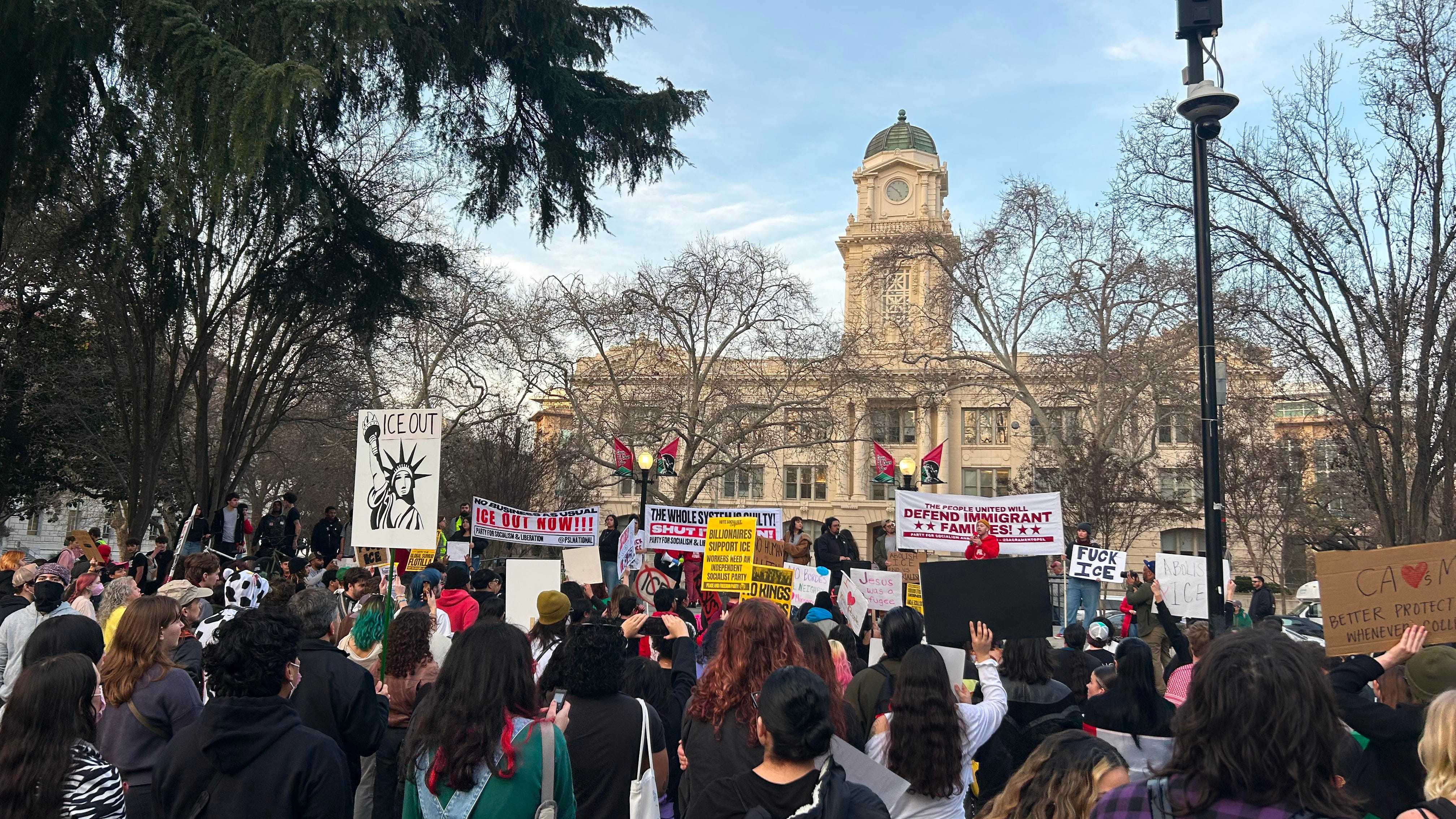
Deep down, maybe I couldn’t stop scrolling through the devastation not because I thought it would actually soothe anything internally, but because the thought of turning inward and focusing on caring for myself felt too selfish to consider given the horrors that others were facing. My own problems paled in comparison, full stop. Maybe too, something in the helpless feeling of watching this world go down a path that horrifyingly felt like one of no return resonated with the helplessness I felt about my own life. I couldn’t do anything to stop the horrors outside my apartment, and I couldn’t do anything to get my old self back, either.
Not being able to distract myself with work I was passionate about—and not having the energy to pour into extra-curricular activities that might otherwise make up for the lack of a day job—turned out to be particularly harmful to my mental health. And I couldn’t spin the situation as a temporary setback. There was no consoling myself with the idea that I might soon be back at work, making the world a better place—because I had no idea when I would be back at work full-time, if ever. More on that in Part II...
This article is part of our feature The Longer Read. Published periodically, The Longer Read explores important and timely topics in more depth than a typical Sufficiency & Wellbeing Magazine article.
 | A guest post by
|
You can REALLY write, Lily. You've got great writing energy. That's got to be blessing to cherish and enjoy. I can't imagine what it would be like if you couldn't do that....
Looking forward to reading more.