
The Urgency of Adivasi, Dalit, and Muslim Leadership amid Communal Racism and the Ideological Vacuum of Postcolonial Liberal Democracy in India

Revised and republished after original publication on the author’s personal Substack account.
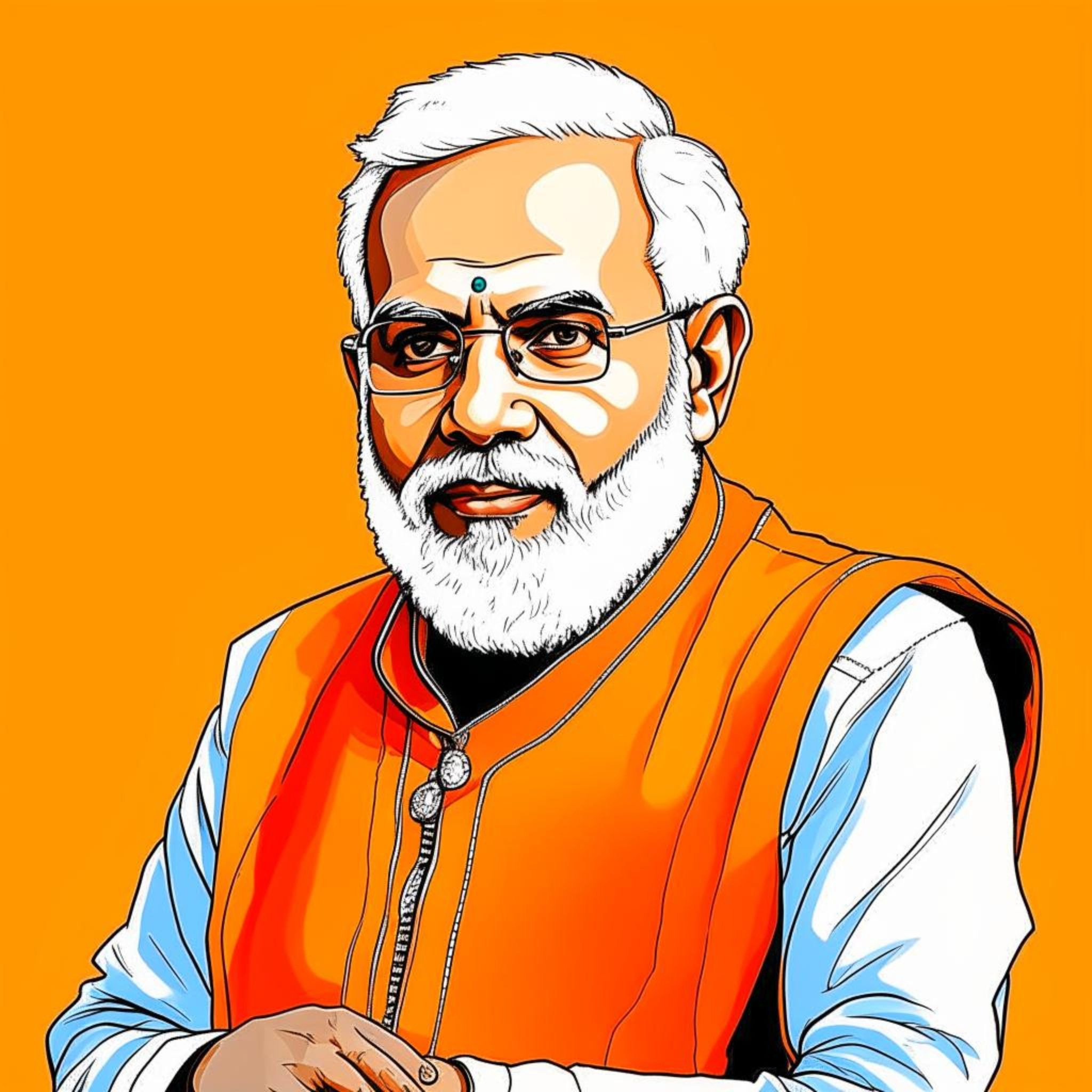
The Rise of the Global Hindu Far-Right and the Crisis of Liberal Democracy
In India, Hindu right-wing fascism, operating as internal colonisers in the postcolonial era, is no longer emerging; it has already consolidated at the central level and, for the first time, in my home state of West Bengal. I write this in the immediate aftermath of the sweeping victory of the Bharatiya Janata Party (BJP) or the Hindu-right-wing party, over the All India Trinamool Congress (TMC), in the state legislative assembly elections, which had governed the state for fifteen years. The coincidence of this moment of the Hindu right-wing party’s victory, with the birth anniversary of Karl Marx, on 5th May, 2026, at least in my view, resonates with the symbolic death of the Left in India more or less, but most definitely in the Bengal region.
This shift has been widely contested and accompanied by allegations of vote share garnered through immense electoral malpractice by BJP-captured state machinery including the administrative and electoral bodies at the central and state (Bengal) levels, and it signals a stronger consolidation of Modi-led ‘Hindutva’, or Hindu Brahminical supremacist ideological politics, within West Bengal and more generally eastern India’s political landscape. What we are witnessing today is not an isolated national phenomenon but part of ‘Hindutva as a global far-right project’, increasingly linked to transnational authoritarian, genocidal, and hyper-capitalist infrastructures. According to a media report, US President Donald Trump congratulated Prime Minister Narendra Modi on the result, calling it “historic” and stating that India is “lucky to have him as its leader”.
The rise of the BJP in West Bengal is geopolitically significant for three primary reasons: The state hosts one of the largest proportion of Muslim populations in India; it shares the longest international border with Bangladesh compared to other Indian states, shaping racist discourse around so-called “illegal Bangladeshi immigrants”; and Kolkata, the capital of West Bengal, where I live, functions as Bangladesh’s primary entry point into India, making the region central to cross-border migration flows. Politically capturing the Bengal region, therefore, enables a stronger strategic grip over eastern India, while reinforcing narratives of illegal migration and anti-Muslim security politics in the project of rebuilding a Hindu nation in India.
With Bengal’s long history of left-leaning politics and peasant movements that achieved partial land redistribution from the landholding upper-caste elites to landless cultivators from underprivileged caste and indigenous groups, and nearly 34 years of Left rule in West Bengal, this moment feels deeply frustrating. The BJP, whose communal rhetoric and narratives that police beef-eating, have often contributed to attacks by Hindu fundamentalist vigilante groups targeting minority groups belonging to Dalits, Christians, and Muslims in the name of cow protection. This has intensified not only political disillusionment but also growing concerns for the immediate safety of Muslims, women, transgender individuals, free-thinking individuals, Adivasis or the indigenous peoples, and Dalits or the most disenfranchised caste groups.
The scale of the BJP’s victory over the Trinamool Congress reflects more than a routine political shift. It exposes a deeper ideological vacuum within India’s postcolonial liberal democratic framework, including the European nation-state model of ‘one community, one nation, one identity’, which politicises ethnic/religious differences, as well as the notions of individual rights-bearing citizens and representative, competitive electoral democracy. This rests on the assumption that the legislative, executive, and judicial institutions, including electoral processes, function as independent bodies, and that all citizens and social groups are equally powerful and possess formally equal and universal rights as granted by the Constitution of India. This ignores the realities of elite capture and the deep-seated power differences in material and social conditions across the citizenry that reproduce generational inequalities.
Even during the constitution-building process in 1948, Dalit leader and constitutional maker Dr. B. R. Ambedkar warned that formal ‘political democracy’ cannot be achieved within the liberal structure in India without substantive ‘social democracy’ or deep-seated transformation of the living conditions of underprivileged caste groups. Many mainstream parties, including the Left, have failed to articulate a vision that meaningfully addresses the material conditions of the most marginalised—particularly Dalit and Adivasi communities, as well as landless populations facing ongoing deprivation, dispossession, and ecological precarity, by ignoring the caste, gender, and religious foundations of class differences.
Communal Racism
Since the last few days, there have been reports and visible instances of violence: groups of men aligned with the BJP vandalising parts of the Kolkata city and across West Bengal, burning opposition party offices, beating some Muslim TMC party workers to death, and celebrating in ways that are concerningly violent, raising serious fears about minority peoples’ and women’s safety—especially for me as a defiant citizen moving through public and social-media spaces. These acts, often accompanied by the symbolic invocation of the Ram temple in Ayodhya city in the northern Indian state of Uttar Pradesh, a religious site believed to be the birthplace of the Hindu God, Ram, and a majoritarian religious identity, signal not just electoral success but an assertion of toxic masculinist power that borders on intimidation, anti-Muslim hatred, male Hindu Brahminical supremacy and what I would call ‘communal racism’.
Communal racism refers to a form of prejudice and structural discrimination that operates within a society by dividing people along religious and nationalistic lines and racialising certain communities as outsiders, infiltrators, or security threats. I draw this term from my mother, a first-generation daughter of Bangladeshi refugees who were forced to flee their ancestral lands as Hindus during the Partition of India and resettle in secular India, when the British divided the subcontinent into India and Pakistan—then comprising West Pakistan (present-day Pakistan) and East Pakistan (now Bangladesh)—along religious lines. Displaced by violence, insecurity, and the sudden loss of ancestral lands and wealth, her family’s experience reflects the long afterlives of that communal moment that was rife with politically concocted riots among Hindus and Muslims. She articulated this idea out of memory, personal history, desperation, and a deep detest for the hatred we are witnessing in India against Muslims or religious minorities.
Unlike racial capitalism, which structures the world through hierarchies in which white populations maintain supremacy over non-white populations—whose bodies, natural resources, and labour are exploited for capital accumulation and consumption in the West—communal racism operates within the borders of postcolonial/modern nation-states, particularly in South Asia, by dividing communities along religious lines and creating internal hierarchies that help perpetuate global capitalist violence. It produces and circulates hatred against Muslims or discursive ethnic/religious minorities within the nation-state borders, while also intersecting with caste-based Brahminical hierarchies directed at subordinating Dalits and Adivasis, especially when these groups disrupt or challenge the Brahminical, male-dominated, upper-caste Hindu hierarchy.
Communal racism operates by masking the real material struggles faced by underprivileged communities or the working classes of the Global South. With its roots in the British colonisers’ divide-and-rule policy that bred communal hatred among Hindus and Muslims in undivided British India, it diverts attention from both class and caste awareness, shifting anger and frustration away from the structural causes of deprivation—such as extraction, exploitation, dispossession, capital accumulation, landlessness, climate crisis, and ecological collapse—and instead redirecting it toward blaming and racialising minority communities as problems. In doing so, it estranges marginalised Hindu groups from the very economic forces shaping their lives, while simultaneously intensifying the alienation and vulnerability of Dalits, Adivasis, and Muslims within their already precarious minority positions.
This ideological operation and masking of capitalist drivers of marginalised communities’ deprivation is compounded by a profound absence of marginalised voices in political leadership and agenda-setting. The exclusion of Adivasi and Dalit peoples from positions at the forefront of political transformation is stark, as is the lack of young women leaders who centre these intersecting crises in their politics. In this vacuum, upper-caste, educated, and privileged landholding elites continue to dominate the political sphere as well as the intellectual sphere, often reproducing the stale liberal frameworks that have historically failed to rectify the horrible living conditions of the poor, let alone dismantle the caste-based hierarchies and inequalities, landlessness, especially those depriving generations of Dalit and Adivasi peoples.
Beyond Reactive Resistance
Opposition politics frequently remains confined to reactive resistance, opposing dominant parties without offering substantive alternatives grounded in the lived realities of the most deprived. Reactive resistance, such as a simple anti-BJP stance, often resorted to by Mamata Banerjee, the current Chief Minister of West Bengal from the TMC party, is not ideology. It’s bullshit! No such ‘anti-party’ tactics will work unless political party philosophies are grounded in a substantive critique of anthropocentrism that is anti-capitalist, anti-imperial, anti-Brahminical, anti-patriarchal, and anti-Eurocentric.
We are living in a time in which the accelerating climate crisis, in the form of heatwaves, cyclones, flash floods, acute crop failures, and the loss of biodiversity and agricultural livelihoods, is intensifying collective existential uncertainty, especially among farmers in the Global South. Plus, we have already crossed seven of nine planetary boundaries, signalling a profound ecological crisis. Any form of ideology and political agenda that treats marginalised communities as passive recipients of top-down institutions, largely architected by upper-caste privileged groups, is likely to fail. In doing so, it may inadvertently reinforce the very forces that are marginalising the Dalits and the Adivasis, and redirect voting patterns towards right-wing political parties that reinstate false promises through ethno-nationalism.
Without a decisive shift towards grounded, community-led leadership and a rethinking of environmental, political and economic priorities, the current trajectory risks entrenching a form of illiberal, ill-informed, majoritarian capitalism sustained by religious fundamentalism. That is not decolonisation. That is recolonisation through Hindutva ideology—reviving a so-called Hindu-dominated past, a supremacist nation that never really existed, as an excuse to legitimise a regime of hyper-extractive capitalism and upper-caste male domination over the means of production. Decolonisation is about social justice. Full stop!
What we are witnessing today is not merely the rise of a fascist Hindu far-right-wing party, but a structural warning regarding the mainstream liberal status quo. The absolute disregard for minority voices, driven by authoritarian and hyper-capitalist forces grounded in Hindutva within India’s liberal and secular constitutional framework, which was promised to serve the interests of all its citizens and communities, combined with the absence of transformative leadership by marginalised communities—not follower-ship—creates the conditions for hyper-exclusionary forms of power to further consolidate.
Minorities in Left Leadership Positions
The urgency of Adivasi, Dalit, and marginalised Muslim solidarity-based leadership is not rhetorical—it is central to any meaningful reimagining of democracy in this present moment of ideological, material and ecological collapse. As Ambedkar reminds us, emancipatory nation-building can only happen by filling the very liberal institutions with individuals from the socially and materially deprived groups who have historically been deprived of a meaningful “share in the political power”.
This must also include the meaningful political representation of women from these same marginalised communities, whose voices remain systematically excluded from leadership and agenda-setting. The focus should shift toward emancipatory and socially just ideologies that abolish the conditions of Dalit and Adivasi subordination across genders.
 | A guest post by
|