
The dawning of an age of peace: Why a post-scarcity future is realistic

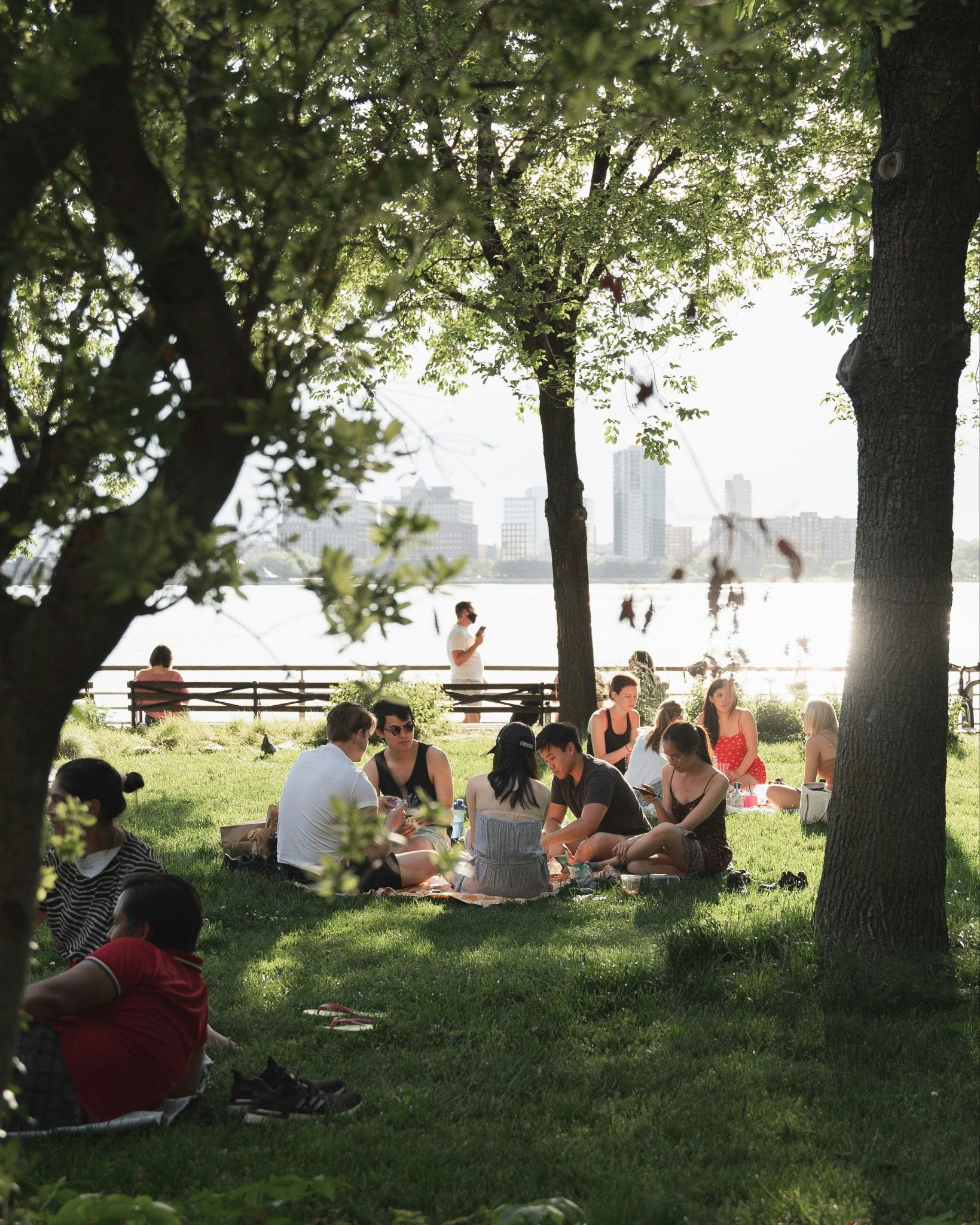
According to one version of Mesoamerican tradition, a new sun is born approximately every 5000 years, most recently in December, 2012. By this teaching, transmitted to me by Indigenous elder Charlie Toledo (Towa), a new 5000-year age has already begun: an age of peace and joy. Given our present global convulsions, this idea may strain credulity. Wars, oppression, poverty, and biophysical collapse didn’t stop in 2012. But change takes time, and the times are changing. For the purposes of this article, it doesn’t matter if this sequence of ages is factual. Consider it an invitation to try a new perspective. When I look at the world from this long-range view, I find it entirely plausible that we are entering an unprecedented era of peace.
Toledo describes the previous age, the past 5000 years, as one of war and oppression. The past 5000 years also roughly coincides with the advent of the city as a unit of human organization. We’ve all heard truisms like humans are naturally destructive. Yet our species, Homo sapiens, has successfully inhabited a functioning biosphere for some 300,000 years. And while prehistoric humans may have had a significant role in shaping environments, severe impacts on the environment date back only about 3000 years. Humans are not naturally destructive; rather, under certain material conditions, we are predictably destructive.
I propose that the fundamental material condition that has led to large-scale destructiveness is urbanization within a context of real resource scarcity. But the material condition of real scarcity has changed. We are on the cusp of a post-scarcity social order in which material abundance can break cycles of destruction and usher in a lasting age of peace and sustainability—if we let it.
Human behavior is shaped by material conditions. For most of human history, we have lived in nomadic hunter-gatherer groups, where the nomadic condition mitigated one group’s accumulation of power over others. Wealth could not be significantly hoarded because you had to carry everything with you. Damage to the environment was limited not only by Traditional Ecological Knowledge but by technological constraints: there were no plows, no steam engines, no automobiles to gouge the face of the Earth.
This began to change with the advent of settled agriculture. In a farming village, a degree of hoarding and, thus, wealth-based hierarchies became possible. Moreover, simply having fields and grain stores to defend made it inevitable that violent conflicts over resources would sometimes erupt. At the same time, farming provided such an attractive material buffer against food shortages that many populations adopted it.
The advent of the city intensified these factors. The first cities appeared about 7000 years ago, and by 5000 years ago, a number of cities with populations of tens of thousands were well established in Mesopotamia. Cities provided shelter from the elements, defense against invaders, and were necessarily accompanied by a large agricultural base and access to water. This significantly protected human populations from the vicissitudes of nature. Yet these same material conditions made violence and domination likely, though not, as Graeber and Wengrow note, universal.
“Precarity” is broadly defined as “the state of being uncertain or likely to get worse.” When people perceive precarity (for example, over food access), they will hoard to evade it. Until quite recently, perceived precarity was driven by real scarcity. Famines could be planned for but not fully avoided. Floods, droughts, plagues of locusts, and so on could devastate communities. Certainly, scarcity could be mitigated by redistributing wealth, even in an ancient city, but it could not be overcome. Real scarcity provided a motive for hoarding, and the stationary edifices of cities provided the means. Thus, hoarding wealth became a standard practice.
Wealth, in turn, is a proxy for power. If some hold significant power over others, the result will predictably be oppression. The rich dominate the poor, husbands their wives, adults their children, citizens foreigners, humans other animals, and so on. Finally, because cities themselves contain concentrated wealth and power, they are targets for military incursion by those who want that wealth and/or fear that power. Thus, violence became a major instrument by which power was both imposed and challenged.
The kingdom and nation state are further developments of this model, but the basic problem has remained. As I write this, cities are being bombed because the people doing the bombing are afraid of those societies or want their wealth or both. As I write this, wealthy hoarders continue to strip the poor of resources. No wonder people who live within these systems of oppression often feel they are inevitable.
But they are not. In the 19th and 20th centuries, we crossed into a fundamentally different type of material condition. The Industrial Revolution caused (and still causes) enormous misery and destruction, but it also launched a period of technological innovation that gave human beings a qualitatively new level of control over their local environments. New agricultural technologies proved Malthus’s fears of food scarcity wrong. New medical knowledge caused infant and maternal mortality rates to plummet. Electricity provided new and flexible protection from heat and cold. By the 1960s, the advent of fairly reliable contraception in the form of the pill not only significantly reduced reproductive oppression but also meant humans could, theoretically, manage population sizes to enable material “enoughness” for all people in perpetuity. Sixty years ago, we already had all the tools to create a truly post-scarcity world.
Cities are here to stay. But within their own borders, many urbanized countries today have low rates of violence. Though factors that affect well-being within a nation are complex, countries with low crime rates generally have relatively low poverty rates and score high in meeting their populations’ socioeconomic needs (Kallis et al., 2025, figure 5). This is not surprising. When humans experience comparatively low stress, we are predictably less aggressive (see Sapolsky, pp. 131-34), and escaping socioeconomic precarity, of course, reduces stress.
Under our current global economy, prosperous nations are sustained by exploitation of the Global South. But this exploitation occurs because global capitalism requires perpetual growth to keep from falling into recession, not because it is necessary to meet human needs (see Kallis, et al., 2025). Remove unnecessary financial speculation, planned obsolescence, bizarrely long supply chains (and commutes), and general rewarding of depredation, and these nations could still support their populations’ well-being (see Vogel, 2023, chapter 3.7). It is likely, therefore, that those populations would remain largely peaceful.
We are a post-scarcity urban civilization sputtering through the last gasps of the ideology of scarcity. We have the tools we need to enter a new era of lasting peace. Of course, climate collapse is on the cusp of imposing a new regime of real scarcity. The window is closing on our opportunity to make this ideological transition to post-scarcity without (even more) catastrophic loss of life. But this is not a reason for despair; it’s a reason for radical, optimistic action now. Many policy proposals suggest a path to post-scarcity social systems. Ways to get involved include the International Degrowth Network, local degrowth groups, democratic socialist political parties, and groups such as Braver Angels committed to honest civic communication across party lines. In the words of Arundhati Roy, “Another world is not only possible, she’s on her way.”
References:
Sapolsky, R. M. (2017). Behave: The psychology of humans at our best and worst. Penguin Books.
 | A guest post by
|