
Technical issues with renewables
Climate, the environment, and degrowth - Part 2

This is the second article in a multi-part series. To read the first article, click here.
The debate over the cost of modern renewable energy technologies like wind turbines and solar PV ("renewables") is quite uncertain. One of the reasons that the debate over the cost of renewables is so uncertain is that there are a number of unresolved technical issues with renewable energy. The financial cost may not be the best indicator of the feasibility of renewables. A more relevant criterion may be “energy return on energy invested,” abbreviated EROEI (or sometimes, EROI). This standard doesn’t look at financial costs, but at energy costs.
EROEI of renewables
It takes energy to generate energy.
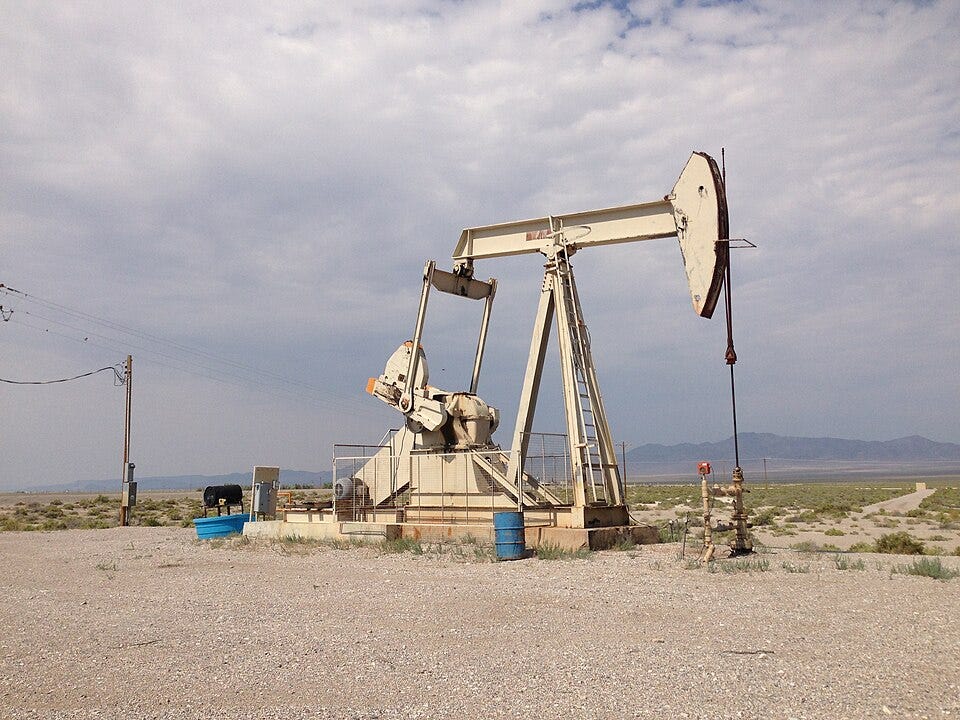
To drill an oil well, you need energy to manufacture the drilling equipment, trucks, and pipelines, in order to extract and transport the oil to market. What we need is an energy surplus: the energy return is greater than the energy invested. EROEI is usually expressed as a ratio, such as 10:1 or 25:1. It's still a relatively new concept. There is no standardized agreement as to how to calculate it. Different people include different things in the “energy invested” part of EROEI. To compare the widely divergent estimates, you need to look at them in some detail.
But conceptually, the idea is sound and gives us a way to understand possible problems with any energy source, whether renewables, fossil fuels, or nuclear power. In the Middle Ages in Europe, the energy surplus was small, much of it from agriculture, wood, and muscle power (human and animal). It enabled society to (usually) prevent the peasants from starving, and support a small number of kings, nobles, and clergy. Today, from fossil fuels, we have a huge surplus, enabling formal education for most people, a vast transportation network, modern medicine, and police. If the energy surplus is small, then the society will not be able to afford quite as much.
We can use EROEI to immediately exclude American corn ethanol as a viable energy solution. Without some dodgy accounting, the EROEI for corn ethanol is less than 1:1! Fossil fuels are used to grow all that corn. Corn ethanol is an energy sink, and is only enabled financially through huge government subsidies. (Hemp, however, appears somewhat better, in the region of 8:1.)
In 2013, Mason Inman estimated the EROEI of various energy sources in an article in Scientific American. Renewables aren’t too bad if we’re just talking about the energy (in the form of electricity) created; wind energy (at about 20:1) is actually better than the EROEI from conventional oil production (16:1). Solar panels come in at 6:1, hydroelectric power at 40:1, and Alberta Tar Sands oil and nuclear power at 5:1. However, others have said that the EROEI of solar panels may actually be improving, to about 10:1 or 15:1.
But these EROEI estimates don’t always count the supporting infrastructure. Inman specifically excluded infrastructure dealing with the intermittency of renewables (see next section); therefore, the EROEI of the entire system—renewables plus infrastructure—is unclear. Two Spanish researchers estimated the EROEI of renewables as being relatively low — in the region of 2.9:1 for onshore wind, and 1.8:1 for solar PV. At these levels of EROEI, we might only be able to support a much more limited public infrastructure of medicine, transportation, and education. EROEI is a good conceptual tool, and gives us plenty of research projects, but it gives us more questions than answers. All of this further illustrates the uncertainty surrounding renewable energy.
Intermittency
What do you do when the wind doesn’t blow and the sun doesn’t shine? The intermittency of solar and wind power is a key complicating factor in determining the EROEI of renewables.
There are various possibilities. To help guarantee that some source, somewhere, would always be operational, we could “overbuild” renewables; or we could use transmission lines to connect different areas with each other; or, you could store any surplus energy in some form. Batteries are one obvious, though quite expensive, choice. But storing surplus energy from renewables by creating hydrogen gas, and storing the hydrogen for use later, seems to be the favored choice for Jacobson and other renewables advocates.
No one knows yet how this will all work. Even supporters of renewables acknowledge that hydrogen “faces significant challenges,” and that hydrogen storage involves complexity and higher costs. Whatever we choose, incorporating that infrastructure into EROEI calculations will lower the EROEI of renewables somewhat. One bit of good news — right now, we already have a backup system for renewable energy! It’s the fossil fuel system. If it’s cloudy and windless, just switch over to fossil fuels. Of course, then we haven’t completely rid ourselves of fossil fuels.
Infrastructure changes
In addition, renewables will require numerous other infrastructure changes, because solar PV, wind turbines, and hydroelectric dams produce electricity. But most of our energy does not come from electricity. Obviously, cars and trucks rely on gasoline or diesel, and many buildings utilize natural gas for heating. We’ll need to figure out how to perform these functions just on electric energy, which is trickier than it may seem.
Heavy industry (such as steel manufacture) often requires very high and steady temperatures which are difficult or impossible to provide only using electricity. Using renewable electricity to create hydrogen gas, and then burning the gas—suggested by Jacobson—seems relatively best, but could be quite expensive, increasing costs in our current market economy by 10% to 200%, depending on the heat supply, industrial sector, and specific application.
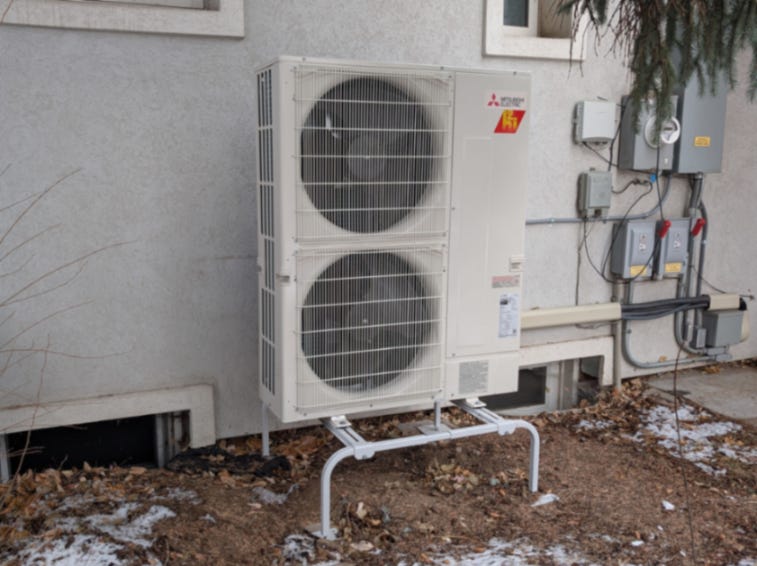
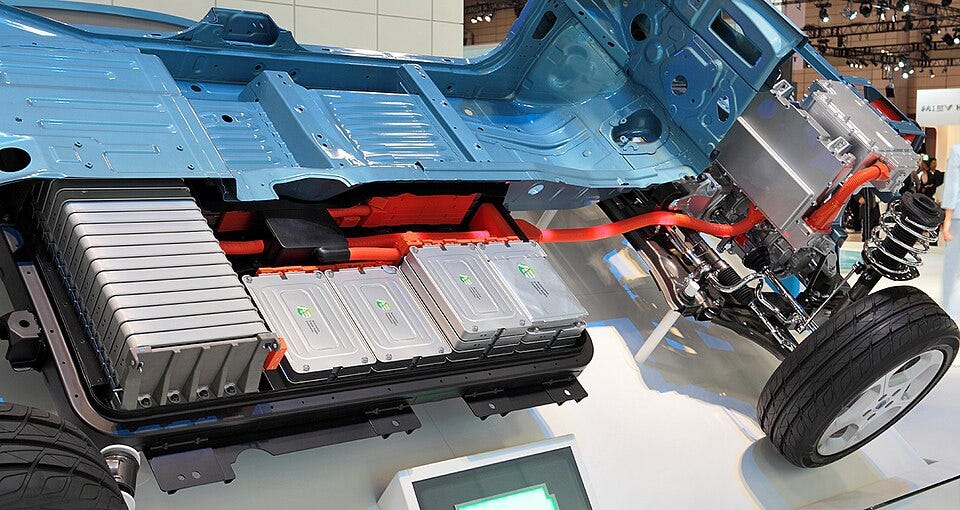
In some cases, electric substitutes work well. Electric heat pumps (to replace natural gas heating) are getting better and better. Transportation, however, could be quite difficult to run on electricity. Electric cars tend to be more expensive, have limited driving range, and currently don’t have as much infrastructure support as gasoline-powered cars. Competitive electric heavy-duty cargo trucks, which can weigh 40 times more than a car, may always be out of reach; the batteries would weigh too much. Currently, the initial cost of an electric truck is two to three times more than a standard diesel model, the cost is not expected to competitive in the near future, and they still require additional infrastructure (e. g. charging stations). Electrified rail is also possible, but still requires many infrastructure additions.
Materials issues
Large-scale production of lithium-ion batteries (for car batteries, or to back up renewables) may create lithium shortages. There have been widely-divergent estimates of just how much lithium is readily accessible— yet another example of how inexact our knowledge of critical resources is. Sodium-ion batteries are an alternative; there's 400 times as much sodium on the planet as lithium. But because sodium also weighs more than lithium, this won't help electric cars or trucks.

Modern renewables also often need rare earth metals or other scarce resources, which are also needed for much of our other modern technology (such as computers, refrigerators, TVs, and smart phones). Modern technology and renewable energy may be in direct conflict for the same diminishing supplies. Thomas Graedel, in 2012, was quoted as saying that to provide most of our energy through renewables would require expanding mining of rare-earth metals by hundreds of times.
Land use
Wind turbines have a substantial land “footprint”; they cannot be situated too close to each other, or they will interfere with the efficient use of other wind turbines. The supply of suitably windy sites is large, but not infinite. To supply all US energy from wind power would take over 500,000 square kilometers, an area larger than the state of California.
In between wind turbines, there is theoretically extra space which could be used for other purposes, like agriculture. But humans wouldn’t like it. The turbines are noisy, making what many call a “swishing” or “thumping” sound — distinctive not because of the volume of the noise, but its unusually low frequencies. Wildlife probably wouldn’t be very enthusiastic either; bats, at least, don’t like the noise. There will likely be a conflict between wind energy and any biodiversity solutions we might want to implement.
Conclusions
Our knowledge is inexact and research is continuing. None of these issues is necessarily fatal to the project of building out a massive renewable energy system to replace (or largely replace) fossil fuels. But the impact of each issue is cumulative, and each will lower the EROEI of the total system. Each of them requires thought, research, and discussion. With limited funding, there’s only so much researchers can do. The lack of discussion and research then becomes another problem we need to deal with.
None of this means that we shouldn’t build renewables anyway, or continue our use of fossil fuels! But we can’t just assume that with renewable energy, we can do everything we’re doing right now and it will all be wonderfully renewable. We need to be thinking in terms of decreasing—not ramping up—exploitation of the earth and exploitation of each other. We need to be thinking in terms of degrowth.
 | A guest post by
|
Have you written anything yet about Data Centers? Erin Brockovich is live here on Substack right now discussing this issue. Apparently one of these monsters can suck up several hundred thousand gallons of water or even several million in a single day!
Go vegan!