
Sembrando comunidad y derechos en el rural gallego / Sowing community and rights in the Galician countryside
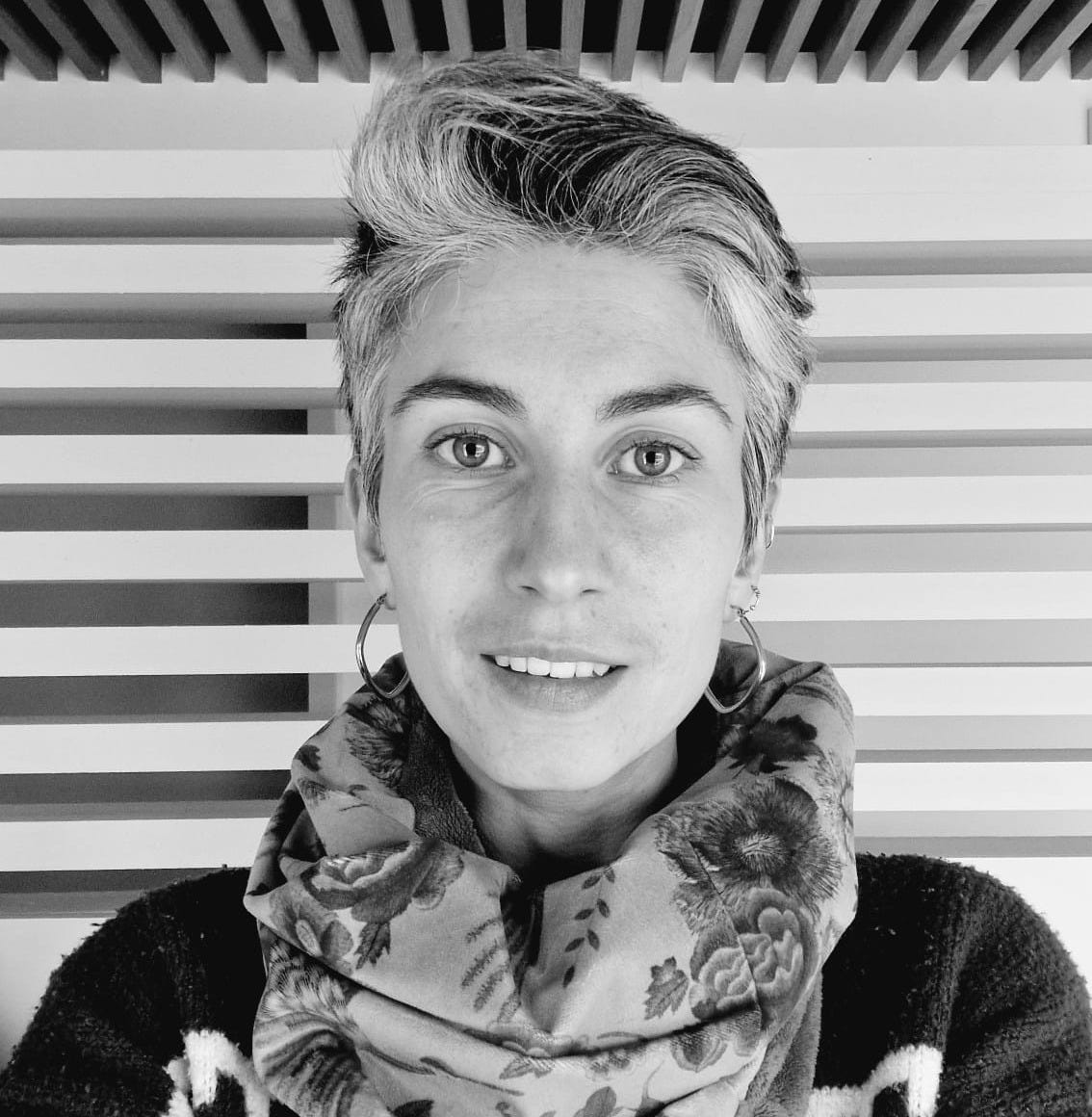
Entrevista de Charline "Carlota" Ducottet / Interview with Charline "Carlota" Ducottet

English translation further down
Alan: Buenas tardes, Charline. Gracias por tu tiempo. Me gustaría empezar por tu recorrido personal. Estudiaste Derecho y Ciencias Políticas, una trayectoria muy intelectual. ¿Cómo llegaste a dedicarte a tiempo completo a la agricultura?
Charline: Es cierto que estudié Derecho y Ciencias Políticas, pero lo hice un poco por inercia, sintiéndome algo perdida. Sin embargo, siempre tuve una conexión latente gracias a mi madre, que valoraba mucho la alimentación de calidad, y a mi abuelo, que cultivaba su huerto. Cuando terminé mis estudios y me pregunté qué quería hacer realmente, la intuición me llevó de vuelta a esa importancia de la alimentación.
Como no tenía formación técnica, empecé poco a poco. Hice una memoria sobre agricultura ecológica y eso me permitió conocer a agricultores en Lyon. Me impactó su humildad y su disposición a enseñar a alguien que no sabía nada; esa conexión humana fue decisiva. Posteriormente, trabajé en el instituto de investigación INRAE, en Francia, en un equipo dedicado a recuperar variedades locales de bancos de germoplasma para volver a cultivarlas. Allí entendí cuánto hemos perdido desde la posguerra con la llegada de la agricultura productivista: sabor, nutrientes y biodiversidad. Ver que el oficio de campesina está desapareciendo, a pesar de ser imprescindible para comer, me hizo sentir que debía dedicar mi energía a esto.
Alan: Tu experiencia actual es un híbrido interesante: vives en Pontevedra pero trabajas la tierra, rompiendo el mito de que hay que irse a lugares remotos para cultivar. Cuéntanos, ¿en qué consiste tu trabajo para la asociación Boa Vida?
Charline: Boa Vida es una asociación de inclusión social vinculada al movimiento Emaus, cuyo objetivo es erradicar la pobreza y acoger a personas migrantes. Mi labor allí es gestionar lo que llamamos una huerta social o comunitaria.
Nos reunimos varias veces por semana. La sesión siempre empieza con un “círculo de bienvenida” para ver cómo estamos y calentar el cuerpo. Luego repartimos tareas: mantenimiento, desbroce, siembra o cosecha. No buscamos una producción industrial, sino formar en principios de agroecología: rotación de cultivos, acolchado del suelo y uso responsable del agua, como el sistema de recuperación de lluvia que estamos instalando. Lo más bonito es que la huerta es una herramienta para crear comunidad; no soy una monitora que impone soluciones, sino que aprendemos y resolvemos problemas entre todas.
Alan: En tu artículo enfatizas el valor social. ¿Qué impacto has observado en las personas que forman parte de este programa, muchas de las cuales llegan en situaciones vulnerables?
Charline: El impacto es muy visible. Para muchas personas que no trabajan, la huerta les ofrece una rutina y una estructura semanal. Valoran enormemente la conexión con la naturaleza y el estar al aire libre, algo que a veces se pierde en situaciones de precariedad. Pero lo más crucial es la comunidad: muchas llegan solas al territorio y aquí encuentran un grupo que las sostiene.
Además, existe una pequeña beca económica que, aunque modesta, ayuda a fomentar el compromiso y la continuidad. También funciona como formación práctica; por ejemplo, aprender a usar la desbrozadora les abre puertas laborales en el mantenimiento de fincas.
Alan: Mencionabas retos sobre la continuidad, tanto de los participantes como del acceso a la tierra. ¿Cómo crees que podría garantizarse mejor la estabilidad de proyectos como este?
Charline: El acceso a la tierra es un gran obstáculo. Nosotros trabajamos en una finca cedida por un particular, pero cada año tenemos que renegociar, lo cual genera incertidumbre. Si construimos un invernadero, no sabemos si al año siguiente tendremos que desmontarlo. Creo que para la agricultura son necesarios contratos de cesión de mínimo 10 o 15 años.
En Francia existe un modelo inspirador llamado Terre de Liens, una fundación que compra tierras gracias a donaciones y las cede a agricultores con proyectos serios, evitando que tengan que endeudarse de por vida para acceder al suelo. En Galicia existe el Banco de Terras, que es una iniciativa interesante para conectar propietarios con personas que quieren cultivar, y creo que es una vía que debemos explorar más para democratizar el acceso al campo sin necesidad de tener un gran capital.
Alan: Además de tu labor en la huerta, formas parte del Sindicato Labrego Galego. ¿Por qué es importante para ti sindicalizarte y qué aporta un sindicato en este sector?
Charline: La profesión campesina es extremadamente precaria y solitaria. Si estás aislada, es muy difícil sobrevivir a las condiciones económicas y de vida tan duras del campo. Organizarse es imprescindible para tener voz y defender nuestros derechos.
Mi sindicato pertenece a la Vía Campesina, un movimiento internacional. Esto nos permite no solo luchar por mejoras locales, sino defender un modelo de agricultura frente a proyectos extractivistas y capitalistas globales. Sin una organización detrás, la pequeña agricultura agroecológica sería invisible en las negociaciones políticas.
Alan: Tu sindicato tiene una clara vocación feminista y ecologista. ¿Cómo se diferencia esto en el día a día respecto a un modelo sindical más patriarcal o productivista?
Charline: La diferencia es fundamental. Nosotros defendemos la agroecología y la pequeña escala, mientras que los sindicatos mayoritarios suelen alinearse con el modelo industrial que impera en Europa.
Pero el rasgo distintivo más potente es la Secretaría de la Mujer. Históricamente, las mujeres en el campo han sido invisibles; trabajaban igual o más que los hombres, pero no tenían la titularidad de las tierras ni derechos reconocidos. Eran vistas como “ayudantes”. El sindicato ha luchado mucho, por ejemplo, por la Titularidad Compartida, para que las mujeres sean dueñas de sus proyectos y tengan derechos administrativos y económicos. El enfoque feminista es vital porque las mujeres son quienes sostienen la alimentación y el territorio, pero a menudo están ausentes de los espacios de poder y decisión.
Alan: Un ejemplo actual de estas luchas es la oposición al acuerdo de Mercosur. ¿Cuál es vuestra postura?
Charline: Nos oponemos porque pone en peligro directo a la pequeña agricultura. Ese acuerdo permitiría la entrada de productos cultivados con normativas laborales y sanitarias mucho más laxas (uso de pesticidas prohibidos aquí, mano de obra barata), lo que tiraría los precios por los suelos.
No podemos competir contra eso, y el resultado será el cierre de más granjas locales que sí cuidan el medio ambiente y la salud. Mientras otros ven una oportunidad comercial para exportar coches o industria, nosotros vemos una amenaza para la soberanía alimentaria y la supervivencia del tejido rural.
Alan: Para ir cerrando, ¿qué mensaje darías a la gente urbana y al ecologismo para que sean verdaderos aliados del campo y rompan esa desconexión?
Charline: Debemos romper la dualidad consumidor-productor. La responsabilidad de una alimentación sana y sostenible no puede recaer solo en los hombros de quien produce, que ya carga con la burocracia, el clima y los precios bajos.
A la gente de ciudad le diría: acercaos. Id a los mercados locales, conoced a quien produce vuestra comida. No se trata solo de una transacción económica. Ofreced ayuda puntual; a veces un agricultor necesita manos para cerrar una finca o plantar, y esos intercambios crean vínculos reales y rompen la soledad del campo. Modelos como los grupos de consumo o la agricultura sostenida por la comunidad, donde los consumidores se comprometen con el productor, son vitales. Nos afecta a todas: si comemos mal, enfermamos todas. Tenemos que entender que apoyar a la agroecología es defender nuestra propia salud y futuro.
Alan: Muchas gracias, Carlota, por tu claridad y por tu trabajo.
Link a la entrevista completa en video.
Link al proyecto de huerta inclusiva.
Link al sindicato labrego galego.
Sowing community and rights in rural areas
English Translation
Alan: Good afternoon, Charline. Thank you for your time. I would like to begin with your personal journey. You studied Law and Political Science, a very intellectual path. How did you end up dedicating yourself full-time to agriculture?
Charline: It’s true that I studied Law and Political Science, but I did so somewhat out of inertia, feeling a bit lost. However, I always had a latent connection to agriculture thanks to my mother, who valued high-quality food, and my grandfather, who cultivated vegetables. When I finished my studies and asked myself what I really wanted to do, my intuition led me back to food production.
Since I had no technical training, I started little by little. I wrote a thesis on organic agriculture, which allowed me to meet farmers in Lyon. I was deeply struck by their humility and their willingness to teach someone who knew nothing; that human connection was decisive. Later, I worked at the INRAE research institute in France, on a team dedicated to recovering local varieties from germplasm banks in order to cultivate them again. There, I understood how much we have lost since the postwar period with the arrival of productivist agriculture: flavor, nutrients, and biodiversity. Seeing that the peasant profession is disappearing, despite being essential for feeding us, made me feel that I had to dedicate my energy to this.
Alan: Your current experience is an interesting hybrid: you live in Pontevedra but work the land, breaking the myth that one has to move to remote places to farm. Tell us, what does your work for the Boa Vida association consist of?
Charline: Boa Vida is a social inclusion association linked to the Emmaus movement, whose objective is to eradicate poverty and welcome migrant people. My role there is to manage what we call a social or community garden.
We meet several times a week. Each session always begins with a “welcome circle” to check in with how we are feeling and warm up our bodies. Then we divide tasks: maintenance, clearing brush, sowing, or harvesting. We are not seeking industrial production, but rather training in agroecological principles: crop rotation, soil mulching, and responsible water use, such as the rainwater harvesting system we are installing. The most beautiful part is that the garden is a tool to build community; I am not an instructor imposing solutions — we learn and solve problems together.
Alan: In your article you emphasize social value. What impact have you observed on the people who are part of this program, many of whom arrive in vulnerable situations?
Charline: The impact is very visible. For many people who are not working, the garden offers a routine and weekly structure. They deeply value the connection with nature and being outdoors, something that is often lost in situations of precarity. But what is most crucial is the community: many arrive alone in the region, and here they find a group that supports them.
There is also a small financial stipend which, although modest, helps foster commitment and continuity. It also functions as practical training; for example, learning how to use a brush cutter opens up job opportunities in land maintenance.
Alan: You mentioned challenges regarding continuity, both for participants and access to land. How do you think the stability of projects like this could be better guaranteed?
Charline: Access to land is a major obstacle. We work on land lent by a private individual, but every year we have to renegotiate, which creates uncertainty. If we build a greenhouse, we don’t know whether the following year we will have to dismantle it. I believe that agriculture requires land-use agreements of at least 10 or 15 years.
In France there is an inspiring model called Terre de Liens, a foundation that buys land thanks to donations and leases it to farmers with serious projects, preventing them from having to go into lifelong debt just to access land. In Galicia there is the Banco de Terras, which is an interesting initiative to connect landowners with people who want to cultivate, and I believe it is a path we need to explore further to democratize access to farmland without requiring large capital.
Alan: In addition to your work in the garden, you are part of the Sindicato Labrego Galego. Why is it important for you to be unionized, and what does a union contribute in this sector?
Charline: The peasant profession is extremely precarious and lonely. If you are isolated, it is very difficult to survive the harsh economic and living conditions of the countryside. Organizing is essential to have a voice and defend our rights.
My union belongs to La Vía Campesina, an international movement. This allows us not only to fight for local improvements, but also to defend a model of agriculture against global extractivist and capitalist projects. Without an organization behind us, small-scale agroecological farming would be invisible in political negotiations.
Alan: Your union has a clear feminist and environmental vocation. How does this differ in daily practice compared to a more patriarchal or productivist union model?
Charline: The difference is fundamental. We defend agroecology and small-scale farming, while the majority unions tend to align with the industrial model that dominates Europe.
But the most powerful distinguishing feature is the Women’s Secretariat. Historically, women in the countryside have been invisible; they worked as much or more than men, but did not hold land titles or recognized rights. They were seen as “helpers.” The union has fought hard, for example, for Shared Ownership (Titularidad Compartida), so that women are co-owners of their projects and have administrative and economic rights. The feminist approach is vital because women sustain food production and the territory, yet are often absent from spaces of power and decision-making.
Alan: A current example of these struggles is opposition to the Mercosur agreement. What is your position?
Charline: We oppose [the agreement] because it directly endangers small-scale farming. That agreement would allow the entry of products grown under much looser labor and sanitary regulations (use of pesticides banned here, cheap labor), which would drive prices down dramatically.
We cannot compete against that, and the result would be the closure of more local farms that do care for the environment and public health. While others see a commercial opportunity to export cars or industrial goods, we see a threat to food sovereignty and the survival of rural communities.
Alan: To conclude, what message would you give to urban people and to environmental movements so that they can become true allies of rural areas and break this disconnection?
Charline: We must break the consumer-producer divide. The responsibility for healthy and sustainable food cannot rest solely on the shoulders of producers, who already carry the burden of bureaucracy, climate pressures, and low prices.
To people in cities, I would say: come closer. Go to local markets, get to know the people who produce your food. It is not just an economic transaction. Offer occasional help; sometimes a farmer needs extra hands to fence a field or plant crops, and these exchanges create real bonds and break the loneliness of rural life. Models such as consumer groups or community-supported agriculture, where consumers commit to producers, are vital. It affects all of us: if we eat poorly, we all get sick. We must understand that supporting agroecology means defending our own health and future.
Alan: Thank you very much, Carlota, for your clarity and for your work.
Link to the full video interview.
Link to the inclusive garden project.
Link to the Sindicato Labrego Galego.
 | A guest post by
|