
Living well within limits
Interview with Professor Julia Steinberger

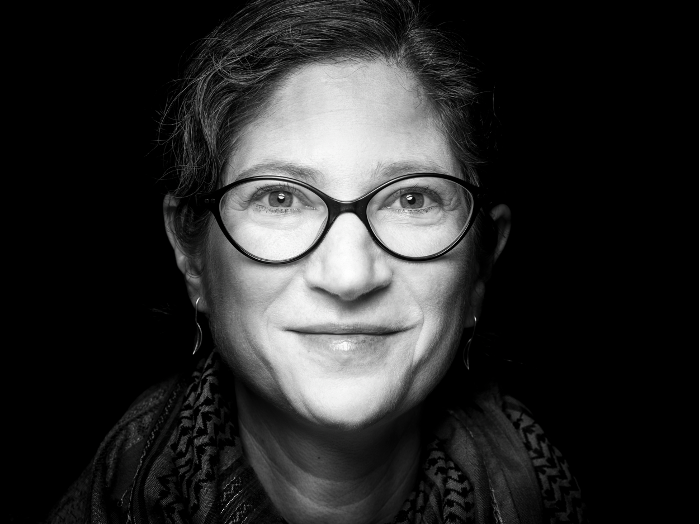
Prof. Julia Steinberger researches and teaches in the interdisciplinary areas of Ecological Economics and Industrial Ecology. Her research examines the connections between resource use (energy and materials, greenhouse gas emissions) and societal performance (economic activity and human well-being). She is interested in quantifying the current and historical linkages between resource use and socioeconomic parameters, and identifying alternative development pathways to guide the necessary transition to a low carbon society. She is the recipient of a Leverhulme Research Leadership Award for her research project ‘Living Well Within Limits’ investigating how universal human well-being might be achieved within planetary boundaries. She is Lead Author for the IPCC’s 6th Assessment Report with Working Group 3.
Vlad Bunea: What does living well within material limits look like in 2026? Could you give us some numbers in terms of energy consumption, food consumption, living space, use of materials etc.?
Julia Steinberger: “Living Well Within Limits“ is the topic of my 2017-2023 research project. First we had to define well-being: what does it mean for people to be able to live in good, healthy conditions, and be able to participate in their societies? We were inspired by Yale University Professor Narasimha Rao’s concept of Decent Living Standards to try to model them globally. The Decent Living Standards describe a bundle of energy and material services: a warm space to live, sufficient healthy nutrition, access to communication and education infrastructure, and so on, that are well above poverty, and would indeed constitute the material basis for a life free of deprivation, with good social and communication conditions. However, Decent Living Standards are well below the living standards of many, or even most, in the industrialised world: the living space is smaller (15-20 m2 per person: the average Swiss dwelling is double or triple that), the travel distances shorter (5’000 - 15’000 person-km per year: the Swiss average is 14’400 person-km, without counting air travel), the material consumption more frugal in general. Moreover, our model was based on the most efficient technologies and infrastructures possible, meaning that the energy use associated with the decent living energy services is on average quite a bit lower than it would be today.
All of this is to say that “living well within limits” in 2026 is not within easy reach. The main levers are sufficiency (using only the minimum energy and material services necessary for a social and healthy life), and investing in infrastructure and technologies that enable good lives for all at lower energy and material use, including housing retrofit and heat pumps, public and active mobility transportation, plant-based diets, efficient appliances (induction stoves etc). These technology investments are not the usual ones we think about for climate or sustainability, because they are mostly on the demand side. Moreover, living well within limits requires far more equality: no poverty, but also no excess.
These extra requirements, investment on the demand side, and economic equality, bring us to the main requirement of living well within limits: system change, challenging power and wealth concentration. Without strong political movements to make demands for more equality and demand-side investment that ensures good living conditions for all, there is no possibility of living well, or returning within planetary boundaries.
Vlad Bunea: Some people in the Global North (the minority world) may associate these numbers you mentioned with a low standard of living, with poverty, with restrictions on their freedoms. How would you answer these concerns?
Julia Steinberger: As I explained above, the material and energy services in the Decent Living Standards are well above poverty. Any person in the world (with appropriate adjustment for disability or special life circumstances and health conditions) would be materially comfortable, as well as physically healthy, in a society that provided universal decent living standards. Indeed, decent living standards are well above what people living in deprivation, both in the Global North and in the Global South, experience. There are still tens of millions living in poverty in Europe and North America, and billions in the Global South. For all of these, the world we are describing constitutes a massive improvement.
Now we come to the question of mental and social well-being, and of freedom, as mentioned in your question. A reduction in living standards (dwelling space, travel habits, consumption in general) can, in some cases, be experienced as a loss, which would entail a decrease in well-being. However, we also have to consider the real, as opposed to imaginary, alternatives we are facing. A future of continued accelerating climate crises, ecosystem collapse, breaching of planetary boundaries and triggering of irreversible tipping points is one of guaranteed mass misery and death, with global food supplies collapsing, diseases and pandemics spreading, and the stability required for modern societies disappearing completely. Sadly, a hypothetical future of high consumption and high well-being is simply impossible, because high consumption is incompatible with remaining within planetary boundaries. A hypothetical future with a tiny minority of overconsumers, surrounded by a large majority of immiserated or barely surviving human population might be compatible with planetary stability. But who, except for a few psychopathic billionaires and world leaders, would argue for such a future? This is also not a future of prosperity, well-being or freedom.
So let’s come back to these ideas of well-being and freedom. We have now, as part of the REAL post-growth EU project, conducted a major comprehensive study on the determinants of well-being, led by Lea Tamberg of the University of Lausanne. It turns out well-being is determined by several categories of factors: individual need satisfaction, collective need satisfaction, and good governance. If all of these criteria are met, levels of well-being even higher than those achieved in the richest and highest consuming countries could be attained. What we learn from this study is that consumption itself is not the main determinant of well-being, but what consumption partially helps us achieve: to satisfy our needs, live in ways where we are secure from want, our loved ones and neighbours are secure from want, and we can all participate in life socially and politically.
This points to a far more important ideal of freedom than the narrow freedom alluded to in the question above. In the question, freedom is narrowly defined as consumer choice: the freedom to buy consumer goods and lifestyles in a market. Instead, the freedom that we discover is most important to human well-being, from studies such as the one by Lea Tamberg, is first and foremost freedom from deprivation, which is the basis for all other freedoms, and the freedom to engage with social interaction and democratic political decision-making. It thus seems that the freedoms that matter most are individual and collective freedom from deprivation, and the freedom to live and engage socially and politically. Rather than superficial consumers, humans are at their hearts social and political actors. Surely this is good news, and certainly entirely compatible with “living well within limits.”
Vlad Bunea: When human behavior is heavily determined by social, economic, and cultural contexts, can we hope that enough people will change their behavior towards a simpler lifestyle, fast enough so the climate crisis does not spin out of control?
Julia Steinberger: The notion that the only change necessary, or possible, is behaviour change, is itself a consumer-lens limit. The change necessary is political and social: the kind of massive change in the purpose and equality of the economy required to address the climate crisis can only be achieved by the strength of popular political movements. In any case, we see powerful actors, from Trump to Putin to Bin Salman hell bent on expanding fossil fuel profits and planetary as well as social destruction. The most important element of change has to be political, aligning with the legitimate desires of the vast majority of the human population to have material and economic security alongside political autonomy and emancipation. This is the direction we recently called for after an international workshop on the future of climate activism this summer.
Vlad Bunea: You’ve pointed out (on Medium and Substack) that the Atlas Network, a massive conglomeration of capitalist think tanks, is one of the greatest enemies to the continuation of life on Earth, and that we should fight it in all the ways we can. What are some of the ways in which we can fight them, and what should we avoid?
Julia Steinberger: I believe researchers, at universities, whose job it is to represent the public interest, should do more with our research skills to expose the greatest dangers to the well-being of our societies and our fellow citizens, who are the fossil fuel industry and their many lobbies, including the neoliberal Atlas Network think tanks. Some researchers are already doing fantastic work in this space, especially the Climate Social Science Network, led by Timmons Roberts and colleagues at Brown University. They have been exposing what they call “climate obstruction” in two major international reports, one on Europe and one global. Becoming aware of climate obstruction actors and tactics is one of the most important steps that any citizens and activists can take right now, so I would recommend having a look at these reports. The terrific investigative journalist Amy Westervelt is covering the topic of climate obstruction in the latest series of her prize-winning Drilled podcast, so I would also recommend learning about it through following her work. Naomi Oreskes and Eric Conway, both science historians, have written a monumental book in this space, called “The Big Myth,” already translated in many languages. This book exposes clearly over a century of American industrial interference in democracy to prevent social, economic and environmental oversight. Learning about industrial power and tactics is essential to fight these forces. The second action I would recommend is to join a democratic popular movement for systemic change. In the US, I am most inspired by the Democratic Socialists of America, the DSA, the party of Zohran Mamdani, now mayor of New York. In the UK, I am inspired by (and a member of) the Green Party, who are doing exactly the right thing with Zack Polanski: representing the material interests of the poorest classes, fighting the far right and wealth accumulation, and demonstrating that ecological and social demands are not in contradiction, but essential to each other. I think Die Linke in Germany is also doing great work in this direction, and hopefully people reading this in any country or space can find political movements to ally themselves with.
Vlad Bunea: In his famous poem (also featured in the film Interstellar, which is about the end of humans on Earth) Dylan Thomas wrote: “Good men, the last wave by, crying how bright / Their frail deeds might have danced in a green bay, / Rage, rage against the dying of the light.” How do we choose and direct the proper kind of rage in these dark times?
Julia Steinberger: I advocate for scientifically informed rage. We need natural and physical science to understand the reality of the climate crisis, of our planet on the brink of destabilising life support systems. We need social science and humanities to understand how powerful actors have acted, and continue to act, to accumulate power and prevent joint social and environmental democratic measures. Scientific understanding, both natural and social, is essential to comprehend the emergency of our time. And that understanding, especially the social and political part, can only lead to rage. The fossil fuel industry has known about the physical reality of climate change since the late 1950s. They developed scientific programs and hugely accurate climate models demonstrating the warming effect of their industry. Yet they continued to invest in fossil fuel infrastructure expansion, lobbying and climate science denial. They are truly monsters, acting against the interests of all life on earth, not just on climate, but on plastics as well. So the more we know and understand, the more we can communicate this reality to others, the more effectively we can fight them by organising together in popular movements.
Vlad Bunea: Thank you, Julia.
This is a very challenging and interesting topic. I also saw your MOST EXCELLENT article (Millward-Hopkins was the lead author) on “Providing decent living with minimum energy”. This is all a bit over my head, but I loved the conclusions. Several questions occur to me.
First, sometimes the most energy-efficient way of producing something is destructive in other ways, such as pasture-raised livestock, which doesn’t take a lot of energy but is destructive of plant life (e. g. deforestation) and creates methane. Do we need a similar analysis for other resources besides energy, e. g. water, metals, and soil?
Second, are you envisioning an all-renewable-energy economy, or just a drastically reduced economy using fossil fuels, something in between, or just not addressing this issue right now?
Third, I’m trying to visualize the social order that this level of energy consumption implies. Is such a society without any real social hierarchy? How would you answer critics who might say that any advanced technological civilization will need some sort of hierarchy and “incentives”?