
Incendios, abandono y precariedad // Wildfires, Rural Abandonment and Precarious Working Conditions
Una conversación con Adrián Pastor González // A Conversation with Adrián Pastor González

Scroll further down for English Translation…
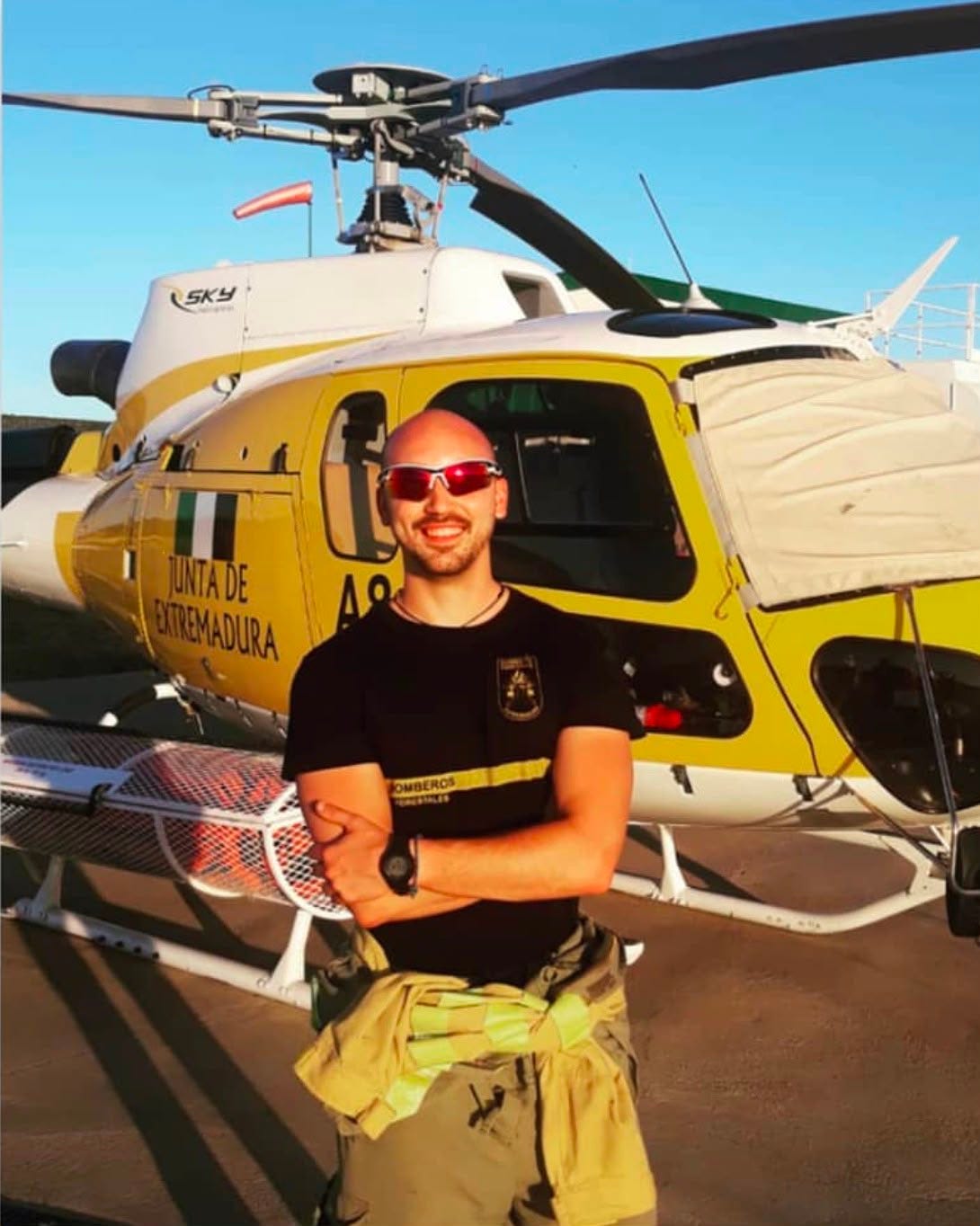
Adrián Pastor González es bombero y técnico en emergencias, con una amplia trayectoria profesional que incluye su experiencia como bombero forestal y jefe de una unidad helitransportada. Actualmente trabaja como bombero conductor y mantiene un firme compromiso con la formación y la profesionalización del sector.
Es cofundador de Nexo Emergencias, una plataforma dedicada a la consultoría, la organización de eventos y la divulgación especializada en protección civil. También impulsa el pódcast FIRESPACE, en el que analiza la actualidad, los retos y las tendencias del ámbito de las emergencias, tanto para profesionales como para el público general.
Su trabajo combina la experiencia operativa sobre el terreno con una clara vocación por formar, informar y conectar a la comunidad dedicada a la prevención y respuesta ante emergencias.
Alan: Buenos días, Adrián. Muchas gracias por dedicarnos parte de tu tiempo y participar en esta entrevista. Para empezar, ¿podrías contarnos un poco sobre ti, tu trayectoria y qué te llevó a dedicarte al mundo de los bomberos y las emergencias?
Adrián: Buenos días, Alan. Muchas gracias a vosotros por invitarme. La verdad es que llegué al mundo de los bomberos un poco por casualidad, ya que no tengo antecedentes familiares relacionados con esta profesión. Mi interés comenzó durante una excursión, en la que pude conocer más de cerca el trabajo de los bomberos. A partir de ese momento nació en mí una gran pasión y curiosidad por este oficio.
Siempre he tenido vocación de servicio y me ha gustado ayudar a los demás. Además, me interesan mucho la actividad física, los vehículos y el trabajo en equipo, aspectos que están muy presentes en esta profesión.
También me identifico con una frase que dice: «Es mejor ser un guerrero en un jardín que un jardinero en una guerra». Para mí, representa la importancia de estar preparado para afrontar situaciones difíciles, aunque esperemos no tener que vivirlas.
Alan: Me gustaría comenzar hablando de los incendios forestales. ¿Cuáles son sus principales causas y qué factores deben coincidir para que un incendio evolucione hasta convertirse en un gran incendio forestal?
Adrián: Para que un incendio evolucione hasta convertirse en un gran incendio forestal suele darse una combinación de varios factores. Entre ellos se encuentran la falta de medios operativos suficientes, la dificultad geográfica del terreno y unas condiciones climatológicas adversas, como las altas temperaturas, el viento fuerte o la baja humedad. A lo que tenemos que añadir la alta presencia de combustible disponible para arder.
También influyen factores sociales y económicos. El abandono de las zonas rurales y la falta de gestión forestal provocan una acumulación progresiva de biomasa, es decir, de vegetación seca y combustible natural. Cuando esa cantidad de combustible es elevada, el fuego puede propagarse con mucha más rapidez e intensidad.
Por eso es fundamental contar con una gestión forestal ordenada e integral. Sin embargo, actualmente la economía forestal resulta poco rentable en muchos lugares, por lo que esa biomasa no se aprovecha suficientemente ni como fuente de energía ni como materia prima. Esto favorece su acumulación y aumenta el riesgo de incendios de gran magnitud que superen las capacidades de extinción de los dispositivos.
Alan: A menudo escuchamos que prevenir es mejor que apagar. ¿Qué medidas son realmente eficaces para reducir el riesgo de grandes incendios? ¿Qué administraciones, organizaciones o actores tienen mayor capacidad para aplicarlas?
Adrián: Una de las medidas más eficaces es crear zonas de seguridad alrededor de los entornos urbanos y de las viviendas cercanas al monte. Estos perímetros, que pueden ser de unos 25 metros dependiendo de la exposición, la vegetación y las características del entorno, ayudan a reducir la continuidad del combustible y dificultan que el fuego alcance las edificaciones.
También es necesario actuar sobre la masa forestal. Aunque solo se gestione una parte del territorio cada año, retirar biomasa, reducir la densidad de vegetación y romper la continuidad del combustible puede marcar una gran diferencia. El objetivo no es eliminar el bosque, sino mantenerlo en mejores condiciones para evitar que un incendio se propague con tanta rapidez e intensidad.
Otra medida importante es favorecer la recuperación de las zonas rurales. La ganadería extensiva, el aprovechamiento de los recursos forestales y la presencia de población en el territorio contribuyen a mantener el monte cuidado. El abandono rural provoca que se acumule vegetación sin gestionar y aumenta el riesgo de grandes incendios.
Por ello, hacen falta planes integrales de prevención que combinen la gestión forestal, la planificación urbanística, la actividad económica rural, la educación y la preparación de los servicios de emergencia.
Las administraciones públicas tienen una gran responsabilidad, pero también deben participar los propietarios forestales, los ayuntamientos, las comunidades autónomas, el Estado, el sector ganadero y la población local. Sería necesario alcanzar un pacto de Estado que permitiera trabajar con una estrategia común y a largo plazo, dejando de convertir los incendios en una guerra cultural o política.
Además, debemos evitar desviar toda la atención hacia los pirómanos. Aunque los incendios provocados existen y deben perseguirse, centrarse únicamente en ellos puede ocultar problemas estructurales como la falta de gestión forestal, el abandono rural y la ausencia de políticas preventivas continuadas.
Alan: Muchas de estas medidas son conocidas desde hace años. ¿Por qué crees que todavía no se aplican de manera suficientemente amplia o coordinada?
Adrián: Uno de los principales problemas es la desconexión que existe entre la mayor parte de la población y el territorio rural. Aproximadamente el 90 % de la población vive concentrada en una parte muy pequeña del territorio, por lo que muchas personas no conocen de cerca la realidad del monte ni las dificultades que supone mantenerlo y gestionarlo.
Esta falta de contacto hace que la prevención de incendios no siempre se perciba como una prioridad hasta que ocurre una gran emergencia. Sin embargo, la gestión forestal debe realizarse de manera constante y a largo plazo, no solamente cuando los incendios ocupan los titulares.
Por eso, combatir la despoblación rural es también una medida de prevención. Mantener población, actividad económica y servicios en estas zonas permite que haya personas cuidando el territorio, aprovechando sus recursos y detectando los problemas antes de que se conviertan en grandes emergencias.
Como han señalado expertos en gestión forestal, entre ellos Paco Castañares, no podemos separar la conservación del monte de las personas que viven y trabajan en él. Para aplicar estas medidas de forma amplia y coordinada hacen falta continuidad política, inversión y una visión común del territorio.
Alan: ¿Cómo se vive un gran incendio desde dentro? ¿Podrías compartir alguna experiencia que ayude a entender las condiciones, la presión y las decisiones que afrontan los equipos de emergencia sobre el terreno?
Adrián: Un gran incendio se vive con una sensación enorme de impotencia. Estás rodeado de calor, peligro y tensión máxima. Caen árboles, vuelan piedras por las descargas de los medios aéreos y el comportamiento del fuego puede cambiar en cuestión de segundos. Es una situación dantesca, probablemente lo más parecido a una guerra que se puede vivir en este contexto.
En alguna ocasión he tenido que acabar en el hospital por inhalación de gases y compañeros han tenido que ser evacuados por caídas y fracturas. Pero, más allá del riesgo físico, también pesa mucho la parte emocional. Ves cómo desaparecen cultivos, viviendas y formas de vida enteras. Sabes que detrás de cada terreno quemado hay años de trabajo, recuerdos y familias que pueden perderlo todo.
Lo más duro es que, a veces, después de arriesgarlo todo, tienes que retirarte y observar cómo el incendio continúa avanzando. Te marchas sintiéndote peor que cuando llegaste, porque tienes la impresión de no haber conseguido apenas nada.
En esos momentos te preguntas por qué estás allí y si todo el esfuerzo ha servido de algo.
Alan: El año pasado nos hicimos eco de la precariedad laboral denunciada por numerosos bomberos, por ejemplo en Castilla y León y en la Comunidad de Madrid. Desde tu experiencia, ¿Cuáles son los principales problemas laborales y profesionales que afectan actualmente al sector?
Adrián: Uno de los grandes problemas es que muchas veces se utiliza la vocación como excusa para justificar condiciones laborales muy precarias. Que una persona sienta pasión por su trabajo y tenga voluntad de servicio no significa que deba aceptar cualquier situación.
En muchos dispositivos existe una temporalidad muy elevada. Hay profesionales que trabajan únicamente durante cuatro meses al año, principalmente en verano, y que durante ese periodo deben mantener una disponibilidad prácticamente total. A esto se suman los salarios muy bajos y la gran movilidad geográfica, que obliga a muchos trabajadores a desplazarse lejos de sus hogares sin contar siempre con unas condiciones adecuadas.
Hay personas que tienen que intentar vivir con unos 600 euros al mes o buscar un segundo empleo, por ejemplo trabajando como camareros durante los fines de semana. Esto resulta especialmente grave en una profesión que exige una gran preparación física, responsabilidad y exposición constante al riesgo.
Las carencias también afectan a los medios y a las condiciones básicas de trabajo. En algunos casos no se proporciona la comida más adecuada para recuperar las calorías consumidas durante una jornada de gran esfuerzo físico. También puede haber falta de duchas, espacios adecuados para el descanso, higiene suficiente o equipos de protección y trabajo en condiciones como señalaba esta misma semana la BRIF.
A esto se añade el uso de vehículos poco apropiados. En ocasiones se trabaja con furgonetas de reparto en lugar de vehículos especializados y preparados para circular por terrenos forestales difíciles. Todo ello no solo perjudica la dignidad y el bienestar de los trabajadores, sino que también compromete su seguridad y la eficacia de la respuesta ante una emergencia como hemos visto en INFOCA.
Alan: ¿Existe suficiente representación sindical y capacidad de organización entre los profesionales? ¿Qué cambios serían necesarios para mejorar sus condiciones de trabajo, su estabilidad y su seguridad?
Adrián: Uno de los principales problemas es que somos un colectivo relativamente pequeño y muy fragmentado. Esto dificulta la organización, la representación sindical y la capacidad de ejercer presión para mejorar las condiciones laborales.
Además, muchos profesionales del sector no cuentan con un estatuto propio que reconozca de manera clara las características específicas de su trabajo, los riesgos que asumen y las necesidades particulares de la profesión. Esa falta de regulación común provoca diferencias importantes entre territorios, administraciones y tipos de contrato.
Sería necesaria una mayor coordinación a nivel nacional, con unos criterios mínimos compartidos en materia de formación, salarios, estabilidad, prevención de riesgos, equipamiento y acceso a los cuerpos de emergencia. No se trata de eliminar las competencias territoriales, sino de garantizar que todos los profesionales dispongan de unas condiciones dignas y seguras, independientemente del lugar en el que trabajen.
También es necesario reforzar los cuerpos públicos y reducir la dependencia de contrataciones temporales o dispositivos que solo funcionan durante algunos meses al año. Contar con plantillas estables, bien formadas y suficientes permitiría mejorar tanto la seguridad de los trabajadores como la capacidad de respuesta ante los incendios y otras emergencias.
Alan: ¿Hay alguna cuestión importante que no te hayamos planteado y que consideres necesario abordar?
Adrián: Creo que no hemos hablado suficientemente de lo que puede hacer la ciudadanía. Es una cuestión complicada, porque tampoco se puede pedir constantemente más esfuerzo a familias que trabajan muchísimas horas, llegan agotadas a casa y, en muchos casos, ya están al límite como para preocuparse de más cosas.
Los incendios forestales son un problema muy complejo y no pueden reducirse únicamente a la responsabilidad individual. La población puede informarse, respetar las normas de prevención, cuidar los entornos rurales y exigir políticas públicas eficaces, pero las soluciones deben ser colectivas y estructurales.
Alan: Quizá los medios de comunicación podrían desempeñar un papel mucho más importante. Podrían contribuir a centrar el debate en las causas estructurales de los incendios, en lugar de limitarlo a casos anecdóticos de pirómanos; dar voz a quienes conocen el territorio y no suelen tener presencia pública; y presionar a los gobiernos para que desarrollen una verdadera planificación territorial y mejoren las condiciones de los bomberos forestales.
Adrián: Desde luego. Por eso es tan importante que tengamos esta conversación y que hagamos toda la divulgación posible, tanto desde vuestra plataforma como desde las de nuestras propias comunidades. Cuanto mejor se comprendan las causas reales del problema, más fácil será exigir soluciones serias y duraderas.
Alan: Muchas gracias por tu tiempo, tu trabajo y tu dedicación, Adrián.
Adrián: Gracias a vosotros por dar espacio a esta conversación.
Recursos adicionales
Nexo Emergencias: https://emergenciasespana.wordpress.com/
FIRESPACE: Haz clic aquí
Twitter: Haz clic aquí
Instagram: https://www.instagram.com/nexoemergencias/
LinkdIn: https://www.linkedin.com/in/adri%C3%A1n-pastor-gonz%C3%A1lez-245b68264/
Grupo de Telegram: https://t.me/nexoemergenciaschat
Wildfires, Rural Abandonment and Precarious Working Conditions: A Conversation with Adrián Pastor González
Adrián Pastor González is a firefighter and emergency medical technician with extensive professional experience, including service as a wildland firefighter and leader of a helicopter-borne firefighting unit. He currently works as a firefighter-driver and remains strongly committed to training and the professional development of the sector.
He is a co-founder of Nexo Emergencias, a platform devoted to consultancy, event organisation and specialist public outreach in the field of civil protection. He also leads the FIRESPACE podcast, where he discusses current developments, challenges and trends in emergency management for both professionals and the general public.
His work combines hands-on operational experience in the field with a clear commitment to training, informing and connecting the community involved in emergency prevention and response.
Alan: Good morning, Adrián. Thank you very much for taking the time to speak with us and participate in this interview. To begin, could you tell us a little about yourself, your professional background and what led you to pursue a career in firefighting and emergency response?
Adrián: Good morning, Alan. Thank you very much for inviting me. I actually entered the firefighting profession somewhat by chance, as I have no family background in this line of work. My interest began during an excursion, when I had the opportunity to learn more about what firefighters do. From that moment on, I developed a deep passion for and curiosity about the profession.
I have always had a strong sense of public service and have enjoyed helping others. I am also very interested in physical activity, vehicles and teamwork, all of which are central to this profession.
I also identify with the saying, ‘It is better to be a warrior in a garden than a gardener in a war.’ To me, it expresses the importance of being prepared to face difficult situations, even though we hope never to experience them.
Alan: I would like to begin by discussing wildfires. What are their main causes, and which factors must come together for a fire to develop into a major wildfire?
Adrián: A fire generally develops into a major wildfire through a combination of several factors. These include insufficient operational resources, difficult terrain and adverse weather conditions such as high temperatures, strong winds or low humidity. We must also add the presence of large amounts of combustible material available to burn.
Social and economic factors also play a role. The abandonment of rural areas and the lack of forest management lead to a gradual accumulation of biomass—in other words, dry vegetation and natural fuel. When the fuel load is high, fire can spread much more rapidly and intensely.
This is why orderly and integrated forest management is essential. However, forestry is currently not economically viable in many areas, so this biomass is not sufficiently used either as an energy source or as a raw material. As a result, it accumulates and increases the risk of large-scale wildfires that exceed the suppression capacity of emergency services.
Alan: We often hear that prevention is better than suppression. Which measures are genuinely effective in reducing the risk of major wildfires? Which public authorities, organisations or stakeholders are best placed to implement them?
Adrián: One of the most effective measures is to establish defensible safety zones around urban areas and homes located close to woodland. Depending on the level of exposure, the vegetation and the characteristics of the surroundings, these zones may be approximately 25 metres wide. They reduce fuel continuity and make it more difficult for fire to reach buildings.
Action must also be taken within forest stands. Even if only part of the territory is managed each year, removing biomass, reducing vegetation density and breaking up fuel continuity can make a significant difference. The aim is not to eliminate the forest, but to keep it in better condition so that a fire cannot spread with such speed and intensity.
Another important measure is to support the recovery of rural areas. Extensive livestock grazing, the productive use of forest resources and the continued presence of people in the territory all help keep the countryside managed. Rural abandonment allows unmanaged vegetation to accumulate and increases the risk of major wildfires.
What is therefore needed are comprehensive prevention plans combining forest management, spatial and urban planning, rural economic activity, education and the preparedness of emergency services.
Public authorities bear considerable responsibility, but forest owners, municipalities, regional governments, the national government, the livestock sector and local communities must also participate. Spain needs a long-term national agreement that enables all parties to work under a common strategy, rather than turning wildfires into a cultural or political battleground.
We must also avoid focusing all attention on arsonists. Deliberately started fires do occur and must be investigated and prosecuted, but concentrating exclusively on them can obscure structural problems such as inadequate forest management, rural abandonment and the absence of sustained prevention policies.
Alan: Many of these measures have been known for years. Why do you think they are still not being implemented broadly or consistently enough?
Adrián: One of the main problems is the disconnection between most of the population and rural areas. Approximately 90% of the population is concentrated in a very small part of the territory, which means many people have little first-hand understanding of the countryside or of the difficulties involved in maintaining and managing it.
This lack of contact means wildfire prevention is often not perceived as a priority until a major emergency occurs. Forest management, however, must be carried out continuously and over the long term, not only when wildfires dominate the headlines.
For this reason, countering rural depopulation is also a form of prevention. Maintaining population, economic activity and services in these areas ensures that people are present to care for the land, make use of its resources and identify problems before they develop into major emergencies.
As forest-management experts such as Paco Castañares have pointed out, the conservation of the countryside cannot be separated from the people who live and work there. Broad and coordinated implementation of these measures requires political continuity, investment and a shared vision for the territory.
Alan: What is it like to experience a major wildfire from the inside? Could you share an experience that helps people understand the conditions, pressure and decisions faced by emergency crews in the field?
Adrián: A major wildfire creates an overwhelming sense of helplessness. You are surrounded by heat, danger and extreme tension. Trees fall, rocks are thrown through the air by the downdraught from aerial firefighting operations, and the behaviour of the fire can change within seconds. It is a harrowing situation—probably the closest thing to war that one can experience in this context.
On one occasion I ended up in hospital after inhaling smoke and gases, and colleagues have had to be evacuated following falls and fractures. Yet beyond the physical risk, the emotional impact is also immense. You watch crops, homes and entire ways of life disappear. Behind every burned area are years of work, memories and families who may lose everything.
The hardest part is that, sometimes, after risking everything, you have to withdraw and watch the fire continue to advance. You leave feeling worse than when you arrived because it seems that you have achieved almost nothing.
At such moments, you ask yourself why you are there and whether all the effort has served any purpose.
Alan: Last year we reported on the insecure working conditions denounced by many firefighters, for example in Castilla y León and the Community of Madrid. From your experience, what are the main employment and professional problems currently affecting the sector?
Adrián: One of the major problems is that a sense of vocation is often used as an excuse to justify extremely poor working conditions. The fact that someone is passionate about their work and committed to public service does not mean that they should have to accept any conditions whatsoever.
Many services rely heavily on seasonal employment. Some professionals work for only four months of the year, mainly during the summer, and throughout that period they are expected to remain almost entirely available. This is compounded by very low wages and extensive geographical mobility, which forces many workers to travel far from home without always being provided with adequate conditions.
Some people are expected to live on around €600 per month or find a second job—for example, working as waiting staff at weekends. This is particularly serious in a profession that demands exceptional physical fitness, carries substantial responsibility and involves constant exposure to risk.
Shortcomings also affect equipment and basic working conditions. In some cases, workers are not provided with appropriate food to replace the calories expended during a day of intense physical effort. There may also be insufficient access to showers, suitable rest areas, adequate hygiene facilities, or proper protective and work equipment, as the BRIF crews themselves reported this very week.
The use of unsuitable vehicles is another problem. In some cases, crews work from delivery vans instead of specialised vehicles designed for difficult forest terrain. This not only undermines workers’ dignity and wellbeing, but also compromises their safety and the effectiveness of the emergency response, as we have seen in INFOCA.
Alan: Is there sufficient trade-union representation and organisational capacity among professionals? What changes would be needed to improve their working conditions, stability and safety?
Adrián: One of the main problems is that we are a relatively small and highly fragmented professional group. This makes organisation, trade-union representation and the ability to exert pressure for better working conditions much more difficult.
Moreover, many professionals in the sector do not have a dedicated employment statute that clearly recognises the specific nature of their work, the risks they assume and the particular needs of the profession. The absence of a common regulatory framework creates significant differences between regions, public authorities and types of contract.
Greater coordination is needed at national level, with shared minimum standards for training, pay, employment stability, occupational-risk prevention, equipment and entry into emergency services. The aim is not to remove regional powers, but to ensure that all professionals have dignified and safe working conditions, regardless of where they work.
Public emergency services must also be strengthened, and reliance on temporary contracts or services that operate for only a few months each year must be reduced. Stable, well-trained and adequately staffed teams would improve both worker safety and the capacity to respond to wildfires and other emergencies.
Alan: Is there any important issue we have not raised that you believe should be addressed?
Adrián: I do not think we have spoken enough about what the public can do. It is a difficult issue, because we cannot continually ask more of families who already work very long hours, arrive home exhausted and, in many cases, are already at their limit.
Wildfires are an extremely complex problem and cannot be reduced solely to individual responsibility. People can stay informed, comply with prevention rules, care for rural environments and demand effective public policies, but the solutions must be collective and structural.
Alan: The media could perhaps play a much more important role. They could help focus the debate on the structural causes of wildfires instead of limiting it to isolated cases of arson; give a voice to people who understand the territory but rarely have a public platform; and put pressure on governments to develop genuine territorial planning and improve the working conditions of wildland firefighters.
Adrián: Absolutely. That is why it is so important to have this conversation and to share as much information as possible, both through your platform and through those of our own communities. The better the real causes of the problem are understood, the easier it will be to demand serious and lasting solutions.
Alan: Thank you very much for your time, your work and your dedication, Adrián.
Adrián: Thank you for giving this conversation a platform.
Additional resources
Nexo Emergencias: https://emergenciasespana.wordpress.com
FIRESPACE: Click here
Twitter: Click here
Instagram: https://www.instagram.com/nexoemergencias/
LinkedIn: https://www.linkedin.com/in/adri%C3%A1n-pastor-gonz%C3%A1lez-245b68264/
Telegram group: https://t.me/nexoemergenciaschat
 | A guest post by
|