
How to Pivot-All the economy from extractivism, one business at a time


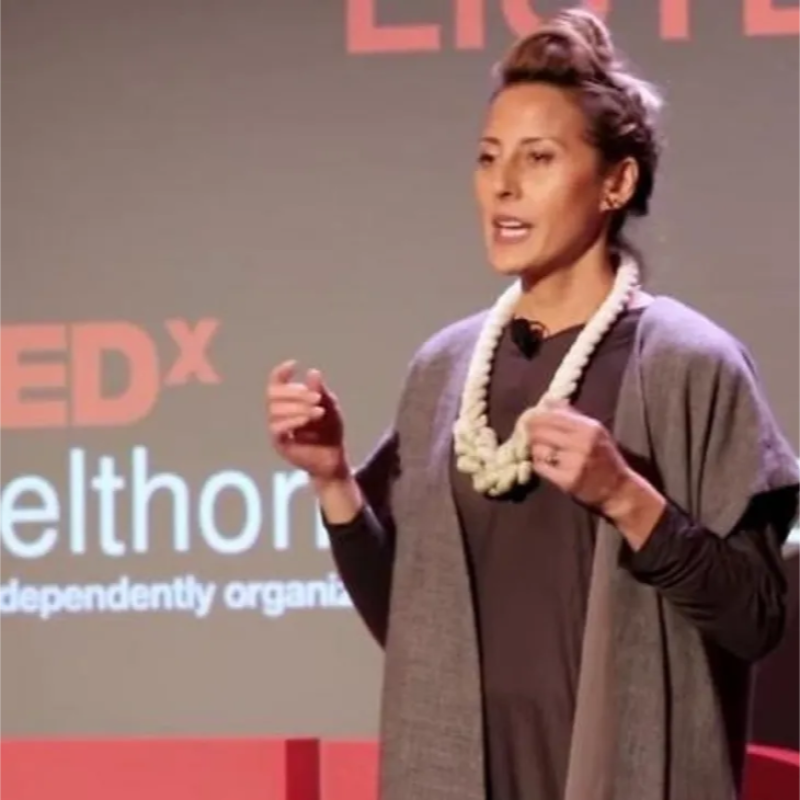
Stella McShera is a serial entrepreneur who knows how to transform the materiality around her through business. Trained in psychology and with a master's in degrowth, she brings an unusual combination to the world of enterprise — one that is less interested in scaling up than in fundamentally changing what businesses take, and what they give back. Her latest venture, PivotAll, works with companies looking to move away from extractive practices and redesign themselves around regeneration at the core.
Alan: Hello Stella, thank you for your time and for sharing your story and the work you do with S&W Magazine. To start, could you tell us a bit about your background and why you find post-growth or degrowth appealing?
Stella: I’m a lifelong lover of secondhand. My first memories are of my dad taking us all to the flea market every Sunday and walking up and down the sea of used stuff. There were treasures on almost every table. My grandmother was a seamstress and always dressed my mother to the nines, making all of her clothes by hand. So the combined gifts bestowed upon me - love of vintage things, love for fashion and understanding how things are constructed - made me appreciate the quality and craftsmanship of things. I have been wearing well-made, secondhand clothing almost exclusively since the 80’s. As fast fashion began to dominate our culture, I rejected it from the beginning. Not just clothing but the quality of so many things were declining for the sake of convenience. When I saw an article in Business Vogue entitled “Is Degrowth the Answer?” I knew I found the antidote to the poison that had become consumerism.
Alan: You have been working in business for many years. What role do you think business can play in the transition toward a just and regenerative mosaic of alternatives to growth?
Stella: I started out in fashion (in school) but quickly realized I have no artistic talent. So, after returning from teaching in Japan, I had an epiphany that one of the main reasons I loved fashion was the psychology behind it - how clothes made us feel and how we engaged with others based on what we/they were wearing. So I ended up going back to college to study the brain. After graduation, a number of paths presented themselves that lead me away from science but offered a way to use both my analytical and creative skills...business. I founded the first business incubator for fashion in the US and 3rd in the world in 2000. Since then, I’ve been working to support local, creative economies and have been developing a degrowth business incubator with others called PivotAll to focus on transitioning US “main street” businesses. Together, we can all pivot to a better economy.
Alan: Unfortunately, most people in productive sectors are not engaging with degrowth as much as we might hope, and the degrowth community often does not fully trust or see businesses as sufficiently transformative. How can we bridge this gap?
Stella: From our early beginnings, humans have engaged in exchange of goods and services. We can’t exist as a society without this, as we are social creatures. Our theory of change is that if we want to change the economy, we must change how the businesses operate within it. That’s what PivotAll aims to do.
Alan: Entrepreneurship can be intimidating and, for many, completely unfamiliar. What makes it exciting? And how can we encourage more degrowth believers to create the alternatives envisioned by degrowth scholars?
Stella: Change is tough for most people. Our brains create ways to make things easier, more efficient, more familiar and that eases our anxieties. But change is inevitable and a necessary part of any evolution. Entrepreneurship is an evolutionary (or revolutionary?) path we must take to realize a post-growth society. What makes entrepreneurship exciting is the ability to create something entirely new from a perspective the world has yet to experience. It’s an art form.
Alan: Many people struggle with the finance part of alternative projects, how can we finance alternative biz and organisations, specially at early stages?
Stella: Speaking of scary...money is what we’re conditioned to strive for and lack of it symbolizes so much in our society. But this scarcity mindset is limiting. I don’t have the answer but what I know is that we need to think differently about how we approach finances projects. I talk to anyone and everyone who I’ve learned has been innovative and resourceful in their businesses and succeeded, even if in small ways. That’s why at PivotAll, we’ve been looking for degrowth aligned businesses - for and nonprofits - to conduct case studies and apply these learnings to an incubator program we’re building. We have started to create a library of these strategies and tools businesses have shared with us so that we can share them others who need not only inspiration but concrete and proven infrastructure. There is no one way to approach financing a project, but we know the extractive model that’s entrenched in business today will not work for a degrowth tomorrow.
Alan: I think people can draw inspiration from your clothing library. Could you explain what it is and what stage the initiative is currently at?
Stella: The Clothing Library was my masters thesis project at UAB. Your readers likely know that fast fashion is one of the most harmful industries that exists today generating endless amounts of clothing while extracting both raw materials and labor without consideration for the true cost. This leads to millions of tonnes of non biodegradable trash heaps piling up with nowhere to go. Global corporations have successfully instilled in us “consumers”, not humans, that we need to have more than we need, things we ‘want’ have to be easy to get, and cost us pennies. Quantity, convenience and (low) cost is driving our societies into the ground. But what if we could flip that on its head? What if we could deliver but without producing more? A model already exists all over the world that people are familiar with and trust - the public library. Books are loaned out for free to anyone with a valid library card. So I thought, partner with these institutions to make borrowing easy, free and like a library, provide a curated and bountiful collection, but in addition to books, libraries also offer ‘looks’. What’s beautiful about this partnership is that, rather than having one clothing retail location that could struggle to get off the ground, libraries have a connection to the their communities already - often at least 30% of residents are library members in any given town. So there is a built in base of potential borrowers from the start. And there are 2 million libraries globally, so scaling horizontally is a grand idea, but not out of the realm of possibility. Think globally but act locally is the saying.
In 2023, I partnered with my local library for a 6 week pilot and not only did hundreds of people peruse the aisles and borrow not buy clothing, many said they started to change their buying behaviors. Some said they began to rethink their impact of buying more than they needed; others said they actively chose a thrift store or clothing swap over a retail store; and still others realized the compulsion to acquire lessened when they knew they could get something they actually needed at the library. We were fortunate enough to get inquiries and articles written about it both locally and globally and to this day, people are contacting me about it. I’m focusing on PivotAll now but should anyone want to take the baton, I’m happy to share what I learned and support them in creating a Clothing Library in their town.
Alan: You are now focusing on Pivotall. Could you tell us more about it?
Stella: PivotAll was conceived of before I began the masters program at UAB but studying there helped me to recruit others who shared in my original vision. Of course, with other voices, PivotAll has changed and morphed into what it’s becoming today and will continue to do so to meet the needs of the businesses and communities it serves. We have completed five in-depth case study interviews so far and by the time this articles come out, will have published two or three. We hope to publish one per month and are planning to launch several MVP workshops this summer to learn more about the needs businesses are facing. What are their biggest challenges operationally and how do we create an incubator program that will support their long term financial sustainability and impact? We won’t have all the answers but we hope to be a go-to source for entrepreneurs in a growing ecosystem of post growth aligned organizations (like the Lift Economy, House of Small, and the Donut Economics Action Lab).
Alan: Could you tell us about the team? How did you come together to lead this initiative?
Stella: We started out with the four of us - Patrick Loftus and I were in the same cohort at UAB and Veronica Devenin was our degrowth business teacher (and my thesis advisor). I invited Matt Orsagh to join us after meeting with him as part of the Degrow US team. I met Lauren Goetze, Jack Blumenshine and Alison Chapel at the DeSchool event the following year and invited them to join along with Richard Robinson, Alison’s partner, and Seth Schori, who is currently a UAB masters student. We are always open to welcoming new energy to our team!
Alan: What are Pivotall’s plans and goals for this year and the coming years?
Stella: We are currently an all volunteer team and with other full time commitments, everyone’s involvement ebbs and flows. We are looking to organize as a workers cooperative this summer and begin accepting consultation clients so that we may begin operating as a social impact business that can provide viable living wages for us all. This summer in June, we presented our first workshop at the US Society for Ecological Economics in Ohio and as mentioned earlier, plan to host MVP workshops to inform how we will develop the incubator program. We plan on launching the degrowth incubator program in 2027 in New England where I live. As I am a Town Councilor, I hope to work with the municipality and businesses to enact more degrowth friendly policies that supports the transition of traditional, business-as-usual companies into a plethora of business-that-benefits-all ecosystems locally. Our vision is that PivotAll serves as a model for other communities to adopt and adapt to the needs of their people and their place.
Alan: We are indeed living in challenging times. What gives you hope and keeps you motivated?
Stella: I have a lot of irons in the fire - maybe too many. So I need a way to blow off steam and re-energize. So I started a flash mob. We rehearse every Sunday, dance to Bruno Mars’ “I Just Might” (which we thought would be easy but its not!) and plan to perform at random grocery stores once we all learn the choreography and for some, muster up the courage. I say, Be Brave.
Alan: Is there someone you would like to highlight or give a platform to?
Stella: The Degrowth Masters program at UAB changed my life. Although the bureaucracy behind it is still challenging, the program itself not only opened my eyes wider to the systemic oppression of capitalism everywhere but also brought together an incredible community of academics, activists and advocates who have every intention of dismantling our broken economies. And best of all (to me) is that I met some of the most treasured friends I now have, and together, we can change the world. Shout out to Alan, Gisela, Amerissa, Diana, Kanika, and so many more!
Additional Resources
Link: https://pivot-all.org/
 | A guest post by
|
 | A guest post by
|