
Equality matters

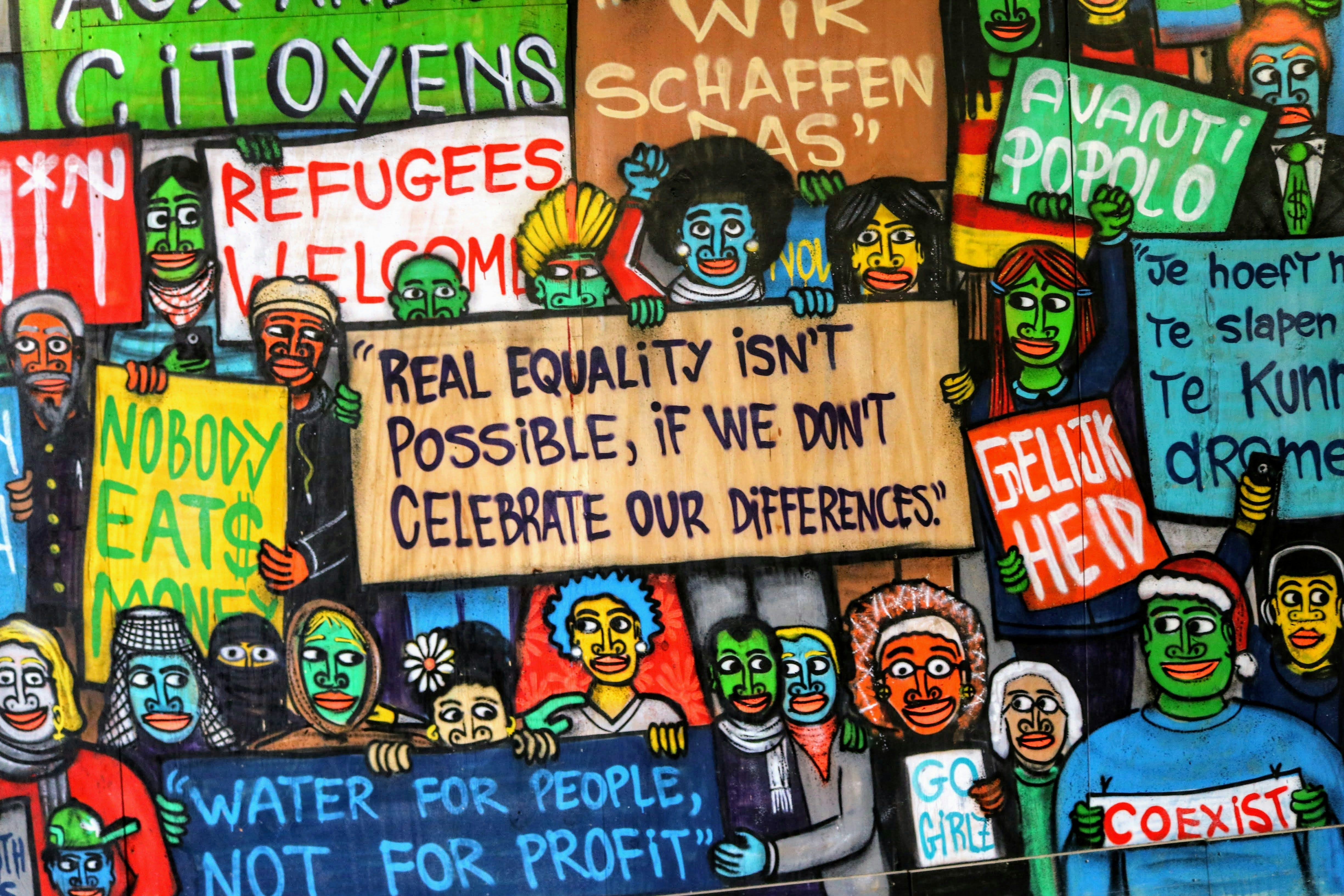
When we say that we want equality, what do we mean? Same pay for everyone? Same caloric intake? Same size of house? Same amount of electricity consumed every day? Same amount of household waste? Same amount of political power, influence, or fame?
What if we aimed for equality as a moral principle based on the consequences it produces? Maverick economist, millionaire, and former trader Gary Stevenson talks a lot about wealth inequality and how we must fix it. He points out correctly that economic inequalities are so high today because governments have allowed the rich to get away with hoarding wealth. Philosopher Michael Sandel points out that there are three aspects of equality: one is economic, a second is political, and a third is about social relations – about dignity, status, and respect. If we thought in terms of consequences, it is obvious that a society based on equality creates better results for everyone, both on the left and on the right political spectrum. So yes, we must tax wealth, not work, but do it in such a way that dignity, status, and respect are also recognized.
What if we aimed for equality as a moral principle in itself? Let us say we did not know that equality produced good results. Let us say we should have equality because it is the right thing to do. Nature does create differences among us, but nature does not pick winners and losers, nature does not make moral judgments. Since life is a genetic lottery, since privilege is all about luck, being born in the right country, at the right time, to the right parents, then we should guide ourselves by principles that recognize this randomness of life. We could recognize that we are equal players in this game of randomness. This is the most inclusive moral position we could have because it is recognizing humans are a form of life, among a vast diversity of many other species.
What if we considered equality as survival maximizer? Humans have started the sixth mass extinction in the span of a few centuries, and vastly accelerated it in the past few decades. We will never be able to control nature because it’s too complex. It’s also about physics. In order to fully control a system, you need another system that is more complex. This is why we cannot assume we live in a simulation, like in The Matrix. The world is real and we are affecting it. Equality with fair and just boundaries for everyone, can be our best chance at stopping the sixth mass extinction and keeping Earth habitable for the future.
What if we considered equality an expression of cooperation? Many researchers have shown how humans are the most cooperative species. We became the dominant species because we were able to cooperate: from planning agriculture across seasons tobuilding structures over decades and even waging war against each other. Equality can be the idea that describes a behaviour and a culture that we recognize as good and desirable. If we dropped the violence and kept cooperation, solidarity, and belonging, we would advance as species without the suffering that we have caused against each other until now.
What if equality was a way to recognize a set of desirable values? I hope we all agree that respect and dignity are better than arrogance and hate. The impulse to feel above others, to climb the hierarchy of status, to be recognized and rewarded, may originate from a quest for survival. As a civilization, we have evolved past that. We have the technology to cure illness and travel to space. Our values have evolved past primitive survival-of-the-fittest thinking. Equality advances creation over destruction. Equality opens the range of the human experience, so that life is not just about happiness, but also about sadness and melancholy, it’s about feeling alive, and being given an equal chance to thrive.
What if equality is the path to sufficiency, wellbeing, and increased quality of life for everyone? We have been trying to play the game of capitalism for quite some time. We have been trying really hard to increase the quality of life for everyone. The results are mediocre, at best. We invented medication, but we don’t share it with the poor. We invented the internet, but not everyone has it. We have super-fast air travel, but it pollutes the air. We have industrial agriculture, but it destroys land. We eradicated some poverty on paper, but with a very low bar. Capitalism is all advertising: telling us only the good bits, often lying about them, and hiding the bad parts. Equality cuts through this bundle of lies. Equality reminds us of our commonalities: our genetic makeup, our dependence on nature, our depended on each other, our desire to continue living.
Under capitalism, wealth accumulation is the only desirable value. Not wealth accumulation for everyone, but only for those who “deserve it.” We are back to meritocracy! Michael Sandel asks, if we had perfect meritocracy and if everyone had perfectly equal conditions to start in life, would that world be one we are likely to want to live in? Meritocracy is about exclusion, meritocracy punishes. Meritocracy says: “The problem is that you didn’t improve yourself in the way we told you to.” (Sandel). There is a difference between the competence of a highly qualified surgeon and the merit we assign to a celebrity who causes more harm than good.
Many economists point out that wealth inequality is a problem. Yes, and... equality requires boundaries not just of minimum standards of living, but also of maximum standards of living. Society also must exist within the boundaries of Earth in order to survive. It’s not enough to tax the super-rich, but the lifestyles of everyone must remain compatible with the capacity of the planet to sustain all humans, regardless of population size. Society needs both sufficiency and wellbeing.
The game we have been playing is a win-lose game, and only a few are seemingly in the winner’s spot. Poverty remains unchanged since 1990 according to Oxfam. The super rich have elicited only negative attitudes: envy, hatred, mimetic ambition, sycophantic admiration, psychopathic admiration. So, when some people say that every billionaire is a policy failure, I would argue that all super rich (those with a net wealth of roughly $5 million or more) are policy failures.
We must also push hard for the phasing out of an economy motivated by profit. Healthcare and education are enormously important for satisfying the needs of humans, and they work very well outside the logic of the profit motive. Not only must we gaurantee access to both— equally for everyone and at no cost—we should expand them heavily. When we give services only to those who can afford to pay, we create social distance and separation, and we encourage isolation and exclusion. Privileged access to anything always creates resentment and division. When we put everything up for sale, it diminishes the meaning of goods and services.
Equality matters because belonging and community are priceless.
Photo credit: Matteo Paganelli.
Excess accumulation of wealth causes an aberrant constipancy incumbent within economic retentivism. How we might solve this problem of excess wealth for a few retarding economic democracy, in principle, will be covered Thursday,
11 Dec 2025
8:00 PM - 9:00 PM (EST)
5:00 PM - 6:00PM (PST)
On Zoom
https://proutalliance.wildapricot.org/event-6398797