

—English translation further down—
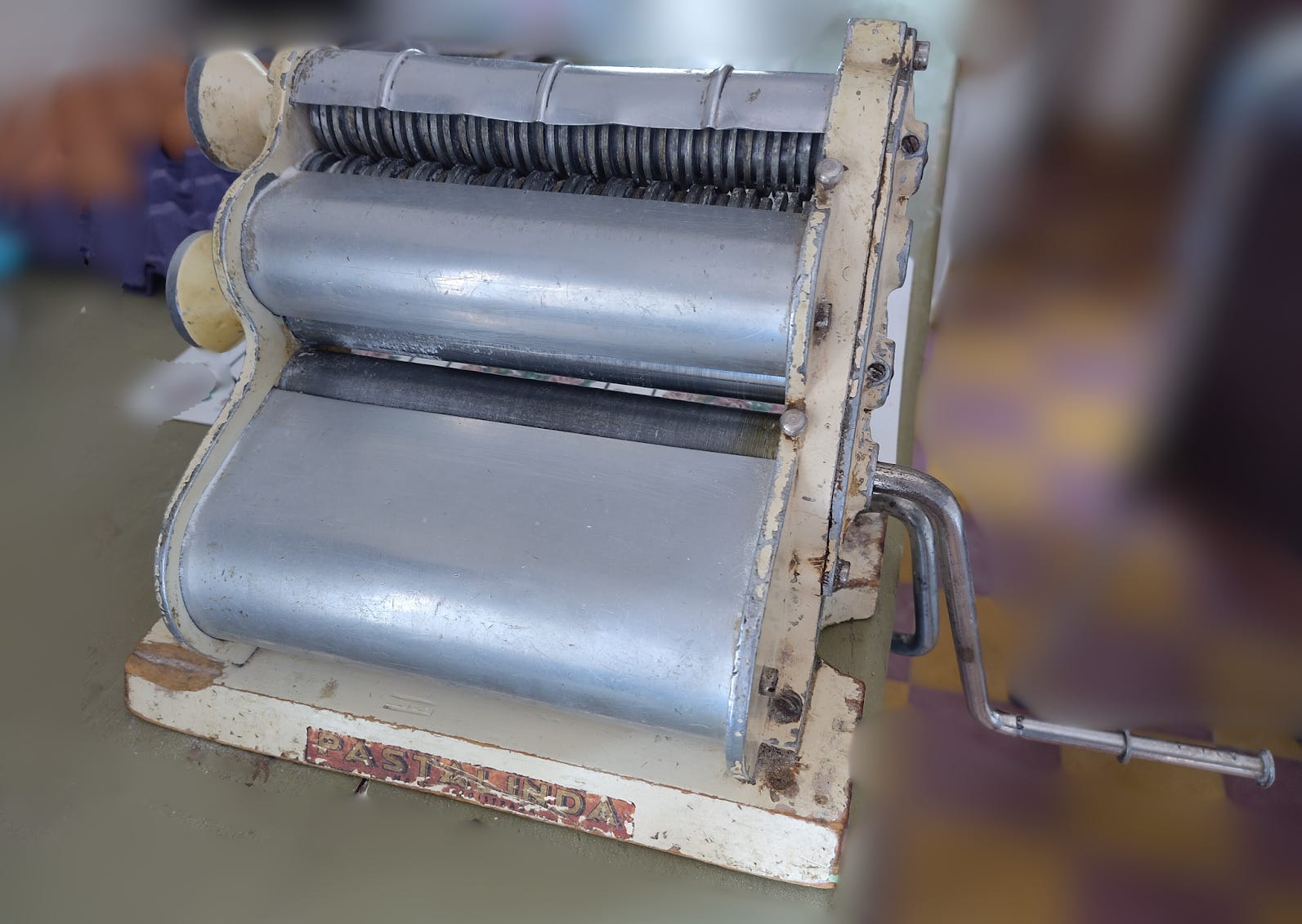
Lo que vemos en la foto de arriba es una maquinita de hacer pasta que probablemente está próxima a cumplir 100 años. Hace unos meses estuve de visita en Argentina con una familia que la conserva de los abuelos, o tal vez, de los bisabuelos. Tuve allí la oportunidad de aprender a usarla haciendo pasta con una receta de tradición familiar. Cayó en la conversación que se han comprado diferentes máquinas a través de los años pero la que usan es ésta, sigue siendo la mejor... Esto creo que no sorprende a nadie.
¿Podemos aún imaginar que un objeto dure decenios?
Es navidad y en buena parte del mundo se compran baratijas por toneladas: Con “baratijas” quiero decir lo que llena nuestros comercios y que proviene de la gran industria globalizada: deslumbrantes objetos grandes y chicos, hechos para que no sean durables. Además, remito al sentido de ‘demasiado barato’, pues sus verdaderos costos externalizados, o más bien, incalculables, en destrucción ambiental y abuso de seres humanos y otros seres vivos, están invisibilizados. Puede tratarse de ropa, pueden ser electrodomésticos, aparatos electrónicos y todo lo que sufre de obsolescencia programada, muebles, etc. (el sector alimentario lo dejamos para otra ocasión).
La durabilidad va en contra de la conveniencia del sistema. Sin importar que los seres vivientes nos estemos ahogando en basura, en diferentes sentidos, algunos literalmente, o que las “zonas de sacrificio” dedicadas al extractivismo, tengan que ir en aumento. Nos enfilamos a producir cada vez más cantidades de objetos de cortísima vida, dejando el problema a futuras generaciones. Es un verdadero escándalo.
Hace tan poco, cien años no es nada, los objetos y sus empaques eran durables, de materiales reutilizables o biodegradables. Objetos que, en su lento paso por el mundo, adquirían pátina e historia. Así también llegaban a tener un valor emocional, pues nuestro modo de relacionarnos con el mundo tiene que ver también con los objetos. Hoy, con la banalización de los objetos, esta relación no puede más que estar entorpecida .
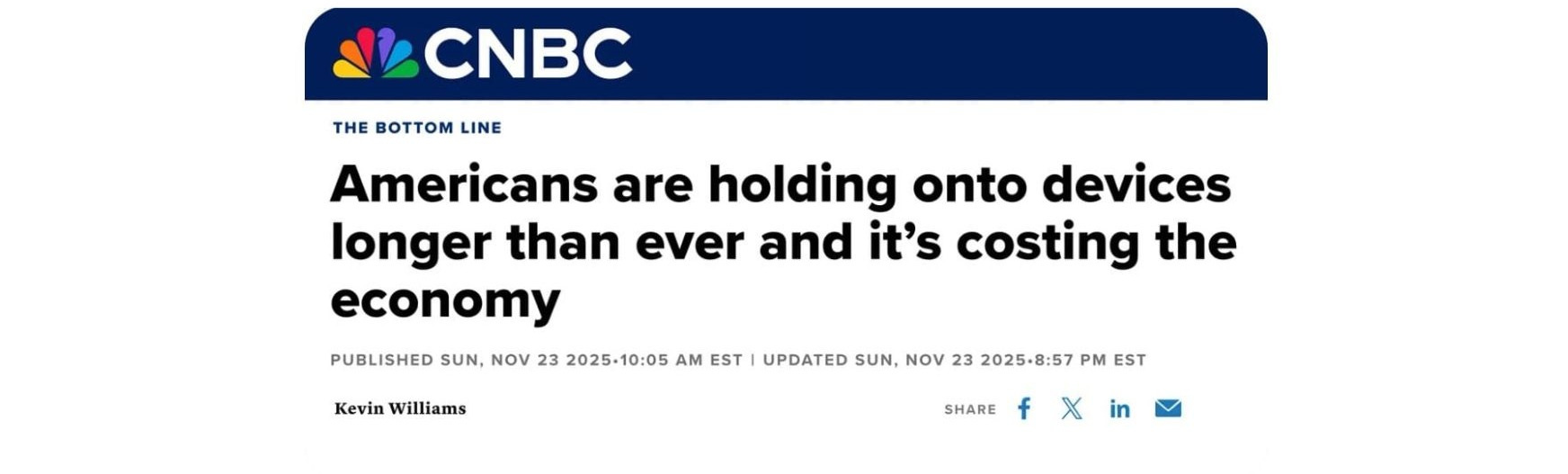
Veamos este titular: “Los americanos están aferrándose a sus aparatos más tiempo que nunca y ésto le está costando a la economía" (CNBC). En el artículo se defiende con naturalidad la desechabilidad (!) , pues está en juego ‘la economía’ También vemos que hay un atisbo de esperanza: ¡las personas! Puede ser por conciencia, o por falta de recursos, pero los consumidores ya no desechan a la velocidad ‘necesaria’.
Llevamos ya muchos años hablando de sostenibilidad. Incluso, se han hecho bastantes avances en la eficiencia de productos, demandando menos recursos, pero esto no ha llevado a que la economía se torne sustentable. En este titular comprobamos la fatal lógica del pensamiento hegemónico, que imposibilita dar pasos más contundentes.
“La democratización del consumo”
Pareciera que en muy poco tiempo nos hubiéramos enloquecido, como humanidad.
Aunque, ¿quién se enloqueció exactamente? Desde el Norte Global, se puede decir que se ha “democratizado el consumo”, como alguna vez oí en orgulloso comentario. No es así en los sitios donde mayormente se producen las baratijas, en el Sur Global, pues con la sistemática diferencia en ingresos, los objetos son baratos, el acceso está ‘democratizado’, solo para el poder adquisitivo de los consumidores del Norte Global.
Acotemos más. Tampoco se trata de poner el peso sobre los hombros del consumidor, aunque como vimos arriba, estos sí tienen poder para reaccionar. Pero no se puede esperar de todas las personas que prioricen preocupaciones éticas cuando la mayoría están ocupados en sobrevivir. Los consumidores no hemos escogido que la economía produzca baratijas-corta-vida, la gran mayoría de nosotros no tiene ahí nada que opinar. El tema es: ¡aquí no ha cabido una democratización! La primera vez que oí esto tuve que dejarlo decantar lentamente para darme cuenta de las implicaciones y posibilidades.
Sí es cierto que es difícil sustraerse a la magia de lo siempre novedoso. Dice el psicoterapeuta G. Dessal: “No importa el objeto. El objeto se desvanece en la metonimia de un deseo errático, y el goce de comprar nos invade”. Muchos que no pueden permitirse las baratijas varias quedan con el anhelo y se disponen a trabajar para participar en el afán de consumir. Aunque sepamos que, pasado el primer entusiasmo, las novedades pierden brillo. En general, a partir de un umbral de satisfacción de necesidades el tener más no contribuye a un mayor bienestar.
Prosigamos: son muy pocas las personas que deciden qué es lo que se produce. Por lógica del sistema, están obligados a vender siempre más, a crecer, a ser competitivos. Posiblemente, muchas de las personas con poder de decisión están convencidas de que hay que actuar así, pues el mundo empresarial está obsesionado por maximizar los dividendos para los accionistas, lo que ha devenido en la única razón de ser del tren desbocado de la economía dominante. Aquí se puede pensar en “la banalidad del mal” (H. Arendt). O en patologías que el mismo sistema premia, también aquellas de carácter socioeconómico que han hecho posible el despropósito de que “solo ocho hombres posean la misma riqueza que la mitad de la humanidad“. Hombres que piensan que pueden ‘permitirse’ destruir la Tierra y salvarse en Nueva Zelanda, o Marte.
El absurdo está normalizado, daños y víctimas son barridos bajo la pulcra apariencia proporcionada por el marketing: Esa increíble riqueza de creatividad humana desperdiciada para que las baratijas parezcan imprescindibles, o también para crear ‘necesidades’. Dolor y rabia, cada vez que pienso en esta cadena de excesos absurdos, en un mundo que ya hemos saqueado y destrozado al límite.
Decrecimiento, el verdadero costo, y duelo
Cuando en el Decrecimiento hablamos de decrecer el metabolismo social, muchos temen carencias, que tendrá que bajar el nivel de vida material alcanzado por algunos, o que se quitará la posibilidad de alcanzarlo a muchos más (olvidando que esto igual no es posible). ¿Pero, no vale más bien preguntarse qué sentido tiene seguir centrando esfuerzos, como sociedades, en la producción de baratijas-corta-vida, con su estela de destrucción y sufrimiento?
Pues el ansia de producir ganancias, inherente al capitalismo, no puede hacer otra cosa que aprovecharse de todo lo que hoy se sobreentiende como propenso a ser explotado: naturaleza, pueblos racializados y trabajo femenino. El verdadero costo de los objetos no sale en la etiqueta del precio.
Nuestra maquinita de hierro actualizada costaría más al consumidor que la semi-desechable de plástico... Pero ¡qué diferencia supondría en el costo real, para planeta y vida!
Aquí llegamos al problema de que los objetos durables pueden ser absorbidos por el mercado ‘eco’, y convertidos en objetos de lujo. Esto ya está ocurriendo, y por eso se hace necesario abogar por una transformación profunda de la economía. Un avance: otro tipo de empresas como cooperativas pueden inclinarse por producir con otros objetivos, como el de el valor de uso para la comunidad.
Pero aceptemos que habrá personas que necesitarán hacer duelo por lo que se sientan perder1, ya sea el plato repleto de carne, la moda super barata o la facilidad de tantos del Norte Global de darse un viaje anual a alguna playa lejos, en el sur. Estamos mal-acostumbrados. Hay que ayudar a morir al sistema (ver Vanessa Andreotti), y esto puede ser también doloroso.
Al alabar la maquinita de pasta podría parecer que queremos volver al pasado. Pero más bien se trata de que usemos nuestro actual nivel de saberes, ahora en plural, refiriéndonos al pluriverso, para ser creativos. Si, volvamos a producir la maquinita de hierro. ¿No es pensable que podamos organizar la producción no con la meta de hacer dinero sino de llenar necesidades? Tal vez, ésta vez partiendo de seres humanos pensantes y no obedeciendo a ese ente incorpóreo pero configurado por relaciones de poder: su majestad El Mercado.
English version
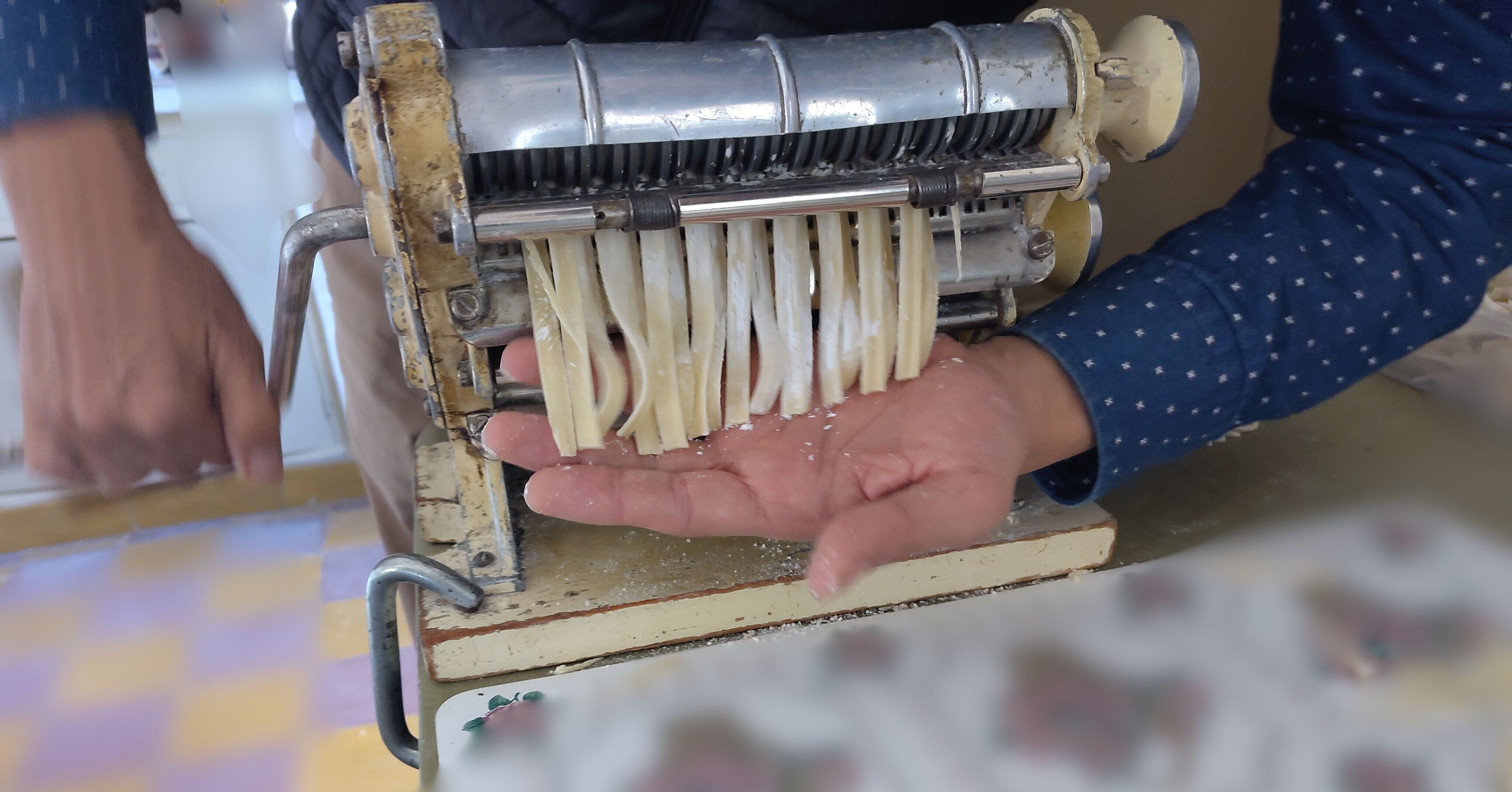
What we see in the photo above is a little pasta-making machine that is probably close to turning a hundred years old. I visited Argentina a few months ago and stayed with a family who have it from their grandparents, or perhaps great-grandparents. There, I had the opportunity to use it, making pasta with a traditional family recipe. It came up in conversation that they have bought different machines over the years, but this one is the one they use, it is still the best... I don’t think this surprises anyone.
Can we imagine an object made today lasting for decades?
It’s Christmas, and in much of the world, tons of trinkets are being bought. By trinkets, I mean all the items that fill our shops and come from large-scale globalized industry: dazzling objects large and small, made to be non-durable. Trinkets also in the sense that they are ‘too cheap’ because their true externalized costs, or rather, their incalculable costs in terms of environmental destruction and abuse of human beings and other living beings, are invisible. These items may be clothing, appliances, electronic devices or anything else that suffers from planned obsolescence, furniture, and more (we will leave the food sector aside here.)
Durability runs counter to the convenience of the system. It doesn’t matter that living beings are drowning in waste, in different senses, some literally, or that the “sacrifice zones” dedicated to extractivism are on the rise. We are producing ever-increasing quantities of short-lived objects, leaving the problem to future generations. It’s a scandal.
Not so long ago--a hundred years is nothing--objects and their packaging were durable, made of reusable or biodegradable materials. Objects that, in the slow passage through their useful life, acquired character and history. They also came to have emotional value, because our relationship to the world also has to do with objects. Today, as objects become increasingly trivial to us, this relationship can only be hindered.
Let’s look at this CNBC headline: “Americans are holding on to their devices longer than ever, and it’s costing the economy.” In the article, disposability is defended matter-of-factly, because “the economy” is at stake. We also see a glimmer of hope: people! It may be out of conscience or because of lack of resources, but consumers are no longer discarding at the ‘necessary’ rate.
We have been talking about sustainability for many years now. Significant progress has even been made in product efficiency, but this has not led to a sustainable economy. In this headline, we see the fatal logic of hegemonic thinking, which makes it impossible to take more decisive steps.
“The democratization of consumption”
It seems that in a very short time, humanity has gone mad.
But who exactly has gone mad? From a Global North perspective, one could say that “consumption has been democratized,” as I once heard in a proud comment. This is not the case in the places where these trinkets are mostly produced, in the Global South. Because of the systematic differences in income between Global North and South, the “democratized” accessibility and low costs are only true for consumers in the Global North.
Let’s narrow it down further, for it is not a question of placing the burden solely on the shoulders of the consumer, either, even though they do have the power to react, as seen above. We cannot expect everyone to prioritize ethical concerns when most people are busy trying to survive. We consumers have not chosen for the economy to produce short-lived trinkets; the vast majority of us have no say in the matter. The point is: this is not something that is decided democratically! The first time I heard this, I had to let it sink in slowly to realize the implications and possibilities.
It is true that it is difficult to escape the magic of the ever-new. As the psychotherapist G. Dessal puts it: “The object doesn’t matter. The object fades, being the metonymy of an erratic desire, and the pleasure of buying overwhelms us.” And many who cannot afford the various trinkets are left with longing and set out to work in order to be able participate in the act of consumption. Even though (as we may already know), once the initial enthusiasm has passed, new things lose their shine. In general, once a certain threshold of satisfaction of needs has been reached, having more does not contribute to greater well-being.
Let us continue: very few people decide what is produced. By the logic of the system, companies are forced to sell more and more, in order to grow and be competitive. Possibly many of those with decision-making power are convinced that they are doing the right thing: maximizing shareholder value has become an obsession, and the sole raison d’être of the runaway train that is the dominant economy. One can think here about “the banality of evil” (H. Arendt). Or about pathologies, which the system rewards, also socio economic ones, which have made possible the mind-blowing fact that “just eight men own the same wealth as half of humanity”. Men who believe they can “afford” to destroy the Earth and save themselves in New Zealand, or Mars.
Absurdity is normalized, damage and victims are swept under the neat appearance provided by marketing: an incredible wealth of human creativity wasted on making trinkets seem indispensable, and also on creating “needs”, in order to keep the system alive. I feel pain and anger, every time I think about this chain of absurd excesses, in a world that we have already plundered and destroyed to the limit.
Degrowth, the true cost, and mourning
When we talk about degrowth in terms of reducing social metabolism, many people fear shortages, worrying that the material standard of living achieved by some will have to be lowered, or that the possibility of achieving it will be taken away from many more (overlooking the fact that this is not even possible). But isn’t it better to ask ourselves: what is the point of continuing to focus our societal efforts on the production of short-lived trinkets, with their trail of destruction and suffering?
The desire to make a profit that is inherent in capitalism can do nothing but take advantage of everything that has been historically constructed as being prone to exploitation: nature, racialized peoples, and female labor. The true cost of objects is not reflected in the price tag.
Our little machine made of genuine iron would have a higher monetary cost for the end consumer than the semi-disposable plastic one... But what a difference it would make in terms of the real cost to the planet and to life!
Here we come to the problem that durable objects can be absorbed by the “eco” market and turned into luxury items. This is already happening, which is why we must advocate for a profound transformation of the economy. Teaser: other types of companies, such as cooperatives, may choose to produce with different objectives in mind (not solely profit), such as use-value for the community.
But let’s accept that there will be people who will need to mourn what they feel they are losing2, whether it’s the plate full of meat, the super cheap fashion, or the ease with which so many in the Global North can take an annual trip to a beach in some sunny far away South. We are spoiled. We must help the system die (Vanessa Andreotti ) and that can also be painful.
By praising our little pasta machine, it might seem that we want to return to the past. But rather, it is about using our current knowledges--in plural, referring to our pluriverse--to be creative. Yes, let’s go back to producing the iron machine. Isn’t it conceivable that we could organize production not with the goal of making money but of meeting needs? Perhaps this time, we will start as thinking- feeling human beings rather than automatically obey that incorporeal entity shaped by power relations: His Majesty, The Market.
En otro lugar, he sido testigo de debates en los que se ha acusado a los defensores del decrecimiento de ignorar el hecho de que la transición podría ser muy difícil, de pintar todo de color de rosa.
Elsewhere, I have witnessed discussions in which degrowth advocates have been accused of ignoring the fact that the transition could be very difficult, of painting everything in a rosy light.

Ohhhhh I have a Singer sewing machine, c.1920, a perfect example to match your pasta machine. A quiet, smooth-running, hand-driven machine of perfection, in contrast to my noisy, plastic, modern, electric Brother. Superb piece, thanks, with all the nuance and clarity needed to ground us at this (and every) Christmas carnage time. Thank you.