
Degrowth narratives won't pay our bills, here is how we can
Living well and resisting in times of austerity, fascism and ecocide

I need to write this piece because many of my comrades in degrowth — and in many progressive movements — face burnout, precarity, social insecurity, and a sense of isolation that cannot go on.
In this article, I want to offer some hints and open a debate: how can we transition to a mosaic of just futures aligned with degrowth, without the current suffering I see around me?
1. Economic Security: Finding Work That Doesn’t Betray Us
The lack of reliable, safe, and well-paid work makes it very hard for committed people to focus emotionally on transformation. It makes any working model unsustainable — savings and family support will not last forever for most of us. Even when they do, many people want to feel rewarded and recognized for their work. Society should honor those who care about unfair trade, water pollution, affordable healthcare, and ending extractive practices.
The uncomfortable reality is that the most ideologically “pure” workspaces are those with the least connection to material reality. Research centers, think tanks, and alternative study centers do important work — but their connection to the materiality of productive and reproductive systems is close to nothing. And even where research and knowledge-building are genuinely needed, these spaces rarely create healthy feedback loops with hospitals, energy providers, housing projects, farmers, foresters, or water custodians.
Look at the industry depth in degrowth literature: it can explain the mechanics of the current system at a macro level, but offers little guidance on how to actually transform a particular activity — finance, housing — beyond some lab-like experiments. This will lead to enormous frustration for people working in degrowth research. More importantly, it makes degrowth-aligned jobs a total rarity.
So we must ask: what can we do outside those spaces while staying consistent with our values?
I think we need to name the work that is essential in the future we want — and exclude from our paid work anything that should not exist in it. There is no way to make chemical pesticides just, nor fast fashion, nor the military complex. There are industries and companies we simply will not step into: we refuse them in the medium term, including big tech.
But outside that space, many paid jobs can let us permeate our workplaces with collective values while making a living close to our ideals. Maintenance work (electricity, water, housing), low-carbon energy, organic farming, alternative software, public transportation, fair clothing, second-hand shops, community centers, cafes, arts, gardening, bikes, sports, ecotourism — these may still operate within a capitalist system, but they will be present in our collective futures. They offer decent pay today while giving us the essential skills to transform those industries further.
I am especially excited about the regeneration movement: people and organizations working full time to restore soils, water systems, forests, and communities — especially in the rural world. If you are reading this, you almost certainly have skills that are missing and desperately needed in rural areas, where housing is more affordable, community is a necessity, and there is a deep thirst for new projects and perspectives.
Every person’s and family’s context is different. My point is simply this: your work today does not have to be perfect. If it allows you to stop worrying about every bill and gives you space to express your values, creativity, and service to others, that is already a significant step.
Note that your potential to change your workplace depends a lot on its governance structure, economic health, and leadership — so read the room and be realistic about transformational potential. And always remember: you are much more than your job. If you find yourself somewhere with little room for change, try to reduce your paid hours so you can dedicate time to initiatives that truly reflect your values. This is what I did — to raise our child, to organize political groups, and to do important unpaid work for human rights and nature regeneration.
2. Community and Social Infrastructure: Getting Off the Screen
We spend enormous hours consuming news, articles, and podcasts — squeezing information into our scarce attention, mostly content that frightens and saddens us, and rarely gives us a sense of power. Social media is the ultimate expression of this. People spend around four hours a day on it, on top of mandatory screen time for work and admin.
This is not just ineffective political work whose returns diminish over time. It is precious time we could be spending building real social infrastructure in our communities.
We cannot say this enough: while alternative media and independent journalism are needed now more than ever, if we are to have any chance against oppressive forces, we must build compassionate, effective, joyful, and safe social spaces where we live. These spaces — of production, reproductive work, and genuine joy — should not be isolated utopias. They must engage in international and supra-local solidarity on a material level.
Let’s make solidarity not about narrative-building, but about actually ending oppression and artificial scarcity. Anything less is virtue signaling and feel-good politics — a true pandemic in our movements.
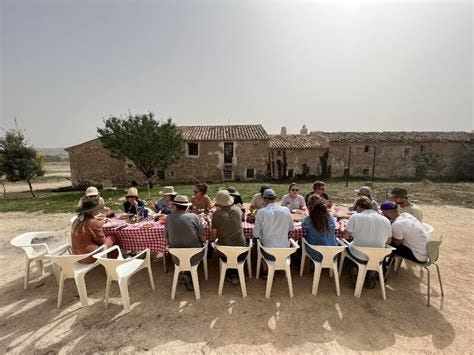
3. Collective Economic Power: Walk the Talk
If you are reading this, you are likely among the 10% wealthiest people on Earth. Around 60% of global GDP depends on what we buy, finance, and use. The call here is simple: walk the talk.
Be unionized. Support independent journalism. Buy regenerative and organic local food. Choose alternative software over big tech. Use insurance and banking tied to real, regenerative economic activity. And punish — vocally, but most powerfully with your money — those complicit with racist, genocidal, and ecocidal governments and practices.
There is no space in degrowth for Microsoft, Google, Nestlé, Total, Repsol, Zara, and their kind. Do not hide behind affordability or systemic arguments to justify complicity.
Boycotting, when organized, targeted, and consistent, drives systemic change: the successful international boycott of South African goods that spurred the larger Anti-Apartheid Movement, alternatives to industrial animal farming, the phase-out of palm oil and dangerous food pollutants, the Metaverse collapse, Starbucks. Corporations know very well that they depend on our legitimacy and complicity to keep operating. It would be naive to think that reduced demand alone makes these monsters disappear, since they own our governments, which will continue to use public money to keep them alive — see Volkswagen's pivot to arms financing to compensate for falling car demand. But when we walk the talk, our redirected money does flow to organizations that align with us, and they will be part of the world yet to be born.
In Closing
If you feel purposeless or struggle to align your values with paying your bills — I feel you. That is exactly why I wrote this.
First, let’s help each other find and have good jobs. Not perfect jobs — good ones.
Second, let’s break the addiction to social media and toxic news, and instead build the social infrastructure we are missing: nearby spaces for organizing, caring, celebrating, and defending ourselves.
Third, let’s support those who are opening cracks in a broken system. Regenerative, democratic work is everywhere if we look for and support it. Let’s make every daily act — eating, drinking, heating our homes, powering our grid, using water and furniture — a political act. Let’s trade quantity for quality, comfort for values, and withdraw our money and legitimacy from those feeding fascism, white supremacy, and ecocide.
Deep transformation is an ultra-marathon. It requires compromise and engagement at both the micro and macro level. Narratives that tell you nothing is possible until capitalism is dismantled, or that strip away your agency and demand perfection, belong in the compost bin.
It’s time to reclaim our voice and our agency — one job at a time, one dinner at a time, one hug at a time — until those acts become billions and make our dreams a material reality, not just words in a book.
With love and solidarity
 | A guest post by
|
Thank you for this wonderful, very timely article. From an American perspective, I wonder what to do about health insurance. Right now, most people need to work a full-time job that provides benefits or be partnered/a dependent of someone who does in order to afford health insurance. I'm reluctant to pursue a full-time benefited job for some of the reasons you mention. I wonder how people in the US can form coalitions to provide healthcare, since we aren't getting reform anytime soon. Direct primary care may be a good option for primary care, but the cost of emergency care or specialized drugs/treatment feels pretty intractable. I'd welcome anyone's thoughts on this.