
Climate change, resistance, and doing the right thing now

No amount of intellectualising is going to change the fact that our climate is thermodynamically fucked.
That humans are economic toast.
Soon-to-be energetic dust on a barren planet.
Unless we do something to change it, and even then, we’ve probably left it too late, and still aren’t doing enough about it.
Is this ‘doomerism’? We love our labels, our boxes, perfect ways to shut up the screaming so we don’t have to listen.
How people resist change, quietly
There’s this wonderful concept I recently discovered, called ‘quiet resistance’. A pair of social studies—reviews—of what the authors called Quiet Adaptation Resistance. An earlier paper, by the same authors, calls it Weapons of the Vulnerable: “Widespread and often subtle resistance to climate adaptation interventions.”
They describe quiet resistance as false compliance, foot-dragging, gossip, feigned ignorance, sabotage, and even arson.
A global phenomenon, this mundane resistance has previously been patronised as simply being the actions of people who don’t know any better, ignorant of the benefits of climate adaptation interventions. There are few overt protests, no attention seeking. Just quiet behaviour from many people of like mindedness, going almost unnoticed until the effects are too powerful to be ignored.
These studies view this collective behaviour through a different lens, and show that in places where communities still run deep, cohesive—even disorganised—disobedience has caused the failure of government attempts to shield them from environmental disaster.
If you’re confused by this idea, consider the Tanzanian farmers who were given drought-resistant seed to plant. They wanted to continue planting their traditional, more flavorful crops, so they planted the drought-resistant plants near roadsides, and the traditional crops in the centre of the fields. The result was that the traditional crops failed, and many people were hungry. In that particular case, many farmers eventually came around to the new crops. However, in other places, communities who have been moved to safer locations have returned, family by family, to their old homes, government plans thwarted, without open protest.
The quiet resistance described by these papers is overt and covert political action disguised as inaction or stubbornness, too successful to be characterised as ignorance.
Why would people make it harder for governments to help their own communities? People need personal autonomy and power over their own lives, even if they’re not educated to postgraduate levels. They have to be onboarded to plans that involve them, without manipulation or coercion, and facts aren’t persuasive, so that can be a challenge.
Looking closer to home, in the UK, especially in the rural areas, the observations made by the studies do apply, though with strong differences. It seems the form of quiet adaptation resistance depends on the social, historical and cultural contexts of the community, so here it often looks like a combination of individualism and a kind of commercial idea of social cohesion.
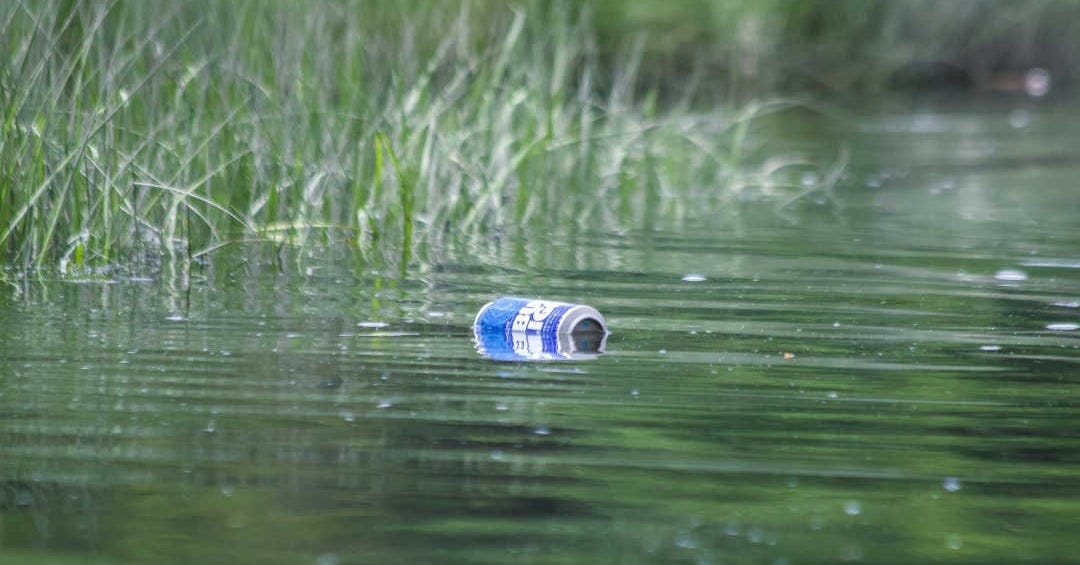
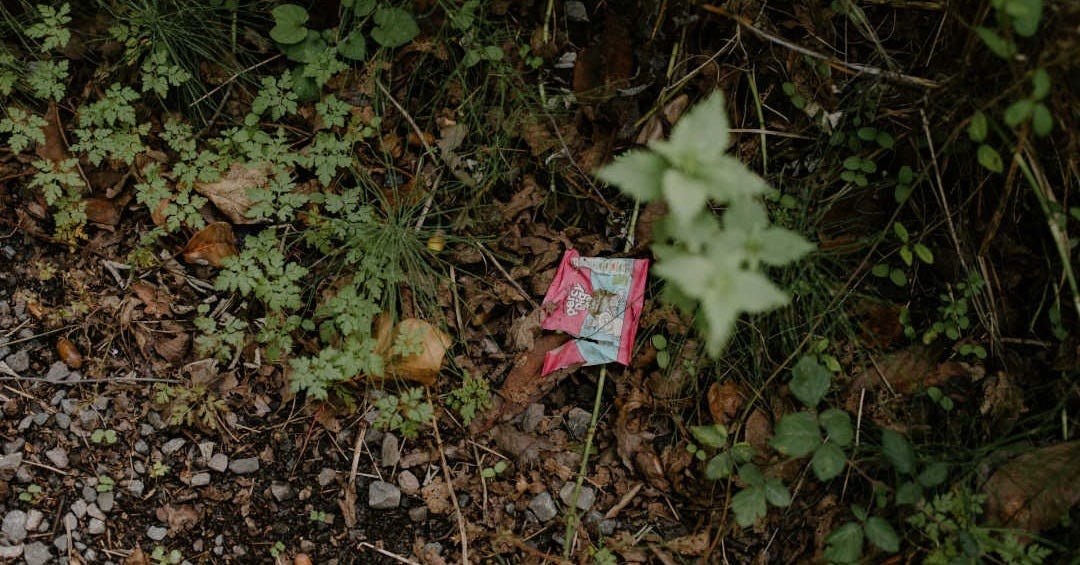
We’ve got dog poop, carefully collected in bags, left hanging from trees (false compliance). Endless plastic litter lining the roads, and endemic fly tipping (disobedience). Unnecessary Range Rovers and SUVs barging at the top of the speed limit along narrow, winding roads (feigned ignorance), and constant purchases of trending plastic-based tat (also feigned ignorance).
Nobody wants to change their lifestyle—we work hard for it, and it’s near impossible to imagine how our lives could be organised any other way. But we’re killing our world with our commitment to convenience and perceived luxury. Hardly anyone pays attention to this, pretending they don’t have capacity to be political. But so very many actions and inactions are political, whether they are intended that way or not.
I was delighted to discover the studies, not least because I independently hit on the idea of A Quiet Resistance four years ago, writing about the unsustainability of paper books. Unlike the quiet adaptation resistance described in the studies, my work and lifestyle focuses on reducing high-carbon activities as much as possible (though crucially, attempting to maintain a life I and my family still enjoy—there’s a danger of hypocrisy). However, both forms of quiet resistance rely on the same foundation: quietly doing what you want to do, in the face of top-down social pressure, and that being a form of resistance.
Why resisters resist
The studies go on to discuss why resisters resist:
While adaptation to climate change is mainstreamed as an imperative societal goal, it is not a neutral or apolitical process but one that ignites social activism and resistance” (Brink, Falla, and Boyd, 2023).
Many people in the UK resist new environmental restrictions. They resist changing their consumerist behaviour, even though that would help the planet, future generations, etc. They don’t mean it to be wasteful or destructive. They conveniently believe the government wouldn’t let manufacturers make the products they want in the materials they do if they were really bad for the environment.
But … while adaptation to climate change might have been mainstreamed as an imperative societal goal—in the UK, it’s only been done so in name. Not in action. Political decisions consistently sabotage the environment—such as AI Growth Zones, new nuclear builds, and a planned undersea nuclear waste dump—so new forms of development have been reframed as climate adaptations, with all the implied flows of financing.
In their attempts to make genuine environmental progress, political leaders haven’t gone far enough. Here, we see international failures, like the Kyoto Protocol, the Paris Agreement, or COP. Or national failures, such as laws that purportedly limit pollution—but not meaningfully. Projections like the latest UK government’s 2025 Carbon Budget and Growth Delivery Plan bely their own pragmatic tone. Their plan heavily relies on the technological fantasy of scaled-up Carbon Capture, Usage and Storage (CCUS) to deal with future emissions from biomass, energy from (plastics) waste (EFW) and gas power plants.
Policies and politicians look weak-willed, but it’s carefully planned: they’re quiet resisters, too.
In the UK, since COVID, it’s become clear that when people don’t really want to do the obvious thing for the benefit of everyone, they look to the government to tell them what to do. And our increasingly populist governments mostly tell them what they want to hear.
Many people welcome the ideas of development, industry, potential job “opportunities” beholden to one or two major industrial employers in a local area. They’re happy with more electric cars, more new housing developments, and bigger roads. They don’t have to do much to get those things. Just vote either way, sit back, and wait.
But in the meantime, the climate is going to hell in a handbasket, on the back of long-termist politics and unenthusiastic populations.
So, questions remain: do people quietly resist good and accessible environmentalism because they don’t care? They think the government has everything under control, so they don’t have to bother? Or is it because they believe that the politics behind the mainstream idea of adaptation to climate change is only a money-making sham?
Politicians kick the can down the road, and have done so since the 1970s. Why shouldn’t the people too? It’s hard enough to get people to change their ways. Harder still, when they look to leaders, and don’t see much substantive urgency.
What they do see are politicians who want to maintain business as usual, as if nothing but prices have changed.
What does it mean to ‘adapt to climate change’?
The phrase ‘adaptation to climate change’ has to consider the confluence of both mitigation and adaptation. The most effective mitigation means ending deforestation, fossil fuel burning, industrial development and unlimited growth. Handled badly, it would bust political careers and set the people howling about jobs and fearing for the future. Handled well, it could be the answer to everything.
But adaptation means finding ways to live with wildfires, frequent flooding, mass migration, oven-ready summers, drought, sky-high food prices, and potential starvation. This places the effects of climate change squarely in the lives of the people, because although politics may provide some institutional assistance, the brunt is borne by losses to lives and livelihoods.
Real mitigation requires structural change; adaptation focuses on how people learn to cope with the new reality (the effects of the last century’s emissions will roll on for some time), however radical or useless the mitigations.
Either way, the quiet adaptation resisters in my area, with their plastics pollution and massive cars, aren’t ready for either mitigation or adaptation. They’re neither inclined to storm the Houses of Parliament to demand real structural reform, nor prepared for when they find their houses and roads underwater.
They certainly won’t reduce every unnecessary, carbon-intense, consumerist activity in their lives just because that might help; and neither will government quiet resisters suddenly change their growth mindset.
Why are people so resistant to change?
Only last week, The Guardian announced that we are headed for 2.6°C warming above pre-industrial levels—and although the paper is quick to mention that it’s predicted by the end of the century, nobody really knows that. The non-linear nature of the tipping points, the sudden earth changes that could cascade like clichéd dominoes cannot be perfectly modelled because you cannot judge risk based on past information.
Many ordinary people in the UK seem to believe that they can’t do anything about the climate crisis—some even take the luxurious position of suggesting it isn’t real—so they don’t even try.
Consumers aren’t to blame for the climate crisis, but we’ve played a powerful role in the destruction; as individuals, we still have a part to play in the reparations. What we do, en masse, in any given situation, can and will make a difference.
But nobody will change how they live until they reach the inescapable conclusion, on their own, that they must change if they want to live. For as long as we are shielded from the effects of climate change, we’re going to carry on living the way we want.
Credits Photo 1: Brian Yurasits on Unsplash / Photo 2: Photo by Annie Spratt on Unsplash
 | A guest post by
|
I think this is key: "People need personal autonomy and power over their own lives, even if they’re not educated to postgraduate levels. They have to be onboarded to plans that involve them, without manipulation or coercion, and facts aren’t persuasive, so that can be a challenge."
Most people want what's good. They want a livable world for themselves, their kids, and grandkids. They don't even want to hurt strangers, endangered species, etc. But your article makes a great point that when human beings are just told to do something that requires accommodation/sacrifice/change, we're likely to resist. I think one area where climate justice movements have a lot of room to grow is including everyday people traditionally dismissed as opponents or idiots.
By analogy, one my classes this past term chose gun violence in the US as a topic. A significant proportion of the students came from rural, gun-owning families, and were raised with hunting, target practice, and narratives about self-protection: people I'd expect to be adamantly anti-regulation. When engaged in respectful conversation, not one of them was. In fact, their intimate knowledge of gun culture and gun safety allowed them to make precise recommendations for what regulations would be most useful (ex. banning assault weapons, mandatory safety training). This is just one tiny example, but I do have faith that if people are sincerely asked to be co-creators of solutions, many will choose to be.
"No amount of intellectualising is going to change the fact that our climate is thermodynamically fucked.
That humans are economic toast.
Soon-to-be energetic dust on a barren planet."
You want to know why people don't change? It is because of statements like these which leave no room for hope. If I am "soon-to-be energetic dust on a barren planet" why the AF would I get on board with anything which could bring about meaningful change? What would the point be? You have committed the sin of certainty, as if you know the future. Poppycock. We, in all likelihood, will not continue in the West as we have, but absolutist certainty is just clickbait for your little SubStack. Writing shite like this only confirms that YOU fit the demographic of people resistant to change or you are a fool working against your own desires. (Queue the response that I must be a "climate change denier")