

Spain's parties to the left of the social democrats (PSOE) are disappearing by the minute. This article explains why, and proposes lines of action to prevent a far-right government in the next elections.
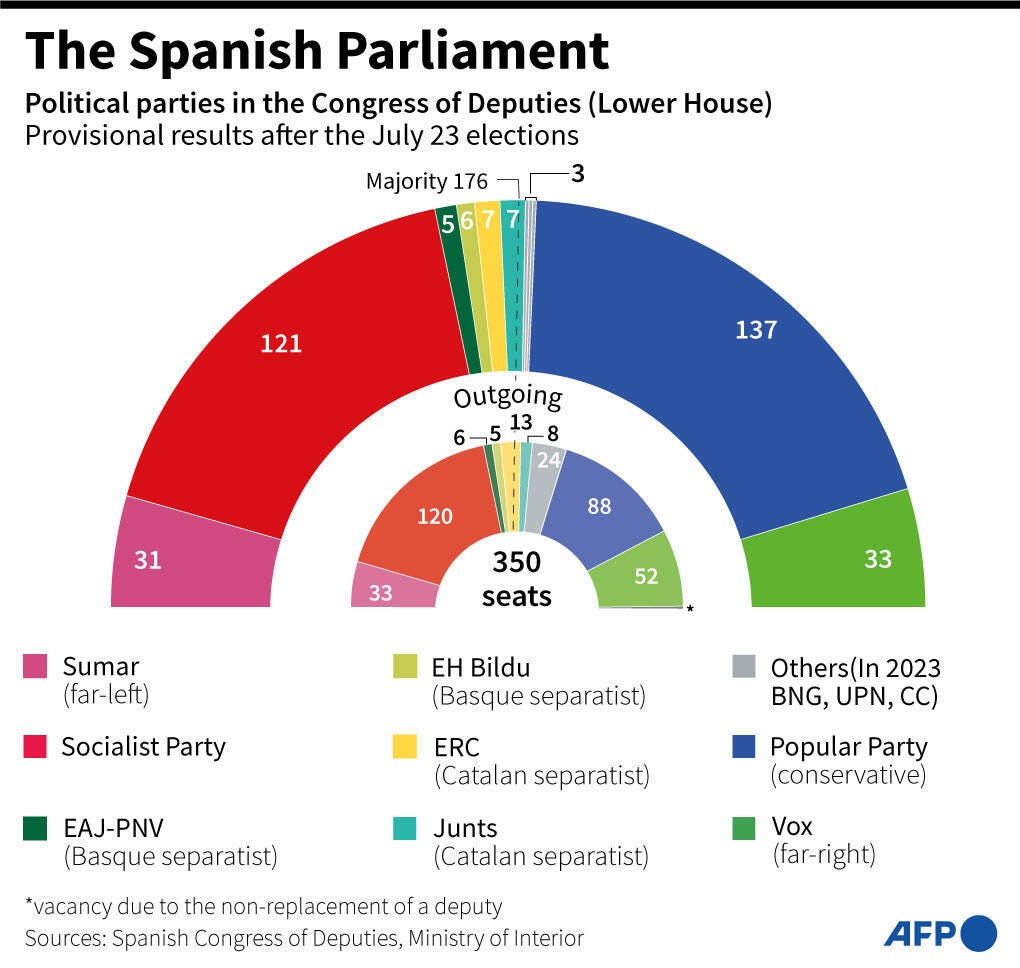
Spain has a mosaic of left-wing groups reflecting the different sensibilities of its nations within a nation. Yet many are struggling to stay relevant at state level. The current coalition government of social democrats may look like a beacon of hope to observers in a Europe dominated by racism, austerity politics, military Keynesianism, and servitude to Washington. But it falls far short of what the country needs and what the majority wants. Spain’s parliament permits personal freedoms around sexuality and gender — yet does not hesitate when forced to choose between profit and human rights.
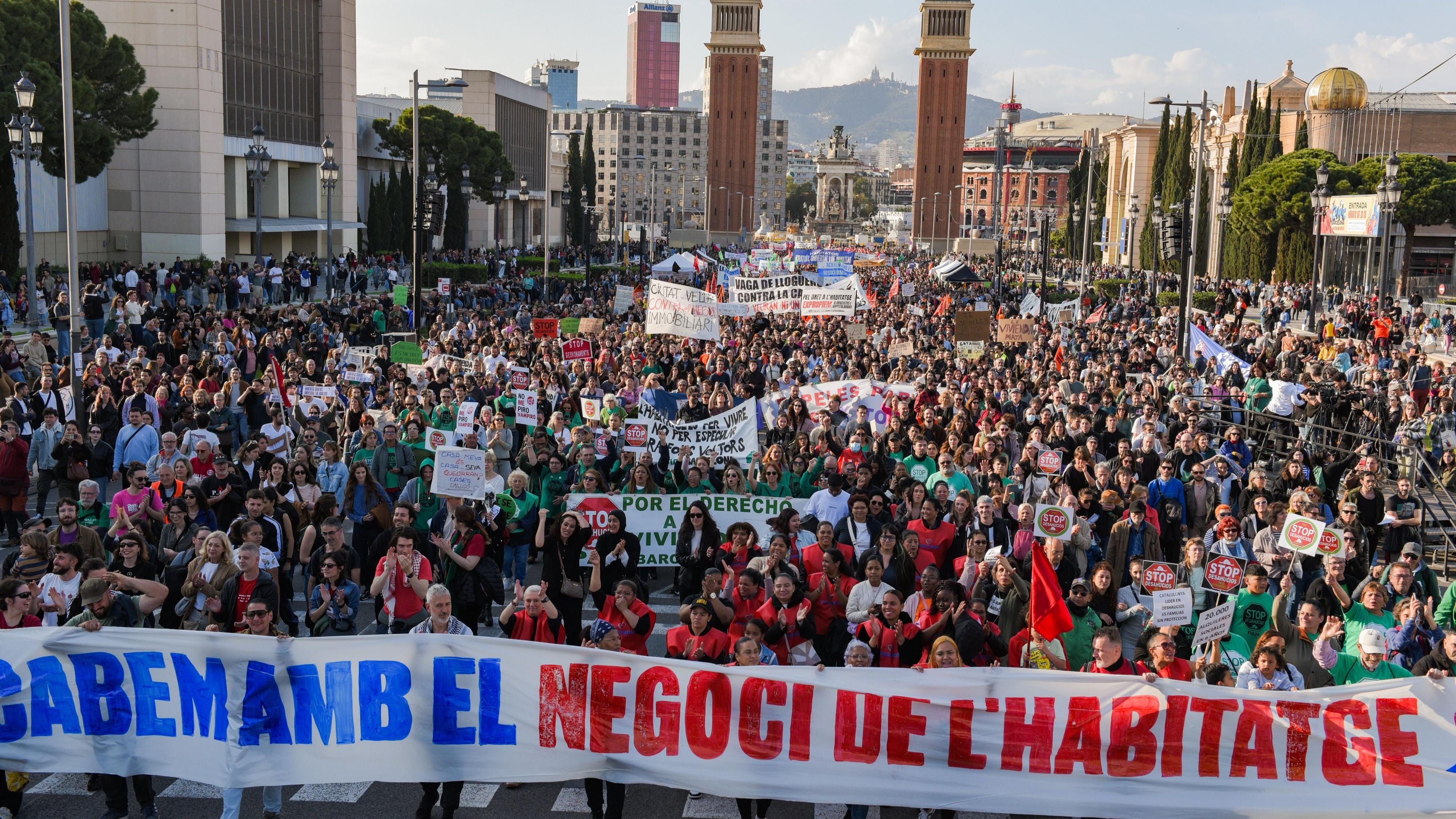
Seven years of “the most progressive government since the dictatorship” have delivered macroeconomic growth and investment returns for capital — alongside precarious work and an affordability crisis without modern precedent. The home our grandparents could buy in under a decade on one salary now cannot be paid off in five decades on two, despite GDP per capita being at least three times larger than in the 1980s. Instead of asking where all this wealth has gone, media and public discourse blame young people for laziness and idealism.
Those approaching retirement with paid-off mortgages seem unwilling to acknowledge that younger generations are right to refuse these conditions — to resist working for such poor returns, and to be almost universally anti-Zionist and anti-imperialist. A section of mostly working-class young men is drifting toward far-right rhetoric and toxic masculinity, but the broader picture is clear: younger generations reject genocide and colonialism as economic systems, even if that means the imperial standard of living will never reach them.
In this context of generational and class conflict — between property owners and renters paying impossible rents — the left has failed to demonstrate the necessity and feasibility of public and collective solutions to the housing crisis, or to make the case for affordable healthcare, energy, food, and water.
The heterogeneous left is trapped between moralism without management and a false realism that refuses to challenge power structures that are both socially and environmentally unsustainable. Dysfunctional party dynamics and a lack of internal democracy divorce political processes from everyday problems. Leaders sound more like priests reciting mantras from books nobody reads, descending into spirals of abstract purism. Language has displaced material reality; social media has become the marketplace of political relevance.
As a result, more and more people retreat toward the only things they feel they can trust: work, family, and money. Face-to-face solidarity has vanished from core political strategy. Who is stopping the eviction of vulnerable families? Attending to the homeless? Providing nutritious food to children? Supporting people fighting depression, eating disorders, sleep deprivation, drug abuse, and screen addiction? The left comforts itself with systems critique, sheltering in a vacuum of perfect morality that provides neither bread nor entertainment.
This was not always the case, and it doesn’t have to be. Genuinely progressive politics must stop cataloguing only the evils of capitalism and start solving people’s immediate needs and fears. That means:
Supporting farmers pushed to destroy the very soil they depend on, as they transition to regenerative agriculture
Offering pivot plans that give hope and security to burnt-out small businesses on the verge of closure
Making housing affordable, and making the future irresistible — so young people look forward to it instead of escaping into screen addiction
Show solidarity and integrity first. Ask for a vote later. Practice the radical pragmatism of what actually needs to be done to meet our goals — explaining what parliament can and cannot deliver, and what global capital will and will not allow — instead of promising what parliament alone can never provide.
Where to start? Give legal and practical support to migrants. Offer time and holistic care to the homeless. Provide safe shelter for women facing male violence. Stop ships, military bases, and companies supporting genocide. Work with — don’t just talk about — the economic alternatives that need to be scaled up and wide.
Being radical means solving problems at their roots:
Fix, and not only punish, broken men who direct violence at those they love
Economically support those who repair homes, tend gardens, and steward life-supporting systems
Resist and stop violence — with force when necessary and with courage when risks are real
There is an entire world of under-resourced social spaces waiting to be reclaimed: festivals, music, arts, sport, travel. Why is the left no longer present in them? Let’s show that a life of joy, safety, freedom, and solidarity is not only possible — it is being built.
Real solidarity is material, not symbolic. It changes lives, not just narratives. It rebuilds social fabric. It creates living experiences of ecosocialism, not texts — restoring the relationships that let people smell, hear, and feel utopia. Push down energy bills. Repair homes. Protect children. Return water to dry landscapes. Cool overheated cities. Handle conflict and guarantee safety. Do not hide from racism: confront it, repair the relationship, dissolve the fear. Safety and solidarity erase racism and fascism far more effectively than moral lecturing.
We need a left that shows up. One that walks the talk on the everyday problems of the working class. Politics is an act of service — not a top-down architecture designed by intellectuals who cannot wire a socket or mend a broken chair. A revolutionary is committed to victory, not purity: victory meaning the end of human and material deprivation through relations of regeneration, not extraction for the few.

@Grace Blakeley you will like that
Thanks Anne for helping to spread the text, I think we need this conversation more than ever : )